

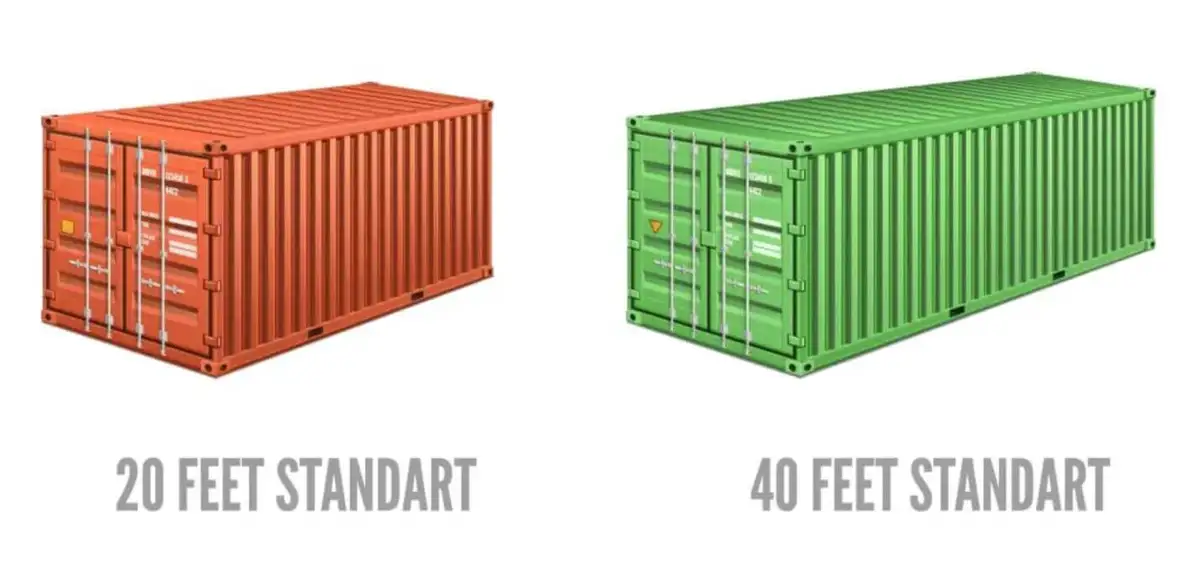
Picking the wrong container size is one of the fastest ways to inflate your landed cost when shipping from Vietnam. Book a 40ft box for eight pallets and you are paying for a lot of dead air. Cram a 20ft container until the doors barely close and you risk overweight penalties, damaged cargo, or a customs re-inspection. The difference between a 20ft and a 40ft container is not just length. It changes your per-unit freight cost, your loading plan, your inland trucking, and sometimes your Incoterm.
At VNForwarder, we quote FCL and LCL shipments out of Vietnam every day. This guide walks you through the real dimensions and capacities of 20ft and 40ft containers, when each size wins, and how to make the choice before your cargo reaches the port.
Standard Container Dimensions at a Glance
The shipping industry uses ISO standard sizes so containers can move seamlessly between vessels, trucks, and trains. The two most common dry-van options for general cargo exported from Vietnam are the 20-foot general-purpose container (20’GP) and the 40-foot general-purpose container (40’GP). There is also the 40-foot high-cube (40’HC), which adds roughly one extra foot of internal height and is worth considering for light-but-bulky cargo.
| Specification | 20ft Container (20’GP) | 40ft Container (40’GP) | 40ft High Cube (40’HC) |
|---|---|---|---|
| Internal length | 5.90 m / 19’4” | 12.03 m / 39’6” | 12.03 m / 39’6” |
| Internal width | 2.35 m / 7’8” | 2.35 m / 7’8” | 2.35 m / 7’8” |
| Internal height | 2.39 m / 7’10” | 2.39 m / 7’10” | 2.69 m / 8’10” |
| Cubic capacity | ~33.2 CBM | ~67.7 CBM | ~76.3 CBM |
| Max gross weight | 30,480 kg | 32,500 kg | 32,500 kg |
| Tare weight | ~2,200 kg | ~3,700 kg | ~3,900 kg |
| Payload | ~28,000 kg | ~28,800 kg | ~28,600 kg |
| Typical pallet fit | 10 EUR pallets (1.2x0.8m) | 20-21 EUR pallets | 20-21 EUR pallets |
A 40ft container is not simply two 20ft containers. Because the floor, walls, and roof add the same structural weight once, the 40ft offers almost double the cubic capacity for a much smaller jump in ocean freight cost. That is why the 40ft is almost always more cost-efficient on a per-CBM basis, provided you can fill it or at least come close.
What Can You Actually Fit Inside?
Numbers on a spec sheet can feel abstract, so it helps to think in real cargo terms. A 20ft container can hold roughly 200 to 300 standard cartons, depending on carton size, or about ten standard EUR pallets stacked two-high. It is the right box for a small production run, samples, heavy machinery parts, or dense products like tiles, castings, or stone.
A 40ft container can fit roughly 20 to 21 EUR pallets or 40 to 44 standard-size pallets, again depending on stack height and loadability. Apparel, footwear, furniture, electronics, and consumer goods exported from the industrial zones around Ho Chi Minh City or Hai Phong frequently travel in 40ft boxes because the cargo is voluminous but not exceptionally heavy.
The 40ft high cube is the hidden hero for many Vietnam exporters. The extra foot of height is free cubic space on most Asia-Europe and transpacific routes, yet it can reduce the number of containers you need by 10-15% for tall cargo such as stacked cartons, bulk bags, or light furniture. If you are shipping from Vietnam to the USA or Europe, where inland drayage can be expensive, consolidating into fewer high-cube boxes can pay off quickly.
Weight Is Often the Real Limit, Not Space
First-time shippers usually look at CBM and stop there. Experienced freight forwarders look at weight first. A 20ft container can legally carry roughly 28 metric tonnes of cargo. A 40ft container carries only marginally more by gross weight, about 28.5 to 29 metric tonnes. That means if your product is dense, a 40ft container may be full on weight while the floor is still half empty.
For example, a shipment of granite tiles, steel parts, or aluminum extrusions from Vietnam could max out the payload limit of a 40ft container with only 25-30 CBM loaded. In that case, switching to a 20ft container or splitting into two 20ft containers can actually lower your total freight spend compared with one underutilized 40ft.
Conversely, light-but-bulky cargo like foam mattresses, plastic housewares, or seasonal decorations can fill a 40ft high cube without getting close to the weight limit. That is the ideal 40ft high-cube profile. VNForwarder checks both volume and weight before quoting, so you do not discover a mismatch at the terminal gate.
Cost Comparison: When Does Each Size Make Sense?
Ocean freight is priced by the container, not by the kilogram. A 40ft box usually costs 1.5 to 1.8 times a 20ft box on the same lane, while offering roughly twice the volume. That is why a fuller 40ft almost always gives a lower cost per CBM.
| Cargo volume (CBM) | Recommended container | Why |
|---|---|---|
| 1-15 CBM | LCL or 20ft if urgent | Share space; pay only for what you use |
| 15-25 CBM | 20ft | Fits well; avoids paying for empty space |
| 25-55 CBM | 40ft | Sweet spot for cost per unit |
| 55-68 CBM | 40ft GP | Standard option for high-volume goods |
| 68-76 CBM | 40ft HC | Extra height gives free capacity |
Remember that ocean freight is only one line item. You also need to factor in terminal handling, customs clearance, inland trucking from factory to port, chassis fees, and destination charges. A 40ft shipment from a factory near Ho Chi Minh City to the Port of Los Angeles may have a higher ocean component than a 20ft, but the per-unit cost often drops by 20-40% if the container is well utilized.
If you are unsure, request a split quote. VNForwarder can quote both 20ft and 40ft FCL options plus LCL, so you can compare the total landed cost per item before you commit.
Step-by-Step: How to Choose the Right Container
Use this simple decision flow the next time your Vietnamese supplier asks, “20ft or 40ft?”
- Measure the cargo volume. Add up the external dimensions of each carton or pallet. Use the supplier’s packing list, not the product dimensions.
- Check the total gross weight. Include pallets, dunnage, and packaging. Compare against the payload limits above.
- Estimate stackability. Can cartons be double-stacked? If yes, a 40ft high cube may let you load taller and avoid a second box.
- Get FCL and LCL quotes. Sometimes 22 CBM is cheaper by LCL than by a half-empty 20ft.
- Check destination costs. In countries like the USA, Canada, or Australia, one larger container is usually cheaper than two smaller ones at destination because of terminal and trucking minimums.
- Confirm port equipment. Some inland depots and smaller ports cannot handle 40ft high-cube boxes on standard chassis. Ask your forwarder.
If your volume is between 15 and 25 CBM and the cargo is heavy, lean toward a 20ft. If your volume is above 25 CBM and the cargo is light or medium density, lean toward a 40ft or 40ft high cube.
Special Containers: When a Standard Box Will Not Work
Standard dry vans handle most cargo, but Vietnam exports a lot of products that need specialized equipment. If your shipment falls into one of these categories, mention it when you request a quote.
- Reefer containers (20’RF / 40’RH): For frozen or temperature-controlled cargo such as seafood, fruit, or pharmaceuticals. A 40ft reefer has the same footprint as a 40ft dry but less internal volume because of insulation.
- Open-top containers: For cargo that must be loaded from above by crane, such as machinery or oversized components.
- Flat-rack containers: For heavy or over-width cargo like vehicles, boilers, or construction equipment.
- Garment on hanger (GOH) containers: For apparel that must arrive wrinkle-free and ready for retail.
Choosing the right equipment up front prevents costly switching fees at the port. If you are exporting project cargo or oversized machinery from Vietnam, VNForwarder can arrange flat-rack and open-top bookings through our local carrier network.
Internal Links: Dive Deeper by Route and Mode
Container size is only half the equation. The other half is the lane you are shipping on. These route guides can help you build a complete shipping plan:
- Sea Freight from Vietnam to USA
- How Long Does Shipping by Sea from Vietnam to USA Take?
- Sea Freight from Vietnam to UK
- Container Shipping from Vietnam to Germany
- Container Shipping from Vietnam to Australia
- Amazon FBA Shipping from Vietnam
- How to Import from Vietnam
FAQ About 20ft and 40ft Containers
How many CBM are in a 20ft container?
A standard 20ft container has approximately 33 CBM of internal volume. In practice, due to pallet overhang and loading inefficiency, most shippers plan for 25-28 CBM of usable cargo space.
How many CBM are in a 40ft container?
A standard 40ft container has roughly 67-68 CBM of internal volume. A 40ft high cube offers about 76 CBM. Plan for 55-60 CBM of usable space in a 40ft GP to leave room for safe lashing.
Is a 40ft container exactly twice the price of a 20ft container?
No. A 40ft container typically costs 1.5 to 1.8 times the price of a 20ft on the same route. That is why the 40ft usually gives a better cost per CBM when it is well filled.
Can I ship a car in a 20ft container?
Yes, one to two standard passenger vehicles can fit in a 20ft container, depending on dimensions and whether they are driven or forklifted. For multiple vehicles, a 40ft container or flat-rack is usually better.
What is the maximum weight for a 40ft high cube?
The gross vehicle weight limit is still around 32,500 kg, and the payload is roughly 28,500 kg. The extra height does not mean extra weight capacity. Use the high cube for light, bulky cargo.
Should I choose FCL or LCL if I have 18 CBM?
It depends on density, urgency, and destination costs. LCL can be cheaper for 18 CBM on many lanes, but FCL gives you faster transit, lower handling risk, and exclusive use of the container. Ask your forwarder to quote both.
Why does VNForwarder ask for carton dimensions, not just total CBM?
Carton dimensions determine how pallets are stacked and how much usable space is lost to gaps. Two shipments with the same total CBM can load very differently depending on carton size.
Final Thoughts
The 20ft versus 40ft decision comes down to three numbers: volume, weight, and cost per unit. A 20ft container is the right tool for dense or small-volume cargo. A 40ft container, especially a high cube, is the right tool for light, bulky, or high-volume shipments. The goal is not to fill the box. The goal is to minimize your landed cost per item while protecting the cargo.
If you are exporting from Vietnam and need help matching your shipment to the right container size, VNForwarder can run the numbers for you. We typically return a clear FCL/LCL comparison within 2-4 hours, with transparent pricing, 24⁄7 support, and a dedicated account manager who understands your product and your route. Whether you are shipping one 20ft box to Los Angeles or a monthly 40ft high-cube program to Hamburg, we will help you load smarter and ship with confidence.