
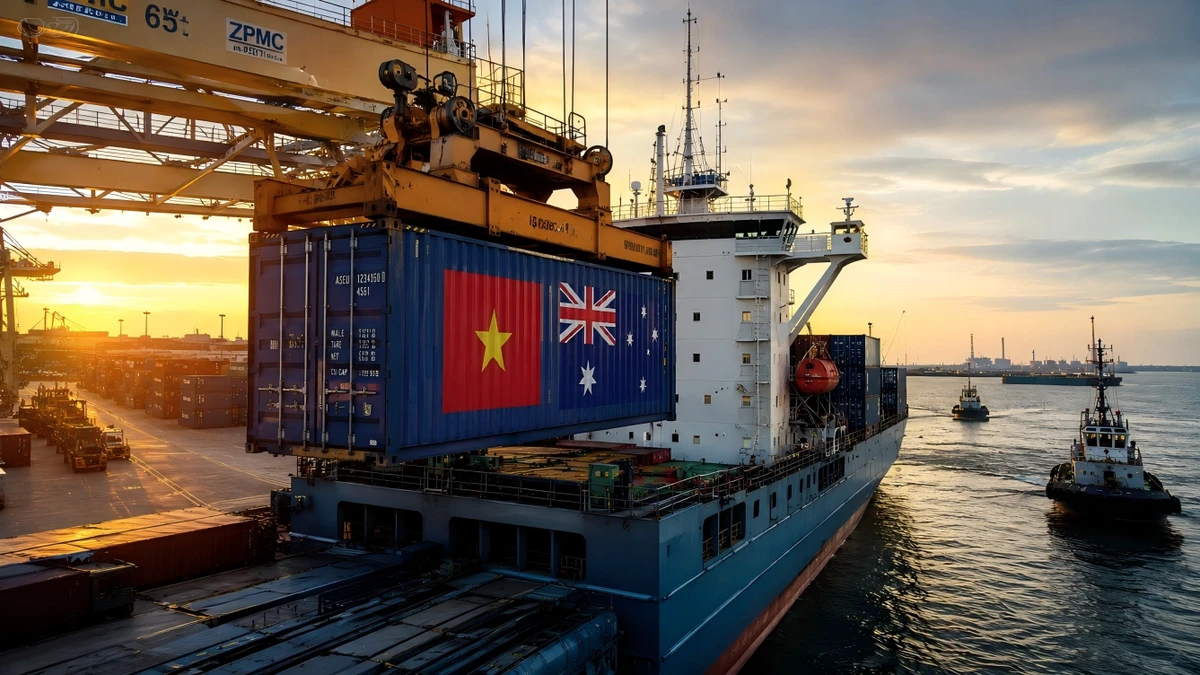
Container shipping from Vietnam to Australia has never been more critical for importers. As Vietnam cements its position as one of Australia’s fastest-growing trading partners, billions of dollars in textiles, furniture, electronics, and seafood cross the South China Sea every year. Yet one misstep—an incorrect HS code, a missing BMSB certificate, or a vague freight quote—can cost Australian importers thousands in delays, demurrage, and unexpected duties.
At VNForwarder, we’ve managed container shipments from Vietnam to Sydney, Melbourne, Brisbane, and Perth since 2018. With on-the-ground operations at Cat Lai, Cai Mep, and Hai Phong, our team clears customs daily and coordinates directly with DAFF-approved treatment facilities. We know from firsthand experience that successful shipping isn’t just about booking a container. It’s about understanding Vietnam’s export regulations, Australia’s strict biosecurity laws, and the true landed cost of every shipment. In this guide, you’ll learn how to choose between FCL and LCL, navigate Australia’s BMSB seasonal measures, leverage AANZFTA duty savings, and calculate your real costs—from a Vietnamese factory floor to your Australian warehouse.
Why Container Shipping From Vietnam to Australia Is Surging
Vietnam has evolved from an emerging manufacturing hub into a top-10 import source for Australia. The country’s competitive labor costs, improving quality standards, and diversified supplier base stretching from Ho Chi Minh City to Hanoi make it an attractive sourcing destination for Australian businesses. Many importers also leverage nearby ASEAN hubs through our shipping from Vietnam to Malaysia service.
The trade relationship is supercharged by three major free trade agreements:
- AANZFTA (ASEAN–Australia–New Zealand Free Trade Agreement): Eliminates or significantly reduces duties on textiles, footwear, furniture, and electronics. According to the Australian Department of Foreign Affairs and Trade, over 96% of Vietnamese goods enter Australia duty-free under this agreement.
- CPTPP (Comprehensive and Progressive Agreement for Trans-Pacific Partnership): Provides additional preferential access for qualifying goods.
- RCEP (Regional Comprehensive Economic Partnership): Creates broader Asia-Pacific tariff advantages for regional supply chains.
For businesses also importing into Europe, VNForwarder offers dedicated shipping from Vietnam to UK and shipping from Vietnam to Germany services with full customs support.
For Australian importers, these agreements represent real money. A properly filed Certificate of Origin (Form AANZ) can reduce or eliminate import duties entirely. Yet many importers unknowingly pay full rates simply because their documentation is incomplete or their forwarder lacks expertise in Vietnam-Australia trade rules. At VNForwarder, we review every client’s product classification and origin documentation to ensure no duty savings are left on the table.
FCL vs. LCL: Choosing the Right Container Shipping Mode
What Is FCL (Full Container Load)?
FCL, or Full Container Load, means you book an entire container exclusively for your cargo. Standard sizes are the 20’ container (capacity ~25–33 CBM) and the 40’ container (capacity ~67–76 CBM). Pricing is a flat rate per container, regardless of whether you fill every cubic meter.
FCL is the best choice when you’re shipping large volumes (typically more than 10–12 CBM), high-value goods, or fragile items that benefit from minimal handling. Because your container is sealed at the factory in Vietnam and opened only at your Australian warehouse, FCL shipping from Vietnam to Australia offers lower handling risk and faster transit times—no consolidation or deconsolidation delays.
What Is LCL (Less Than Container Load)?
LCL, or Less Than Container Load, means your cargo shares container space with shipments from other exporters. You pay per CBM (cubic meter) or per 1,000 kg, whichever is greater. Your goods are consolidated with other cargo at a Container Freight Station (CFS) in Vietnam, shipped together, then separated at the destination CFS in Australia.
LCL shipping from Vietnam to Australia works well for smaller shipments under 10 CBM, sample orders, or businesses testing new Vietnamese suppliers. The trade-off is slightly longer transit times (typically 5–10 additional days for consolidation and deconsolidation) and marginally higher handling risk because your goods are moved more frequently.
The Break-Even Point
The crossover point where FCL becomes cheaper than LCL typically falls between 10 and 12 CBM. Here’s a quick reference:
| Shipment Volume | Recommended Mode | Why |
|---|---|---|
| 1–5 CBM | LCL | Most cost-effective for small volumes |
| 5–10 CBM | LCL or FCL | Compare all-in quotes; LCL surcharges add up |
| 10–15 CBM | FCL (20’) | Usually cheaper than LCL at this threshold |
| 15–30 CBM | FCL (20’ or 40’) | Optimize loading; consider 40’ HC for bulky cargo |
| 30–65 CBM | FCL (40’ HC) | Best per-unit economics for large shipments |
Specialized Container Options
Not all cargo fits neatly into a standard dry container. Depending on what you’re sourcing from Vietnam, you may need:
- 40’ High Cube (HC): Adds approximately one extra foot of height. Ideal for lightweight, bulky cargo like furniture, plastics, and foam products.
- Reefer containers: Temperature-controlled units for Vietnamese seafood, coffee, agricultural products, and pharmaceuticals.
- Flat Rack / Open Top: For oversized machinery, steel beams, or project cargo that won’t fit through standard container doors.
- Hazardous Goods containers: For chemicals, batteries, and restricted cargo requiring IMDG compliance.
Key Ports and Shipping Routes (Vietnam → Australia)
Vietnam Origin Ports
Choosing the right port of loading in Vietnam directly impacts your transit time and inland trucking costs. For a detailed breakdown of ocean freight schedules and rates, see our dedicated guide on sea freight from Vietnam to Australia.
Ho Chi Minh City handles the majority of southern Vietnam’s exports. Within the HCMC region, three terminals matter:
- Cat Lai: The main river terminal. It offers shorter trucking distances from factories in Binh Duong and Dong Nai but has vessel size limitations.
- Cai Mep–Thi Vai: A deepwater port roughly 80 km southeast of HCMC. It accommodates larger mainline vessels and offers more direct services to Australia, though inland haulage is longer and more expensive.
- VICT (Vietnam International Container Terminal): An alternative terminal used by specific carriers.
Hai Phong serves northern Vietnam’s industrial corridor, including Hanoi and Bac Ninh. Lach Huyen is the newer deepwater port capable of handling larger vessels, while Dinh Vu handles regional traffic. If your suppliers are in northern Vietnam, shipping from Hai Phong can save days of inland trucking compared to routing through HCMC.
Da Nang (Tien Sa Port) handles central Vietnam’s lower volumes but is growing as regional manufacturing expands.
Australia Destination Ports
- Sydney (Port Botany): Australia’s largest container port.
- Melbourne (Port of Melbourne): Critical for Victorian distribution networks.
- Brisbane: Primary gateway for Queensland.
- Fremantle (Perth): Western Australia’s main port—shortest transit from Vietnam.
- Adelaide: Smaller volume but direct service available.
Route Strategy Tips
Direct services from Vietnam to Australia typically call at Singapore or Port Klang for transshipment, though some carriers offer direct strings during peak seasons. If speed is critical, ask your forwarder about direct vs. transshipment options. For northern Vietnam suppliers, Hai Phong to Melbourne or Hai Phong to Sydney often makes more sense than trucking cargo 1,700 km south to HCMC.
Container Shipping Transit Times From Vietnam to Australia
Port-to-Port Transit Times
| Route | Direct Service | Transshipment Service |
|---|---|---|
| HCMC → Sydney / Melbourne | 12 – 14 days | 19 – 25 days |
| HCMC → Brisbane | 14 – 16 days | 20 – 26 days |
| HCMC → Fremantle | 10 – 12 days | 18 – 22 days |
| Hai Phong → Sydney / Melbourne | 16 – 18 days | 22 – 28 days |
| Da Nang → Melbourne | ~26 days | — |
Door-to-Door Timelines
Port-to-port times tell only part of the story. A true Door-to-Door service covers the entire journey from your supplier’s factory in Vietnam to your warehouse in Australia. For a complete picture, add:
- Origin: 2–5 days for factory pickup and Vietnam export clearance.
- Destination: 3–7 days for Australian customs clearance, biosecurity inspection (if selected), and cartage to your warehouse.
FCL door-to-door typically ranges from 20 to 30 days. LCL door-to-door adds another 5–10 days due to consolidation and deconsolidation.
Factors That Can Delay Your Shipment
- Peak seasons: Pre-Tet (January/February) and pre-Christmas see tighter equipment and space.
- Transshipment congestion: Hubs like Singapore can add unpredictability.
- Biosecurity holds: Australian DAFF inspections, especially for timber, food, or suspected BMSB risk, can add 2–7 days.
- Documentation errors: Incorrect HS codes or missing certificates trigger manual customs reviews.
Container Shipping Rates and Total Landed Cost Breakdown
Understanding your true landed cost requires looking beyond the ocean freight quote. Cost structures vary significantly by destination—see our breakdown of shipping cost from Vietnam to USA for comparison. Here’s a complete breakdown for the Australia lane.
FCL Ocean Freight Rates (USD, Indicative 2026)
| Port of Loading | Sydney / Melbourne | Brisbane | Fremantle |
|---|---|---|---|
| HCMC (20’ DC) | $650 – $950 | $700 – $1,000 | $600 – $900 |
| HCMC (40’ DC/HC) | $1,100 – $1,600 | $1,200 – $1,700 | $1,000 – $1,500 |
| Hai Phong (20’ DC) | $850 – $1,150 | — | — |
| Hai Phong (40’ DC/HC) | $1,400 – $1,900 | — | — |
Rates fluctuate based on BAF (Bunker Adjustment Factor), CAF (Currency Adjustment Factor), peak season surcharges, and equipment availability.
Note: All rates shown above are indicative benchmarks for 2026 based on current market conditions. Your actual quote may vary depending on commodity type, container availability, and booking timing.
LCL Ocean Freight Rates (USD per CBM)
| Route | Rate per CBM | Minimum Charge |
|---|---|---|
| HCMC → Sydney / Melbourne | $10 – $25 | 1 CBM |
| HCMC → Brisbane | $12 – $30 | 1 CBM |
| HCMC → Fremantle / Adelaide | $15 – $35 | 1 CBM |
| Hai Phong / Da Nang → Sydney / Melbourne | $20 – $40 | 1 CBM |
Essential LCL Surcharges
| Surcharge | Typical Cost |
|---|---|
| THC (Terminal Handling Charge) | ~$7 – $10 / CBM |
| CFS Fee (Container Freight Station) | ~$7 – $12 / CBM |
| Documentation Fee | $35 – $50 / set |
| LSS (Low Sulphur Surcharge) | $3 – $6 / CBM |
Vietnam Local Export Charges (FCL)
These charges are often excluded from basic port-to-port quotes but are unavoidable:
| Charge | 20’ Container (VND) | 40’ Container (VND) |
|---|---|---|
| THC | ~3,200,000 | ~4,800,000 |
| Bill of Lading Fee | ~1,065,000 | ~1,065,000 |
| VGM Administration | ~562,500 | ~562,500 |
| Seal Fee | ~240,000 | ~240,000 |
| Telex Release | ~800,000 | ~800,000 |
Australian Destination Charges
- Port handling and terminal charges.
- Customs clearance and processing fees.
- GST: 10% on (goods value + freight + insurance + duty).
- Import duty (typically 5% if not AANZFTA-eligible).
- Cartage from port to warehouse.
BMSB Treatment Costs
If your cargo requires BMSB treatment, budget $200–$300+ per container for heat treatment or fumigation by a DAFF-approved provider. Minimum job charges often apply, making small LCL shipments proportionally more expensive.
Why DDP Quotes Eliminate Cost Surprises
A DDP (Delivered Duty Paid) quote rolls every cost—origin charges, ocean freight, Australian customs clearance, GST, duties, and final delivery—into a single figure. This is radically different from a port-to-port quote, which can leave you exposed to thousands in unexpected destination fees.
At VNForwarder, we provide all-in DDP shipping from Vietnam to Australia with transparent pricing and no hidden fees. Our quotes include every line item so you know your true landed cost before your cargo ever leaves the factory.
The Vietnam Export Process: What Happens on the Ground
Export Customs Clearance in Vietnam
Vietnam’s export clearance typically takes 1 to 3 working days for standard cargo. In our experience, most Australian-bound shipments clear through the green channel (automatic clearance without inspection), but risk-based profiling can flag containers for yellow channel (document review) or red channel (physical inspection). The process involves:
- Pre-export inspection booking (if required by commodity).
- Electronic customs declaration submission through Vietnam’s customs system.
- VGM (Verified Gross Mass) verification—mandatory under SOLAS regulations.
- Physical inspection (random or risk-based selection).
- Customs release and container gating into the terminal.
Terminal Selection: Cat Lai vs. Cai Mep–Thi Vai
For Australian-bound cargo from southern Vietnam, the terminal choice matters:
- Cat Lai is closer to Binh Duong and Dong Nai manufacturing zones, reducing trucking costs. However, larger vessels cannot berth here, so cargo may need feeder transshipment to Cai Mep.
- Cai Mep–Thi Vai accommodates mainline vessels with direct strings to Australia. The trade-off is longer trucking distances and higher inland costs.
At VNForwarder, we advise clients based on carrier schedules, cargo urgency, and total cost optimization—not just the cheapest trucking quote.
Critical 2025 Update: Vietnam Mandatory ID Requirement
Effective January 2025, Circular No. 29/2025/TT-BTC mandates that every export and import shipment in Vietnam must include an official identification number:
- Individuals: Personal ID number.
- Businesses: Registered Business Tax ID.
Both the sender and receiver must ensure these details match shipment and account records exactly. Australian importers who fail to provide accurate IDs—or whose Vietnamese suppliers use mismatched documentation—face immediate customs delays, cargo holds, or penalties. This applies to all goods moving to and from Vietnam, including container shipments to Australia.
Practical tip: Before confirming your first shipment, ask your Vietnamese supplier for their official Business Registration Certificate number and verify it matches all invoices and customs declarations.
Tet Holiday Peak Season Planning
Tet, the Vietnamese New Year (typically late January or early February), is the most disruptive period in Vietnam’s shipping calendar. Factories close for 1–2 weeks, container availability tightens, and trucking capacity drops sharply. Carrier space books out 3–4 weeks in advance.
If your Australian inventory cycle depends on post-Tet replenishment, plan your bookings by early December. At VNForwarder, we maintain pre-Tet space allocations with major carriers to protect our clients from peak-season disruption.
Australian Import Compliance: Biosecurity, BMSB, and Customs
Understanding Australia’s Strict Biosecurity Laws
Australia maintains some of the world’s strictest biosecurity controls. Two agencies oversee your container’s entry:
- DAFF (Department of Agriculture, Fisheries and Forestry): Enforces biosecurity and quarantine measures.
- ABF (Australian Border Force): Manages customs clearance, duty collection, and prohibited goods screening.
Before shipping, every importer should check the BICON (Biosecurity Import Conditions) database to verify whether their specific product requires permits, inspections, or treatment. Skipping this step is a common cause of costly border delays.
BMSB (Brown Marmorated Stink Bug): The Complete Guide
BMSB is Australia’s seasonal biosecurity measure targeting the invasive Brown Marmorated Stink Bug. Administered by DAFF under the Biosecurity Act 2015, it applies based on the shipped-on-board date from 1 September to 30 April each year.
Is Vietnam a target-risk country?
This is where many importers get confused. Vietnam is generally not listed as a primary BMSB target-risk country. If your goods are manufactured in Vietnam and shipped directly from Vietnam, they typically do not fall under mandatory seasonal BMSB treatment rules solely because of their Vietnam origin.
However, BMSB rules do apply in these scenarios:
- Your goods originated from a target-risk country (e.g., USA, Europe, Japan) and are merely transshipping through Vietnam.
- Your cargo is consolidated with goods from target-risk countries in a shared container.
- You cannot prove your goods have been stored and secured in Vietnam outside the target-risk supply chain.
Target high-risk goods include vehicles, machinery, electronics, and—critically for many Australian importers—furniture with timber components. If you’re importing wooden furniture from Vietnam during BMSB season, Australian authorities may still flag your shipment for inspection based on commodity type and packaging materials.
Treatment options: Heat treatment or fumigation must be performed by a DAFF-approved provider. Costs typically run $200–$300+ per container, with minimum charges around $200 per job. Treatment must often be completed within a valid window before export—sometimes within 120 hours of loading.
Consequences of non-compliance: Fines exceeding $1,000 AUD, onshore re-treatment at your expense, demurrage and storage fees, cargo delay, return, or even destruction.
At VNForwarder, we coordinate DAFF-approved BMSB treatment directly at our Vietnam consolidation warehouses for clients shipping high-risk commodities. By treating cargo before container loading, we eliminate the risk of Australian border holds.
GST and Import Duties
Even if your goods enter duty-free under AANZFTA, you still pay GST:
- GST: 10% on (customs value of goods + international freight + insurance + import duty).
- Import duty: Typically 5% of goods value if AANZFTA does not apply.
- Customs processing fees: A$113 for sea freight shipments valued at $10,000 or less; A$215 for shipments above $10,000.
AANZFTA and Certificate of Origin
Claiming AANZFTA duty benefits requires three things to align perfectly:
- Genuine Vietnamese origin: Most manufactured products qualify, but goods merely assembled in Vietnam from imported components may not meet rules of origin.
- Valid Certificate of Origin: Your Vietnamese supplier must obtain Form AANZ from an authorized Vietnamese body.
- Correct customs entry: Your customs broker must declare the AANZFTA preference on the import entry.
Many importers pay full duties on goods that qualify for zero or reduced rates simply because one of these three requirements is missing. At VNForwarder, we review Certificate of Origin applications before shipment to catch errors that would cost you at the Australian border.
Required Documents: The Complete Checklist
Vietnam Export Documents
- [ ] Commercial Invoice (seller/buyer details, goods description, HS codes, values, Incoterms)
- [ ] Packing List (carton counts, weights, dimensions)
- [ ] Bill of Lading (B/L) or Sea Waybill
- [ ] Vietnam Customs Declaration
- [ ] Certificate of Origin (Form AANZ for AANZFTA benefits)
- [ ] Export License (for restricted goods such as timber or minerals)
- [ ] VGM (Verified Gross Mass) Declaration
- [ ] Fumigation Certificate (for wooden packaging; ISPM 15 compliant)
Australia Import Documents
- [ ] Import Declaration (submitted via the Integrated Cargo System, ICS)
- [ ] Packing Declaration (required for sea freight)
- [ ] BMSB Treatment Certificate (if applicable)
- [ ] DAFF Import Permit (for food, timber, chemicals, and other regulated products)
- [ ] Certificate of Origin (for AANZFTA/CPTPP/RCEP claims)
Pro Tips to Avoid Documentation Delays
First, ensure shipping labels match your documentation exactly—discrepancies trigger manual inspections. Second, use accurate HS codes on your commercial invoice; incorrect classification causes delays and unexpected duties. Third, verify your supplier’s business registration matches Vietnam’s new 2025 mandatory ID requirement. Finally, request your Certificate of Origin at least two weeks before shipment to avoid last-minute scrambling.
Incoterms 2020 for Vietnam to Australia Shipping: Which One Should You Choose?
EXW (Ex Works)
Under EXW, the buyer is responsible for absolutely everything from the factory door in Vietnam to the final Australian warehouse. This gives you maximum control but requires deep logistics expertise and reliable partners in Vietnam.
FOB (Free on Board)
With FOB, your Vietnamese supplier delivers the goods to the port and loads them onto the vessel. You pay for ocean freight, insurance, and all Australian-side costs. FOB works well if you have an established relationship with a freight forwarder who can handle the international leg efficiently.
CIF (Cost, Insurance, and Freight)
CIF means the supplier covers freight and insurance to the Australian port. Caution: this sounds convenient, but inexperienced importers often get surprised by destination port charges, customs fees, and delivery costs that aren’t included in the supplier’s quote.
DDP (Delivered Duty Paid)
DDP is the most hands-off option. Your forwarder handles pickup in Vietnam, ocean freight, Australian customs clearance, GST and duty payment, and final delivery to your warehouse. For SMEs without in-house customs brokers, or first-time importers from Vietnam, DDP removes compliance risk and provides cost certainty.
At VNForwarder, we specialize in DDP shipping from Vietnam to Australia. Our all-in quotes cover every cost component with transparent line items—delivered within 2 to 4 hours of your request. That said, DDP is not always the cheapest option. If you have an experienced customs broker in Australia and prefer to manage GST and duty payments directly, FOB or CIF can reduce your total landed cost by 5–10% in some cases.
DDU (Delivered Duty Unpaid)
DDU is similar to DDP, but you pay GST and import duties at the Australian destination rather than having them prepaid by the forwarder. This works for importers who prefer to manage their own Australian tax obligations or who have existing GST arrangements.
Industry-Specific Shipping Tips
Furniture and Wood Products
Timber furniture faces the highest BMSB risk during the September–April season. All wooden packaging must be ISPM 15 compliant, and a heat treatment or fumigation certificate is mandatory. For lightweight, bulky furniture, a 40’ High Cube container maximizes volume efficiency. At VNForwarder, we’ve helped dozens of Australian furniture retailers navigate BMSB season without a single border hold. We also manage regular shipping from Vietnam to USA and shipping from Vietnam to Canada for wood product exporters.
Textiles and Garments
Vietnam is one of the world’s largest apparel exporters, and AANZFTA offers significant duty savings for qualifying garments. However, rules of origin are strict—fabric sourced from China and merely cut-and-sewn in Vietnam may not qualify. For fashion importers with smaller, frequent orders, LCL consolidation with weekly sailings provides flexibility without tying up capital in full containers.
Seafood and Agricultural Products
Vietnamese shrimp, fish, coffee, and cashews are in high demand across Australia. These products require reefer containers with precise temperature settings. Additionally, DAFF import permits and health certificates are mandatory. The fastest route is typically HCMC direct to Sydney or Melbourne.
Electronics and Machinery
Electronics and machinery benefit from CPTPP tariff advantages when qualifying components meet origin requirements. For high-value shipments, marine insurance is strongly recommended. VNForwarder also coordinates shipping from Vietnam to South Korea for component supply chains. Oversized machinery may require flat-rack or open-top containers with special lashing and routing.
Real-World Case Studies: How VNForwarder Delivers Results
Case Study 1: Melbourne Furniture Importer Saves 12% With DDP
A Melbourne-based furniture retailer was importing timber dining sets from a factory in Binh Duong Province. Their previous forwarder provided port-to-port quotes only, leaving the client exposed to a cascade of unexpected costs: Australian port handling fees, GST calculation errors, and a costly BMSB hold during a September shipment.
VNForwarder stepped in with an all-in DDP quote within two hours. We coordinated DAFF-approved BMSB heat treatment at our Vietnam warehouse before the container was ever loaded. By analyzing their shipment history, we also identified that the client was consistently shipping 18–22 CBM via LCL—well past the FCL break-even point. We switched them to a 40’ High Cube container, reducing their per-unit shipping cost significantly. Finally, we managed their AANZFTA Certificate of Origin to eliminate import duties entirely.
The result: a 12% reduction in total landed cost, zero border delays, and delivery to their Melbourne warehouse 22 days from factory pickup.
Case Study 2: Sydney Amazon FBA Seller Masters Weekly LCL
An e-commerce seller based in Sydney was sourcing textiles from four separate suppliers near Hanoi. Each supplier shipped independently via LCL, creating inconsistent delivery times, duplicated documentation fees, and excessive handling damage from multiple consolidation cycles.
VNForwarder consolidated the client’s supply chain with a weekly LCL service out of Hai Phong Port. We collected cargo from all four suppliers into our northern Vietnam warehouse, performed unified export customs clearance under a single shipper, and booked direct LCL service to Sydney. At origin, we also applied Amazon FBA-compliant labeling and palletization to ensure smooth receiving at Amazon’s fulfillment center.
The result: handling damage dropped by 30%, the client gained a predictable weekly replenishment cycle, and consolidated documentation reduced their administrative overhead by hours every week.
Common Mistakes to Avoid When Shipping From Vietnam to Australia
- Ignoring BMSB seasonality (September–April) for timber and wood products.
- Incomplete documentation causing customs delays, holds, or penalties.
- Wrong HS code classification leading to overpaid duties or rejected AANZFTA claims.
- Choosing the wrong Incoterm without understanding hidden destination costs.
- Underutilizing FCL containers when your volume exceeds the 10–12 CBM break-even point.
- Missing Tet Holiday planning and getting caught in peak-season surcharges and container shortages.
- Not verifying Vietnam’s 2025 mandatory ID requirement with your suppliers before the first shipment.
- Skipping marine insurance on high-value electronics, furniture, or machinery.
FAQ: Container Shipping From Vietnam to Australia
How long does container shipping take from Vietnam to Australia?
Port-to-port transit ranges from 10–12 days (HCMC to Fremantle, direct) to 16–18 days (Hai Phong to Sydney/Melbourne). Door-to-door timelines typically add 10–15 days for origin and destination processes.
What are the current container shipping rates from Vietnam to Australia?
Indicative FCL rates from HCMC to Sydney/Melbourne range from $650–$950 for a 20’ container and $1,100–$1,600 for a 40’ container. LCL rates typically run $10–$25 per CBM from HCMC to Sydney/Melbourne.
Does Vietnam require BMSB treatment for goods shipped to Australia?
Goods genuinely manufactured and shipped directly from Vietnam generally do not require mandatory BMSB treatment. However, BMSB rules apply if your cargo originated from a target-risk country, is consolidated with goods from target-risk countries, or falls into high-risk commodity categories like timber furniture.
What documents do I need to ship from Vietnam to Australia?
Essential documents include the Commercial Invoice, Packing List, Bill of Lading, Certificate of Origin, Vietnam Customs Declaration, and Australian Import Declaration. Depending on your commodity, you may also need DAFF permits, BMSB treatment certificates, or fumigation certificates.
What is the cheapest way to ship a container from Vietnam to Australia?
For shipments under 10 CBM, LCL is usually cheapest. For shipments over 10–12 CBM, a 20’ FCL container often becomes more economical. Booking early and shipping during off-peak periods also reduces costs.
Should I choose DDP or FOB for my Vietnam imports?
Choose FOB if you have an established freight forwarder and want control over the ocean freight leg. Choose DDP if you prefer a single all-in price covering everything from factory pickup to Australian warehouse delivery—ideal for SMEs without in-house customs expertise.
Do I need an import permit for Vietnamese goods entering Australia?
Certain goods require DAFF import permits, including food, timber, chemicals, and pharmaceuticals. Always check the BICON database before shipping.
Can I ship perishable goods like seafood from Vietnam to Australia?
Yes, but you’ll need a reefer container with precise temperature control, plus DAFF import permits and health certificates.
What is AANZFTA and how does it save me money?
The ASEAN–Australia–New Zealand Free Trade Agreement eliminates or reduces import duties on many Vietnamese goods. To claim benefits, you need a valid Certificate of Origin and correct customs declaration.
How do I choose between FCL and LCL shipping?
FCL is best for shipments over 10–12 CBM or when you want minimal handling. LCL is ideal for smaller volumes, sample orders, or businesses testing new suppliers.
What is Vietnam’s new 2025 export ID requirement?
Circular No. 29/2025/TT-BTC mandates that every export shipment include an official identification number. Businesses must provide their Registered Business Tax ID. Mismatched IDs cause immediate customs delays.
How does VNForwarder differ from other freight forwarders on this route?
We’re based in Vietnam with operations at Cat Lai, Cai Mep, and Hai Phong. We provide all-in DDP quotes within 2–4 hours, coordinate DAFF-approved BMSB treatment at origin, and manage AANZFTA documentation to maximize your duty savings.
Conclusion: Your Next Step
Container shipping from Vietnam to Australia offers enormous cost advantages for Australian importers—but only when you get the details right. Choosing between FCL and LCL, understanding BMSB compliance, securing AANZFTA documentation, and planning around Vietnam’s export calendar are not optional extras. They are the fundamentals that separate smooth, profitable imports from expensive surprises at the border.
Working with a forwarder who operates on the ground in Vietnam eliminates the guesswork. You get accurate quotes, compliant documentation, and proactive problem-solving before your cargo ever reaches the port.
Get your all-in DDP quote from VNForwarder within 2–4 hours. Our dedicated account managers handle everything from factory pickup in Vietnam to final delivery at your Australian warehouse—transparent pricing, no hidden fees, and 24⁄7 support.
Disclaimer: This guide is for informational purposes only. Shipping rates, regulations, and compliance requirements change frequently. Always verify current rules with your freight forwarder or the relevant customs authorities before booking.