

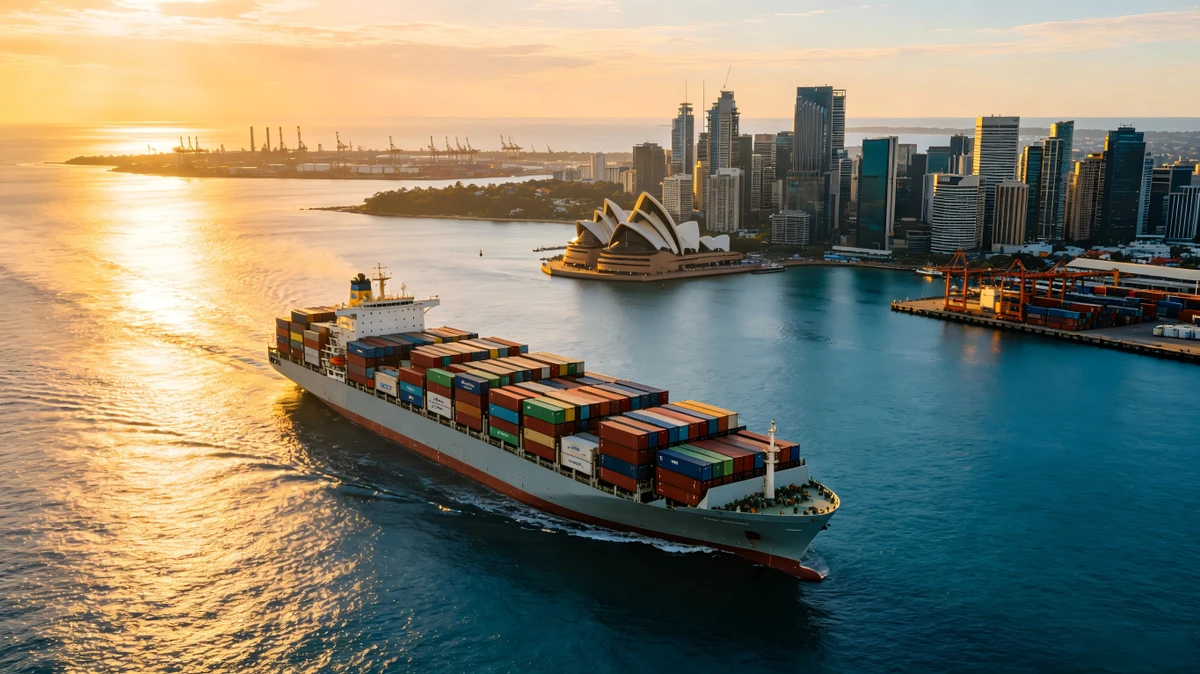
Sea freight from Vietnam to Australia remains the backbone of bilateral trade between these two Asia-Pacific partners. With record-breaking trade volumes and manufacturing continuing to shift from China to Vietnam, Australian importers are shipping more containers than ever from ports like Cat Lai and Hai Phong. Yet most buyers still struggle with the same three problems: opaque pricing that balloons at destination, unexpected biosecurity holds that cost thousands, and documentation gaps that delay shipments for weeks. From our office in Ho Chi Minh City, VNForwarder helps importers across Sydney, Melbourne, Brisbane, and beyond navigate every step — with transparent quotes in 2–4 hours, no hidden fees, and a Dedicated Account Manager who knows both sides of the trade. In this guide, you will learn exactly how to choose between FCL and LCL, what BMSB compliance really means for your cargo, how to calculate your true landed cost, and when DDP Door-to-Door shipping saves you money over FOB.
| At a Glance: Sea Freight from Vietnam to Australia | |
|---|---|
| Fastest Route | HCMC → Fremantle: 10–12 days (direct) |
| Most Popular Route | HCMC → Sydney / Melbourne: 12–14 days (direct) |
| Indicative FCL Rate (20’ DC) | $650–$950 from HCMC to Sydney/Melbourne |
| Indicative FCL Rate (40’ HC) | $1,100–$1,600 from HCMC to Sydney/Melbourne |
| Indicative LCL Rate | $10–$40 per CBM depending on route |
| Door-to-Door Timeline | 20–35 days total |
| Best For | Bulk goods, furniture, textiles, machinery, FBA inventory |
| Biggest Compliance Risk | BMSB seasonal measures (Sept 1 – Apr 30) |
FCL vs. LCL Shipping from Vietnam to Australia: Which Option Fits Your Cargo?
Choosing the right container option is the first decision that determines your cost, timeline, and risk exposure. The wrong choice can mean paying for empty container space — or watching your LCL shipment get delayed because another shipper’s cargo failed biosecurity inspection.
What Is FCL (Full Container Load)?
FCL, or Full Container Load, means your goods occupy an entire shipping container exclusively. You pay a flat rate for the container regardless of whether you fill it completely.
Standard equipment available from Vietnam includes:
| Container Type | Internal Dimensions | Typical Cargo |
|---|---|---|
| 20’ DC (Dry Container) | 5.9m × 2.35m × 2.39m | Small-to-medium volumes, dense cargo |
| 40’ DC (Dry Container) | 12.03m × 2.35m × 2.39m | Large volumes, standard palletized goods |
| 40’ HC (High Cube) | 12.03m × 2.35m × 2.69m | Light-but-bulky cargo (furniture, textiles) |
| Flat Rack | Collapsible ends, no roof | Oversized machinery, vehicles, project cargo |
| Open Top | Removable tarp roof | Heavy cargo loaded from above |
FCL makes sense when your shipment exceeds approximately 10–12 CBM (cubic meters). Beyond this threshold, the per-unit cost of FCL typically beats LCL once you factor in consolidation fees, deconsolidation charges, and the extra handling time.
At VNForwarder, our direct contracts with Maersk, MSC, ONE, and COSCO provide rate stability and space protection even during peak season. When Tet Holiday approaches and container availability tightens, these relationships mean your booking is honored.
What Is LCL (Less than Container Load)?
LCL, or Less than Container Load, means your cargo shares container space with shipments from other exporters. You pay only for the volume (CBM) or weight you use, whichever is greater under the W/M (Weight or Measure) rule.
LCL is the smart choice for:
- Sample shipments and trial orders
- Spare parts and after-sales inventory
- E-commerce restocks under 10 CBM
- Buyers consolidating orders from multiple Vietnam suppliers
VNForwarder operates consolidation warehouses in Ho Chi Minh City and Hai Phong. Instead of managing separate small shipments from multiple suppliers, we combine your cargo at our facility, handle unified export customs clearance, and deliver a single consolidated shipment to your Australian distribution center. This approach cuts handling costs and reduces the risk of one supplier’s documentation error delaying your entire order.
FCL vs. LCL Decision Matrix
| Factor | FCL | LCL |
|---|---|---|
| Best Volume | ≥ 10–12 CBM | < 10 CBM |
| Pricing Model | Flat rate per container | Per CBM or W/M |
| Transit Time | Faster (no consolidation) | 3–7 days longer |
| Security | Exclusive use, sealed at factory | Mixed with other cargo |
| Flexibility | Fixed container size | Pay only for space used |
| BMSB Risk | Container-level control | One high-risk shipment affects entire container |
| Best For | Bulk orders, fragile goods, time-sensitive cargo | Small volumes, multi-supplier consolidation |
Pro Tip: If your shipment is larger than 10–12 CBM, a 20’ FCL is almost always cheaper than LCL once THC, CFS, and documentation surcharges are included.
Major Ports and Shipping Routes: Vietnam to Australia
Understanding your port options on both ends of the lane helps you optimize inland trucking costs, sailing frequency, and total transit time.
Vietnam Export Gateways
| Port | Location | Best For | Notable Features |
|---|---|---|---|
| Cat Lai Port | Ho Chi Minh City | Southern Vietnam manufacturing | Largest container port in Vietnam; frequent sailings |
| Cai Mep | Vung Tau (near HCMC) | Deep-draft vessels, FCL bulk | Deep-water port accommodating mega-vessels |
| Lach Huyen | Hai Phong | Northern Vietnam (electronics, textiles) | Modern deep-water terminal; closest to Hanoi manufacturing |
| Dinh Vu | Hai Phong | General cargo, breakbulk | Older terminal with specialized handling |
| Tien Sa Port | Da Nang | Central Vietnam (furniture, agriculture) | Gateway for Binh Dinh and Quang Nam provinces |
| Qui Nhon | Binh Dinh | Niche central Vietnam cargo | Alternative for specific manufacturing clusters |
Most Australian-bound cargo departs from Ho Chi Minh City (Cat Lai/Cai Mep) or Hai Phong (Lach Huyen). If your suppliers are concentrated in Binh Duong or Dong Nai provinces, Cat Lai offers the shortest inland trucking distance. For suppliers near Hanoi or Hai Phong, Lach Huyen is the natural choice.
Australian Ports of Entry
| Port | State | Capacity | Typical Vietnam Transit |
|---|---|---|---|
| Port Botany (Sydney) | NSW | Primary NSW container terminal | 12–14 days direct from HCMC |
| Port of Melbourne | Victoria | Australia’s largest container port | 12–14 days direct from HCMC |
| Port of Brisbane | Queensland | Queensland gateway | 14–16 days direct from HCMC |
| Fremantle (Perth) | Western Australia | WA primary gateway | 10–12 days direct from HCMC |
| Port Adelaide | South Australia | SA niche port | 16–20 days via transshipment |
Direct vs. Transshipment Services
Not all sailings from Vietnam to Australia are direct. Many carriers route through hub ports like Singapore, Port Klang (Malaysia), or Yantian (China).
| Service Type | Transit Time | Best For | Trade-offs |
|---|---|---|---|
| Direct | 10–14 days from HCMC | Time-sensitive cargo, perishables, FBA restocks | Higher freight rate; fewer sailing options |
| Transshipment | 19–28 days from HCMC | Cost-sensitive bulk orders, non-urgent inventory | Lower rate; risk of hub congestion delays |
At VNForwarder, we analyze your cargo urgency, budget, and inventory cycle before recommending direct or transshipment. For furniture importers building stock for the Australian spring season, transshipment often saves 10–20% with no business impact. For Amazon FBA sellers facing stockout risk, direct service is usually worth the premium. If your timeline cannot tolerate a 12-day ocean transit, our air freight service from Ho Chi Minh City to Sydney or Melbourne delivers in 3–7 days — ideal for emergency restocks or product launches.
How Long Does Sea Freight Take from Vietnam to Australia?
Transit time is never just “port to port.” It is the sum of every handoff from your supplier’s factory floor to your warehouse door.
Port-to-Port Transit Times by Route
| Route | Direct Service | Transshipment Service |
|---|---|---|
| HCMC → Sydney / Melbourne | 12–14 days | 19–25 days |
| HCMC → Brisbane | 14–16 days | 20–26 days |
| HCMC → Fremantle | 10–12 days | 18–22 days |
| Hai Phong → Sydney / Melbourne | 16–18 days | 22–28 days |
| Da Nang → Sydney / Melbourne | N/A (transshipment only) | 18–22 days |
These figures reflect typical sailing schedules. Actual vessel arrival can shift by 1–3 days due to weather, port congestion, or carrier schedule adjustments.
Door-to-Door: Where the Time Really Goes
When an importer asks, “How long will my shipment take?” they usually mean door-to-door. Here is the realistic breakdown:
| Stage | Duration | What Happens |
|---|---|---|
| Factory Pickup | 1–3 days | VNForwarder arranges trucking from supplier to port warehouse |
| Export Customs (Vietnam) | 1–2 days | Vietnam Customs declaration, inspection if flagged |
| Port Loading & Departure | 1–2 days | Container stuffing, vessel loading, sailing |
| Ocean Transit | 12–18 days | Port-to-port sailing time |
| Australian Customs & Biosecurity | 1–5 days | ABF clearance, BMSB verification, random inspection |
| Final Delivery | 1–3 days | Cartage from port to your warehouse or Amazon FC |
| Total Door-to-Door | 20–35 days | Varies by route, Incoterms, and inspection rates |
Important: BMSB season shipments (September 1 – April 30) can add 2–5 days if documentation requires additional verification. Random Australian Border Force inspections — which occur on approximately 5–10% of commercial shipments — can extend customs clearance by 3–7 days.
What Delays Your Shipment
- Tet Holiday (January–February): Factory closures, driver shortages, and blank sailings can add 1–2 weeks.
- Peak Season (July–October): Christmas inventory rush causes port congestion and space shortages.
- Documentation Errors: Incorrect HS codes, missing Packing Declarations, or mismatched Commercial Invoices trigger holds.
- Weather Events: Typhoons in the South China Sea or severe storms near Australian ports cause schedule disruptions.
Sea Freight Costs from Vietnam to Australia Explained
The most common mistake we see from Australian importers is comparing a port-to-port ocean freight quote against a competitor’s door-to-door DDP quote. They are not the same thing. Here is how to understand what you actually pay.
Indicative FCL Container Rates (2026)
The following rates are indicative baseline ocean freight only. Final quotes depend on cargo weight, dimensions, seasonality, fuel surcharges, and specific carrier availability.
| Port of Loading | Destination | 20’ DC | 40’ DC / 40’ HC |
|---|---|---|---|
| Ho Chi Minh (Cat Lai) | Sydney / Melbourne | $650 – $950 | $1,100 – $1,600 |
| Ho Chi Minh (Cat Lai) | Brisbane | $700 – $1,000 | $1,200 – $1,700 |
| Ho Chi Minh (Cat Lai) | Fremantle | $600 – $900 | $1,000 – $1,500 |
| Hai Phong (Lach Huyen) | Sydney / Melbourne | $850 – $1,150 | $1,400 – $1,900 |
| Da Nang (Tien Sa) | Sydney / Melbourne | $800 – $1,100 | $1,350 – $1,850 |
Note: These are indicative port-to-port rates. All-in door-to-door pricing includes origin charges, destination fees, customs clearance, and delivery. Request a transparent, itemized quote from VNForwarder for your specific shipment.
Indicative LCL Rates per CBM
| Route | Rate per CBM | Minimum Charge |
|---|---|---|
| HCMC → Sydney / Melbourne | $10 – $25 | 1 CBM |
| HCMC → Brisbane | $12 – $30 | 1 CBM |
| HCMC → Adelaide / Fremantle | $15 – $35 | 1 CBM |
| Hai Phong / Da Nang → Sydney / Melbourne | $20 – $40 | 1 CBM |
| Hai Phong / Da Nang → Brisbane / Adelaide | $25 – $45 | 1 CBM |
Essential LCL surcharges to factor in:
| Surcharge | Typical Cost | Description |
|---|---|---|
| THC (Terminal Handling Charge) | $7 – $10 / CBM | Port handling at origin and destination |
| CFS Fee | $7 – $12 / CBM | Container Freight Station consolidation/deconsolidation |
| Documentation Fee | $35 – $50 / set | Bill of Lading and export/import paperwork |
| LSS (Low Sulphur Surcharge) | $3 – $6 / CBM | Environmental fuel compliance surcharge |
Landed Cost Calculator: What You Actually Pay
Your true cost is never just the ocean freight rate. Here is the complete breakdown for a typical DDP shipment:
| Cost Component | Typical Range | Notes |
|---|---|---|
| Origin Pickup | $50 – $200 | Factory to port (varies by distance) |
| Vietnam Export Customs | $50 – $100 | Documentation and clearance fees |
| Ocean Freight (FCL) | $600 – $1,900 | Depends on route and container size |
| Fuel Surcharge (BAF) | 5–15% of freight | Fluctuates with oil prices |
| Australian Import Duty | ~0–5% | Reduced or eliminated under AANZFTA with valid C/O |
| Australian GST | 10% | Applied to goods value + freight + insurance + duty |
| Customs Clearance Fee | $150 – $300 | Brokerage and processing |
| Australian Port Charges | $200 – $400 | THC, quarantine handling, terminal fees |
| Final Delivery (Cartage) | $150 – $500 | Port to warehouse; varies by distance |
| Cargo Insurance | 0.3–0.5% of CIF value | Optional but recommended for high-value goods |
Real-World Example: Furniture Shipment DDP to Sydney
A Melbourne-based furniture retailer imports a 40’ HC container of dining sets from a factory in Binh Duong Province. Under DDP shipping from Vietnam to Australia, VNForwarder handles factory pickup, Vietnam export customs, ocean freight to Port Botany, BMSB treatment coordination, Australian import clearance, GST payment, and final delivery to their Melbourne warehouse. The all-in landed cost is approximately \(4,200–\)4,800, with every line item disclosed upfront. No surprises at destination.
Real-World Example: Textiles LCL to Melbourne
A Sydney e-commerce brand sources 3 CBM of textiles from two suppliers near Hanoi. VNForwarder consolidates both orders at our Hai Phong warehouse, handles unified export customs, and ships LCL to Melbourne. Door-to-door cost: approximately \(380–\)520 including freight, THC, CFS, customs clearance, GST, and delivery. Split across two suppliers, this is significantly cheaper than two separate LCL bookings.
The Cheapest Way to Ship from Vietnam to Australia
“Cheapest” depends on your constraints:
- Low volume, no rush: LCL with transshipment service.
- Medium volume (10–15 CBM): 20’ FCL direct if schedule allows; otherwise transshipment FCL.
- High volume, time-sensitive: 40’ HC direct service with locked-in rates.
- Multi-supplier orders: Consolidate through VNForwarder’s Vietnam warehouse before booking FCL.
The real savings come from avoiding hidden costs. A quote that looks \(200 cheaper port-to-port can become \)800 more expensive if it excludes destination THC, GST handling, or BMSB certificate preparation. For a trans-Pacific cost comparison, read our detailed guide on Shipping Cost from Vietnam to USA.
Disclaimer: All rates, transit times, and compliance requirements in this guide are indicative averages based on 2026 market conditions and current Australian regulations. Actual costs depend on cargo specifications, carrier availability, fuel surcharges, seasonal demand, and inspection outcomes. For a binding, itemized quote tailored to your shipment, contact VNForwarder.
BMSB Compliance: The #1 Mistake That Delays Vietnam-to-Australia Shipments
If you ship furniture, wood products, machinery, or vehicles from Vietnam to Australia, BMSB (Brown Marmorated Stink Bug) compliance is not optional — and getting it wrong is expensive.
What Is BMSB and Why Does It Matter?
The Brown Marmorated Stink Bug (BMSB) is an invasive pest that poses a severe threat to Australian agriculture. The Australian Department of Agriculture, Fisheries and Forestry (DAFF) enforces strict seasonal measures to prevent its entry. Vietnam is classified as a target risk country, which means cargo containing target risk goods must undergo mandatory offshore treatment before arrival.
For importers, this matters because:
- Untreated break bulk cargo faces export on arrival — at your expense.
- Untreated containerized cargo requires onshore treatment or directed export.
- Documentation errors can attract fines up to AUD $110,000.
If you ship furniture from Vietnam to Australia during BMSB season without proper treatment and certification, your cargo will not clear customs. It is that simple.
BMSB Season Dates and Target Risk Goods
| Detail | Requirement |
|---|---|
| Season Dates | September 1 – April 30 (annually) |
| Target Risk Goods | Furniture, machinery, vehicles, textiles with wooden components, ceramic tiles, steel products (specific HS codes apply) |
| Affected Container Types | Break bulk, open top, flat rack, modified FCL |
| LCL Critical Rule | One high-risk LCL shipment makes the entire container high-risk |
The LCL rule is particularly important. If your textiles share a container with another shipper’s untreated wooden furniture, the entire container can be flagged for inspection or treatment. This is why VNForwarder performs container-level risk assessment on every LCL consolidation we manage.
Mandatory Offshore Treatment Requirements
Treatment must be performed by a DAFF-approved provider registered under the AusTreat scheme. Key requirements:
- 120-Hour Rule: Treatment must be completed within 120 hours of shipment.
- Approved Methods: Methyl Bromide fumigation, Sulfuryl Fluoride fumigation, or heat treatment (depending on cargo type).
- Certificate Validity: Only certificates from AusTreat-registered providers are accepted by Australian Border Force.
- Sealing Declarations: Must be completed by the exporter, freight forwarder, or shipping line at origin.
You can verify approved providers on the DAFF website. However, navigating the AusTreat registration system, coordinating treatment timing with your factory production schedule, and ensuring the 120-hour window is met is complex — especially if you are managing shipments from outside Vietnam.
Documentation and Sealing Declarations
For every BMSB-affected shipment, your documentation package must include:
- BMSB Treatment Certificate (from DAFF-approved provider)
- Sealing Declaration (if applicable to container type)
- Tranship Declaration (if cargo routes through a third country)
- Bill of Lading showing “shipped on board” date (gate-in dates are NOT accepted)
Missing or incorrect paperwork is the most common cause of BMSB-related delays. In our experience, even a single typo in the treatment certificate provider registration number can trigger a 3–5 day customs hold while Australian authorities verify authenticity.
Cost of Non-Compliance
| Violation | Consequence |
|---|---|
| Untreated break bulk | Export on arrival; all costs borne by importer |
| Untreated containerized goods | Onshore treatment or directed export |
| Invalid/missing certificate | Customs hold, potential fines up to AUD $110,000 |
| Incorrect sealing declaration | Container rejection, re-export or treatment |
How VNForwarder Handles BMSB for You
From our warehouse in Ho Chi Minh City, we coordinate the entire BMSB compliance workflow:
- Pre-shipment fumigation at DAFF-approved facilities near Cat Lai Port.
- 120-hour window management: We schedule treatment within the mandatory timeframe and document every timestamp.
- Sealing declaration preparation: Our documentation team completes declarations in compliance with DAFF requirements.
- Container-level risk assessment: For LCL consolidations, we evaluate every shipment in the container to prevent cross-contamination holds.
In our experience: A furniture client in Binh Duong nearly missed the BMSB season cutoff for a September sailing. Their factory finished production late, leaving only 72 hours before vessel loading. We expedited treatment with our DAFF-approved provider, prepared the sealing declaration overnight, and delivered the container to Sydney without a single customs hold. The client avoided an estimated AUD $3,500 in onshore treatment fees and demurrage.
If you are shipping target risk goods from Vietnam to Australia between September and April, contact VNForwarder before production begins. BMSB compliance is not a last-minute checkbox — it is a supply chain planning requirement.
Required Documents: Vietnam Export and Australia Import Checklist
Documentation errors are the single most avoidable cause of shipping delays. Here is the complete checklist, divided by who prepares what.
Vietnam Export Documents
| Document | Purpose | Who Prepares |
|---|---|---|
| Commercial Invoice | Value declaration for customs and insurance | Supplier / Exporter |
| Packing List | Detailed contents, weights, dimensions per carton | Supplier / Exporter |
| Bill of Lading (B/L) | Contract of carriage and title document | VNForwarder (on carrier’s behalf) |
| Vietnam Export Customs Declaration | Legal clearance to exit Vietnam | VNForwarder customs team |
| Certificate of Origin (Form AANZ) | Proves Vietnam origin for AANZFTA duty reduction | VNForwarder documentation team |
| Export License | Required for wood, minerals, certain agricultural products | Supplier (if applicable) |
| BMSB Treatment Certificate | Proof of DAFF-approved treatment | DAFF-approved provider (coordinated by VNForwarder) |
| Dangerous Goods Declaration | Mandatory for batteries, chemicals, flammables | Certified packager / VNForwarder DG specialist |
Australia Import Documents
| Document | Purpose | Who Prepares |
|---|---|---|
| Import Declaration | Legal entry notification to Australian Border Force | VNForwarder customs broker |
| Packing Declaration | Mandatory for sea freight; describes packing materials | VNForwarder |
| Certificate of Origin (Form AANZ) | Submitted to claim AANZFTA/CPTPP/RCEP duty benefit | VNForwarder (prepared at origin) |
| Biosecurity Declaration | Confirms compliance with BICON import conditions | VNForwarder |
| GST Payment Documentation | Proof of 10% GST remittance | VNForwarder (under DDP) |
Who Handles What?
When you ship with VNForwarder, your responsibility is simple: provide a Commercial Invoice and Packing List from your supplier, plus supplier contact details. We handle everything else — export customs, B/L issuance, C/O preparation, BMSB certificates, import declarations, and delivery scheduling.
Under DDP (Delivered Duty Paid), you do not need an Australian customs broker. We manage both Vietnam export clearance and Australia import clearance under one quote. Under FOB or CIF, you can use your own Australian broker, or we can connect you with our customs clearance partners in Sydney, Melbourne, and Brisbane.
Incoterms 2020 for Vietnam-to-Australia Trade: Which One Should You Choose?
The Incoterms 2020 rule you select determines who pays for freight, who arranges customs, and where risk transfers from seller to buyer. For Vietnam-to-Australia trade, the choice has real cost implications.
EXW (Ex Works): Maximum Control, Maximum Effort
Under EXW, the buyer assumes responsibility from the supplier’s factory door. This gives you maximum control but places the burden of Vietnam inland trucking, export customs, and port coordination entirely on your shoulders.
When it makes sense: Large importers with their own Vietnam logistics network or buying office.
The Vietnam challenge: Arranging reliable trucking from Binh Duong or Dong Nai factories to Cat Lai Port requires local knowledge. Traffic congestion, weighbridge compliance, and factory loading coordination are daily realities that overseas buyers often underestimate.
FOB (Free On Board): The Most Common Choice
Under FOB, the supplier delivers cargo to the port and clears Vietnam export customs. The buyer arranges and pays for ocean freight from the port onward.
Why experienced importers prefer FOB: You control the ocean freight carrier and rate, and you can use your preferred Australian customs broker.
VNForwarder’s role: Even under FOB, many buyers ask us to coordinate the Vietnam-side export customs and port delivery to ensure the supplier meets documentation standards. A supplier-prepared Packing List with incorrect weights or HS codes can delay your shipment just as easily as a freight problem.
CIF (Cost, Insurance, Freight): Freight Included, Clearance Not
Under CIF, the seller pays for freight and insurance to the destination port. The buyer handles import customs and delivery.
Hidden risk: CIF insurance often covers only minimum requirements. If your cargo is damaged during ocean transit, the payout may not reflect full replacement value. We recommend reviewing CIF insurance terms carefully or arranging standalone cargo insurance.
DDP (Delivered Duty Paid): The Hassle-Free Option
Under DDP, the seller (or their forwarder) handles everything: pickup, ocean freight, export and import customs, duties, GST, and final delivery.
Why DDP is ideal for SMEs: If you do not have an Australian customs broker or do not want to manage the complexity of Vietnam export procedures, DDP eliminates every coordination burden. You receive one all-in quote and one point of contact.
Cost comparison example:
| Cost Component | FOB (Buyer Manages) | DDP (VNForwarder Manages) |
|---|---|---|
| Ocean Freight | $1,200 | $1,200 |
| Vietnam Export Customs | $80 (separate) | Included |
| Australian Import Duty | $150 (buyer pays) | Included |
| GST (10%) | $450 (buyer pays) | Included |
| Australian Customs Broker | $250 (separate) | Included |
| Port Charges + Delivery | $350 (separate) | Included |
| Total Landed Cost | $2,480 + your time | \(2,300–\)2,500 all-in |
For buyers without existing customs relationships, DDP often has a lower total landed cost once you account for your time, coordination risk, and the hidden fees that appear when multiple vendors invoice separately.
Incoterms Quick-Decision Chart
| Your Situation | Recommended Incoterm |
|---|---|
| Large importer with Vietnam buying office | EXW or FOB |
| Experienced importer with Australian customs broker | FOB or CIF |
| SME without customs broker; want simplicity | DDP |
| First-time importer from Vietnam | DDP |
| E-commerce seller shipping to Amazon FBA | DDP |
| Maximizing control over carrier choice | FOB |
Cargo-Specific Shipping Advice from Vietnam to Australia
Vietnam’s export strengths align closely with Australia’s import demand. Here is how to optimize shipping for the most common cargo categories.
Furniture and Wood Products
Furniture represents one of the fastest-growing categories in Vietnam-Australia trade. It is also one of the most compliance-intensive.
- BMSB risk: High. Almost all wooden furniture requires offshore treatment during BMSB season.
- Container choice: Use 40’ HC for light-but-bulky items (dining sets, sofas). Use Flat Racks for oversized pieces that cannot fit through container doors.
- Packaging: Moisture is the enemy of ocean freight. Demand that your supplier uses VCI (Vapor Corrosion Inhibitor) film for metal components and moisture-barrier wrapping for upholstered items.
Case Study: A furniture client in Binh Duong Province shipped a full 40’ HC container of oak dining sets to Sydney under DDP. VNForwarder handled factory pickup, Vietnam export customs at Cat Lai, ocean freight to Port Botany, Australian BMSB compliance treatment, import clearance, GST payment, and final delivery to their warehouse — all under a single quote with no hidden fees. Total door-to-door time: 24 days.
Textiles and Footwear
Vietnam is the world’s second-largest textile exporter, and Australian brands are increasingly sourcing here.
- HS code accuracy: Correct classification unlocks AANZFTA duty reductions of up to 100% on qualifying goods. A misclassified shipment can cost you 5% in unnecessary duty.
- Container utilization: Textiles are light but bulky. A 40’ HC can often hold more CBM of textiles than a 40’ DC, improving your per-unit freight cost.
- LCL consolidation: If you source from multiple textile suppliers in Ho Chi Minh City or Hai Phong, VNForwarder can consolidate at our warehouse before shipping a single FCL.
Electronics and Machinery
High-value electronics and industrial machinery require extra attention to packaging, insurance, and compliance.
- Insurance: For cargo valued over $20,000, standalone cargo insurance is strongly recommended. CIF minimum coverage is often inadequate.
- Packaging: Anti-static foam, shock indicators, and humidity absorbers protect sensitive components during the 12–18-day ocean transit.
- Dangerous Goods: Lithium batteries (common in consumer electronics) require IMDG code compliance, proper labeling, and sometimes segregation from other cargo. VNForwarder’s DG-certified team handles this classification.
Case Study: When a renewable energy client needed to transport oversized wind turbine components from Da Nang to Brisbane, our project cargo team coordinated special flat-rack containers, port heavy-lift equipment at Tien Sa Port, and route surveys to ensure safe loading and delivery within the client’s construction timeline.
Agricultural Products and Food
Vietnamese coffee, cashews, pepper, and spices are in high demand across Australia.
- Biosecurity certificates: Required for most agricultural imports. Processing time at Australian quarantine can add 3–7 days.
- Temperature control: Some food products require refrigerated containers (reefers) or controlled atmosphere shipping.
- FSANZ compliance: Australian food imports must meet Food Standards Australia New Zealand requirements. Labeling and ingredient documentation must be precise.
Amazon FBA Shipments to Australia
Amazon FBA Australia is a rapidly growing channel for Vietnam-origin goods — homewares, textiles, electronics, and kitchenware. Yet most forwarders treat FBA shipments the same as standard commercial cargo.
At VNForwarder, we provide dedicated Amazon FBA prep services in Vietnam:
- Quality Inspection: We check for defects, incorrect quantities, and packaging damage before goods leave Vietnam.
- FNSKU Labeling: Each unit receives Amazon-compliant FNSKU labels applied correctly.
- Carton Labeling: Carton labels follow Amazon AU specifications (weight, dimensions, SKU, expiration dates if applicable).
- Palletization: Built to Amazon’s inbound receiving standards for Sydney, Melbourne, Brisbane, and Perth fulfillment centers.
- Direct Delivery: We deliver directly to Amazon FCs, bypassing your warehouse and cutting handling costs.
For e-commerce sellers, this means your Vietnam factory output arrives at Amazon’s door ready for immediate putaway — no relabeling, no repacking, no delays.
Seasonal Planning Calendar: When to Book Your Shipment
Timing your Vietnam-to-Australia shipment around seasonal disruptions can save you money, stress, and stockouts.
Tet Holiday (January–February)
Vietnam’s Lunar New Year (Tet) is the single biggest disruption in the Vietnamese logistics calendar. Factories close for 1–2 weeks. Port operations slow. Truck drivers return to their home provinces. Blank sailings increase as carriers adjust schedules.
Actionable Advice:
- Book ocean freight space 4–6 weeks before Tet.
- Confirm production completion dates with suppliers 2 weeks before Tet.
- Expect port congestion and delays for 2–3 weeks after Tet as the backlog clears.
BMSB Season (September 1 – April 30)
If your cargo includes target risk goods, BMSB season affects your planning for seven months of the year.
Actionable Advice:
- Schedule BMSB treatment at least 1 week before planned vessel loading.
- If your shipment departs Vietnam in late August, confirm the exact “shipped on board” date with your carrier — cargo loaded in August but with a September B/L date falls under BMSB measures.
- Book treatment providers early in September; demand peaks as the season begins.
Peak Season (July–October)
The pre-Christmas inventory rush creates the highest demand for Vietnam-to-Australia shipping. Rates rise. Space sells out. Transshipment hubs congest.
Actionable Advice:
- Lock in rates with VNForwarder by June for Q3/Q4 shipments.
- Consider transshipment service for non-urgent cargo to secure space when direct sailings are full.
- Build a 2-week buffer into your inventory planning for peak season delays.
Chinese New Year Spillover (January–March)
Northern Vietnam shares supply chains with southern China. When Chinese factories close for Lunar New Year, component shortages can delay production at Vietnamese electronics and machinery suppliers.
Actionable Advice:
- Diversify supplier geography between northern and central Vietnam where possible.
- Buffer inventory for January–March if your suppliers rely on Chinese components.
Proven Cost-Saving Strategies for Vietnam-to-Australia Shipping
After managing thousands of Vietnam-to-Australia shipments since 2018, these are the strategies that consistently deliver the best landed cost for our clients.
1. Consolidate Multiple Suppliers Through VNForwarder’s Vietnam Warehouse If you source from three textile suppliers near Ho Chi Minh City, shipping three separate LCL bookings is expensive. We consolidate all three orders at our HCMC warehouse, handle unified export customs, and ship one FCL. Clients typically save 15–25% on per-unit freight costs.
2. Use Accurate HS Codes for AANZFTA Duty Savings The ASEAN-Australia-New Zealand Free Trade Agreement (AANZFTA) eliminates or reduces tariffs on thousands of product categories. But you only get the benefit if your Certificate of Origin (Form AANZ) lists the correct HS code. A single digit error can cost you 5% in unnecessary duty.
3. Choose Transshipment for Non-Urgent Cargo Direct service from HCMC to Sydney costs 10–20% more than transshipment via Singapore. If your inventory cycle allows an extra 7–10 days, transshipment is free money.
4. Avoid Detention and Demurrage Australian ports typically allow 3–5 days of free container time after unloading. After that, detention charges accumulate daily. Pre-book your delivery trucks and have your customs documentation pre-cleared before the vessel arrives.
5. Get Transparent, Itemized Quotes The cheapest port-to-port quote is rarely the cheapest landed cost. Always confirm: Is ocean freight the only included cost? Are origin THC, destination THC, customs clearance, GST handling, and delivery quoted separately or included? VNForwarder provides fully itemized quotes so you know exactly what you are paying for.
6. Ship Off-Peak Where Possible If your inventory plan allows flexibility, avoid July–October peak season. January–March (post-Tet) and May–June often offer the best rate-and-availability balance.
Why Choose VNForwarder for Your Vietnam-to-Australia Shipments?
Since 2018, VNForwarder has operated from Ho Chi Minh City as a dedicated freight forwarder. We specialize in Shipping from Vietnam to Australia, with direct carrier contracts and on-the-ground operations in both countries. We are not a platform. We are not an Australia-based agent outsourcing to unknown partners. We are a Vietnam-based team with local warehouse operations and strong relationships with Vietnam Customs, port authorities, and DAFF-approved treatment providers.
Here is what that means for you:
- 2–4 Hour Quote Turnaround: Transparent, itemized quotes with no hidden fees. You see every cost component before you book.
- 24⁄7 Customer Support + Dedicated Account Manager: Human support across Australian and Vietnamese time zones. Your Account Manager knows your cargo, your schedule, and your preferences.
- Direct Shipping Line Contracts: Maersk, MSC, ONE, COSCO. Rate stability and space protection — even during Tet.
- Vietnam Warehouse + FBA Prep: Consolidation, quality inspection, FNSKU labeling, carton labeling, and palletization under one roof.
- BMSB Treatment Coordination: DAFF-approved provider network. We manage the 120-hour window so you do not have to.
- C/O Form AANZ Expertise: Our documentation team prepares Certificates of Origin that withstand Australian Border Force scrutiny, ensuring you claim every available duty reduction.
- Full-Service DDP: From factory pickup in Binh Duong to delivery in Sydney or Melbourne — one quote, one point of contact, zero surprises.
Looking for other routes? We also offer reliable Shipping from Vietnam to USA and Shipping from Vietnam to Canada services for businesses expanding across North America.
Get a transparent, all-in quote for your Vietnam-to-Australia shipment in 2–4 hours. Contact VNForwarder today.
Frequently Asked Questions (FAQ)
How long does sea freight take from Vietnam to Australia? Port-to-port transit is 12–18 days on direct services and 19–28 days via transshipment. Door-to-door delivery typically takes 20–35 days total, depending on route, Incoterms, and customs inspection rates.
How much does a container cost to ship from Vietnam to Australia? Indicative FCL rates range from \(650–\)950 for a 20’ DC and \(1,100–\)1,600 for a 40’ HC on the HCMC-to-Sydney/Melbourne lane. LCL rates run \(10–\)40 per CBM depending on origin and destination. Final quotes depend on cargo specifics, season, and fuel surcharges. Request an all-in quote from VNForwarder for exact pricing.
What is BMSB and does my cargo need treatment? BMSB (Brown Marmorated Stink Bug) is a seasonal biosecurity threat active from September 1 to April 30. If your cargo contains target risk goods — including furniture, wood products, machinery, and vehicles — mandatory offshore treatment by a DAFF-approved provider is required. VNForwarder coordinates this treatment at our Vietnam warehouse.
Do I need a customs broker in Australia? Not if you ship DDP with VNForwarder — we handle both Vietnam export clearance and Australia import clearance under one quote. For FOB or CIF shipments, you will need your own Australian customs broker or can use our customs clearance partners in Sydney, Melbourne, and Brisbane.
What documents do I need to provide versus what does VNForwarder handle? You provide the Commercial Invoice, Packing List, and supplier contact details. VNForwarder handles everything else: Bill of Lading, Vietnam export customs declaration, Certificate of Origin (Form AANZ), BMSB treatment certificates, Australian import declarations, and delivery scheduling.
Can you ship Amazon FBA directly from Vietnam to Australia? Yes. VNForwarder provides FBA prep services in Vietnam including quality inspection, FNSKU labeling, carton labeling, and palletization per Amazon AU standards. We deliver directly to Amazon fulfillment centers in Sydney, Melbourne, Brisbane, and Perth.
What happens if my cargo is inspected by Australian Border Force? Random inspections occur on approximately 5–10% of commercial shipments and can add 2–5 days. If your documentation is accurate and BMSB treatment is properly certified, most cargo clears without issue. VNForwarder pre-validates all paperwork to minimize inspection risk.
How do I claim AANZFTA duty reduction? Submit a Certificate of Origin (Form AANZ) with your Australian import declaration. VNForwarder’s documentation team prepares this certificate as part of our standard export handling, ensuring your HS codes and origin declarations meet AANZFTA requirements.
Is DDP more expensive than FOB? DDP includes more services, so the upfront quote is higher. However, for buyers without an Australian customs broker, DDP often produces a lower total landed cost because you avoid unexpected clearance fees, GST payment complications, and the time cost of coordinating multiple vendors.
When should I book my shipment to avoid Tet delays? Book ocean freight space at least 4–6 weeks before Tet (January–February). Factory closures typically last 1–2 weeks, and port congestion persists for 2–3 weeks after the holiday ends.
Conclusion: Ship Smarter from Vietnam to Australia
Sea freight from Vietnam to Australia offers unbeatable cost efficiency for bulk goods, with direct transit times as fast as 12–14 days from Ho Chi Minh City to Sydney or Melbourne. But cost efficiency means nothing if your shipment is delayed by BMSB non-compliance, documentation errors, or a quote that hid $800 in destination charges.
Success on this lane comes down to three things: choosing the right service (FCL vs. LCL), understanding Australian import compliance (especially BMSB season), and working with a forwarder who truly knows both sides of the trade.
The cheapest quote is rarely the best quote. Hidden fees, biosecurity delays, and missed duty savings can cost far more than the difference between two ocean freight rates. At VNForwarder, we have managed Vietnam-to-Australia shipments since 2018 from our base in Ho Chi Minh City. We believe freight forwarding should be transparent, predictable, and partnership-driven — not a black box of surprise charges.
Ready to get started? Request your free, all-in quote from VNForwarder today and receive a transparent breakdown within 2–4 hours. From factory pickup in Binh Duong to delivery in Sydney, Melbourne, or Brisbane, we handle every step — so you can focus on growing your business.