

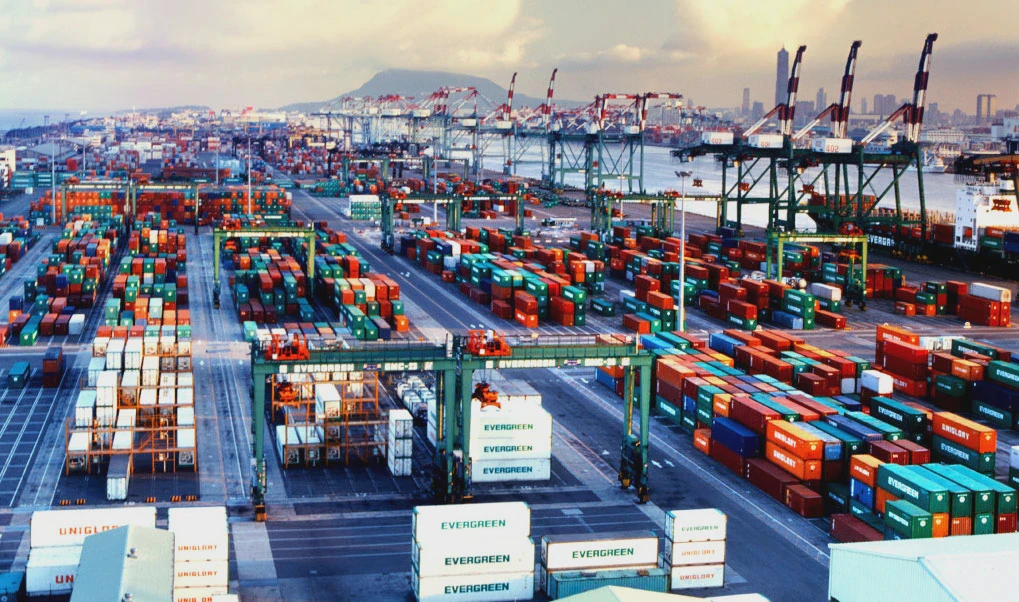
Vietnam’s freight market spent the week of September 8–14, 2026 doing two things at once: rebuilding long-term capacity and repricing short-term space. The Vietnam International Container Freight Index (VCFI) held flat at US$4,912 per FEU, yet underneath that number the lanes split violently — South America jumped 8.43% in seven days while Northern Europe and the Mediterranean gave back more than 6% each. Carriers scheduled 79 blank sailings for weeks 38–42, Hai Phong climbed the global port rankings, and Ho Chi Minh City cleared the final procedural hurdles for the US$5 billion Can Gio transshipment port. For B2B importers, e-commerce sellers, and SMEs sourcing from Vietnam, last week was not one dramatic event but a market in which capacity and price are moving in opposite directions.
Freight Rates Split Hard by Trade Lane
The composite VCFI for September 8–14 came in at US$4,912/FEU, up a rounding error of 0.06% week on week — a stability that is entirely deceptive, because the index averages lanes behaving nothing alike. South America remains the costliest corridor out of Vietnam, with FCL rates from Ho Chi Minh City hitting US$10,757/FEU, an 8.43% rise in a single week. The US West Coast and US East Coast ticked up slightly. Northern Europe eased 6.10% and the Mediterranean fell 6.48%, welcome relief for importers moving furniture, footwear, and textiles into Hamburg, Rotterdam, and Genoa. The Middle East stayed the least predictable lane of all, with unstable rates, shifting itineraries, and continuing risk around the Strait of Hormuz.
The practical consequence is that “Vietnam freight rates” is no longer a single benchmark. Quote lane by lane, with a stated validity window, and treat any quotation lacking an expiry date as a risk rather than a price. If your volume is trans-Pacific, our breakdown of sea freight from Vietnam to the USA explains how ocean freight, terminal handling, and destination charges actually stack up on that corridor.
79 Blank Sailings Are Coming in Weeks 38–42
The same weekly update carried a number that matters more than any rate: carriers have scheduled roughly 79 voyage cancellations across weeks 38 to 42 — about 11% of total scheduled sailings — concentrated on trans-Pacific and Asia–Europe services. When one in nine advertised voyages disappears, space tightens on the remaining vessels, rollover risk rises, and spot pricing on affected lanes becomes far more volatile than the composite index implies.
Reefer cargo needs particular attention. Vasep reported no widespread shortage of 40RF refrigerated containers in Vietnam, but warned of localized friction around vessel space, allocation, reefer plugs, and rollover. When you request a 40RF quotation, ask for a comprehensive all-in figure covering every surcharge, electricity and plug-in fees, container storage, and domestic refrigerated trucking — then confirm the sailing and the transshipment port in writing, not just the rate.
Ho Chi Minh City Clears the Way for a $5 Billion Transshipment Port
The week’s biggest structural story was Can Gio. On September 14, the Ho Chi Minh City People’s Committee Office released Chairman Nguyen Van Duoc’s conclusions on the project, directing the investor consortium to accelerate capital, manpower, and preparation so construction can break ground in October 2026. Officials were also told to fast-track a 3-kilometer road from Phuoc An to the site, study rail links toward the Cai Mep – Can Gio cluster, and propose dredging the Cai Mep – Thi Vai channel to 16–18 meters so the port can actually receive the ships it is built for.
The scale is unusual. The site spans roughly 571 hectares on Phu Loi Islet at the mouth of the Cai Mep River, carries total investment of nearly VND 129 trillion, and features a main wharf system stretching 7.5 kilometers. Berths are designed for vessels up to 250,000 DWT — the roughly 24,000 TEU class — with capacity of 4.8 million TEU by 2030 and 16.9 million TEU by 2047. For comparison, Tan Cang – Cat Lai, Vietnam’s largest container port, handled about 5.8 million TEU in 2024. The consortium combines Vietnam Maritime Corporation, Saigon Port, and Terminal Investment Limited, a member of MSC.
Why care about a port that opens next decade? Because it changes regional transshipment arithmetic. Much Vietnamese export cargo still feeds hubs such as Singapore or Hong Kong, adding three to five days and extra handling before the long-haul leg even begins. A direct-call hub at the mouth of the Cai Mep River compresses that, making Vietnam-origin cargo more competitive on the deep-sea corridors where rates were already moving last week.
Hai Phong and Cai Mep Keep Building
The northern gateway had a busy week. On September 3, Saigon Port invited tenders for Package No. 8 of the Lach Huyen berths No. 7 and No. 8 project, part of a fourth contractor-selection round covering 19 packages worth more than VND 12,779 billion. The largest — Package No. 15 at nearly VND 9,632 billion — covers surveying, detailed design, land leveling, container berths, barge and service berths, shoreline protection, dredging, and utilities across an 840-day schedule. The two main berths total 900 meters and will handle vessels up to 200,000 DWT, roughly 18,000 TEU, under a total approved investment of about VND 14,766 billion running through 2028. CMA CGM, the world’s third-largest container line, is partnered on the development, and the terminal is expected to reach 1.9 million TEU per year when operations begin in 2028.
The southern cluster produced the week’s most interesting milestone. On September 7–8, Cai Mep International Terminal (CMIT) and Tan Cang – Cai Mep Thi Vai (TCTT) jointly worked the ZIM SHENZHEN at the connecting berth between the two facilities — Vietnam’s first trial operation of a mother vessel under a shared-berth model. The ship measures 335.23 meters at 102,517 DWT, and the operators moved about 3,200 TEU while keeping her on schedule. Linking the terminals creates a continuous berth line of roughly 1,200 meters. Separately, SSIT reported handling nearly 10,000 TEU on a single call by MSC Arina.
Vietnam Climbs the Global Port Rankings Again
Lloyd’s List published its Top 100 container ports, and all three Vietnamese clusters held their places for a sixth consecutive year. Ho Chi Minh City stayed 22nd with throughput above 8.9 million TEU, up 14.5% year on year. Hai Phong climbed three places to 26th on more than 8.2 million TEU, growth above 16%. The Cai Mep cluster ranked 31st, confirming its role as an international gateway for the southern key economic region. First-half Alphaliner data points the same way: Ho Chi Minh City 19th worldwide, Hai Phong 25th with port-system throughput of about 96 million tons (+11.4%), and Cai Mep 29th with roughly 3.9 million TEU (+9.2%).
Zoom out and the scale is clearer still. Vietnam’s port system handled 687.4 million tons in the first half of 2026, up 18.3% year on year, with containerized cargo reaching 18.03 million TEU (+12.2%) and dry bulk accounting for about 66.9% of volume. For importers these are not vanity metrics. Vietnam’s shift from dependent satellite port to direct transshipment hub rests on China + 1 manufacturing relocation, deep-water infrastructure at Lach Huyen and Cai Mep – Thi Vai, and more direct alliance calls. Direct calls mean fewer handoffs, shorter transit times, and one less place for your bill of lading to go sideways — which increasingly makes a direct sailing the better choice on both cost and reliability.
Learning From China’s Smart Ports
From September 6 to 13, a delegation from the Agency of Foreign Trade toured Hangzhou, Ningbo, Shenzhen, and Qinzhou to study smart-port and multimodal models. At Meishan Container Terminal in the Ningbo-Zhoushan cluster, autonomous container trucks work alongside a Digital Twin integrated with terminal operating software, which port authorities credit with roughly 30% better yard turnover. At Qinzhou Automated Container Terminal, where the yard links directly to the central railway station, a U-shaped operating model reportedly raised guided-vehicle density by about 50% and lifted rail-to-port transshipment efficiency by roughly 50%. The trip closed with a Vietnam–China logistics seminar in Shenzhen attended by more than 140 businesses. The relevance for shippers is indirect but real: as Vietnamese terminals and border crossings digitize, the paperwork-heavy parts of your chain — customs declaration, phytosanitary certificates, and document pre-clearance — get faster and less error-prone.
What Last Week Means for Your Next Shipment
The week described a market expanding capacity faster than almost anywhere in the world while deliberately withholding short-term space. That rewards preparation and punishes improvisation. Five actions stand out.
- Quote lane by lane, not by headline index. A 0.06% move in the VCFI concealed an 8.43% jump to South America and a 6.4% decline to Europe. Demand per-lane pricing with a validity window, and re-quote if your cargo-ready date slips.
- Treat blank sailings as a planning assumption. With 79 cancellations scheduled, lock FCL space three to four weeks ahead on trans-Pacific and Asia–Europe services, and book LCL at least two weeks out so your cargo is consolidated rather than waiting for the next available vessel.
- Protect reefer cargo explicitly. Confirm 40RF equipment availability, plug-in capacity at origin and transshipment, and rollover contingency in writing.
- Get documents ahead of the ship. Align the commercial invoice, packing list, Certificate of Origin, and B/L before the container reaches the gate. Misaligned paperwork is the most common reason cargo booked on time still clears late.
- Reassess your Incoterms and routing. Diverging rates shift where risk sits. Review whether FOB, CIF, EXW, or full DDP / DDU terms serve you best — this plain-language guide to Incoterms 2020 is a good place to align expectations with suppliers. E-commerce sellers should also check our Amazon FBA shipping from Vietnam guide for labeling, inspection, and warehouse-appointment requirements, while DDP shipping from Vietnam explains how a single accountable partner handles duty and clearance at both ends.
Get a Quote Before the Lanes Move Again
VNForwarder is a Vietnam-based freight forwarder helping B2B importers and e-commerce sellers move cargo from Vietnam to global markets. We quote FCL, LCL, air freight, door-to-door DDP, cold-chain, and Amazon FBA shipments within 2–4 hours, with transparent all-in pricing, a dedicated account manager, and 24⁄7 customer support backed by a local network at Cat Lai, Cai Mep, Lach Huyen, Da Nang, Noi Bai, and Tan Son Nhat. With 79 blank sailings already scheduled for weeks 38–42, shippers who lock space and pricing early are the ones who keep landed costs predictable. Contact VNForwarder for a competitive quotation on your next shipment out of Vietnam.