
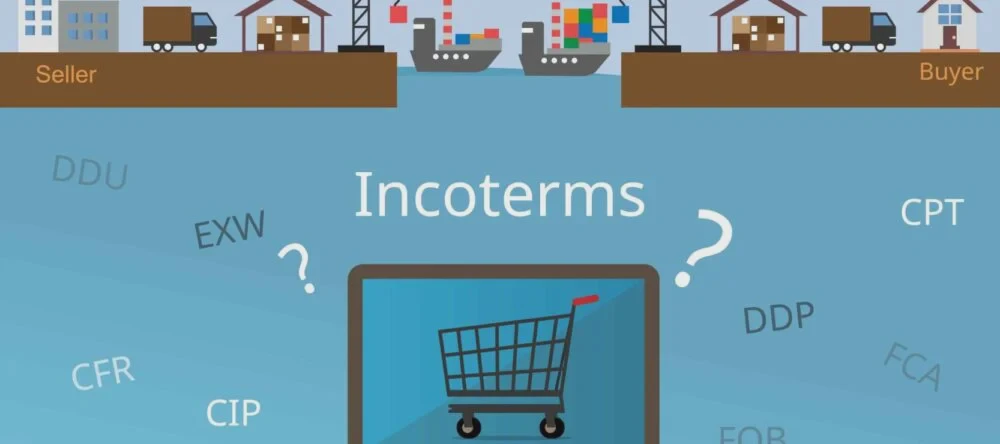
If you have ever received a quote from a Vietnamese supplier that said “FOB Haiphong” and wondered exactly what that commits you to — and what it leaves on your plate — you are not alone. Incoterms (International Commercial Terms) are the 11 standard trade rules published by the International Chamber of Commerce that define who is responsible for costs, risk, insurance, and paperwork at every stage of an international shipment. Misunderstanding a single three-letter code can easily cost an importer thousands of dollars in unexpected charges, cargo sitting at a port, or a customs dispute nobody planned for.
This guide explains the Incoterms 2020 rules in plain English, with a specific focus on shipments originating from Vietnam — the world’s 16th-largest exporter and a top sourcing hub for furniture, footwear, textiles, electronics, and coffee. We will break down the terms you will actually encounter when buying from Vietnamese factories, show you who pays what, and help you choose the term that matches your experience level, cargo type, and appetite for risk.
What Incoterms 2020 Actually Do (and What They Don’t)
Incoterms 2020, which came into force on January 1, 2020, define three things for each rule: where risk transfers from seller to buyer, which party arranges and pays for main carriage (the international leg of the journey), and who handles export and import customs clearance. They cover the physical movement of goods and related costs — they do not define payment terms, transfer of ownership, or which law governs the contract. Those must be written into your purchase contract separately.
One practical detail buyers often miss: Incoterms only work well when you name a precise location. “FOB Vietnam” is meaningless — “FOB Cat Lai Terminal, Ho Chi Minh City” is enforceable. The named place determines exactly where costs and risk shift.
The Four Terms That Cover 95% of Vietnam Exports
Although Incoterms 2020 contains eleven rules, most commercial shipments from Vietnam run on four of them: EXW, FOB, CIF, and DDP. Here is how they compare at a glance.
| Term | Risk transfers to buyer | Main carriage paid by | Export clearance | Import clearance & duties | Best for |
|---|---|---|---|---|---|
| EXW (Ex Works) | At seller’s factory gate | Buyer | Buyer | Buyer | Experienced importers with own logistics team |
| FOB (Free On Board) | When goods pass the ship’s rail/on board | Buyer | Seller | Buyer | The classic default for sea freight from Vietnam |
| CIF (Cost, Insurance & Freight) | On board the vessel (same as FOB) | Seller (to named port) | Seller | Buyer | Buyers who want the seller to arrange ocean freight |
| DDP (Delivered Duty Paid) | At buyer’s named destination | Seller | Seller | Seller | E-commerce sellers and buyers who want zero logistics work |
EXW — Ex Works: Maximum Control, Maximum Responsibility
Under EXW, the Vietnamese supplier’s only obligation is to make the goods available at their factory — packed, labeled, and ready. From that moment, everything is your problem: trucking from the factory to the port, export customs clearance in Vietnam, ocean or air freight, insurance, import clearance, duties, and final delivery.
EXW is popular with first-time importers because suppliers quote it without hesitation, but it is rarely the cheapest option in practice. Vietnamese export clearance requires the supplier to hand over specific export documents, and many factories are not registered exporters or will quietly pad the price to cover their inconvenience. Unless you have a freight forwarder in Vietnam who can manage the pickup and export declaration for you, EXW usually creates more friction than value.
FOB — Free On Board: The Industry Default
FOB is the most widely used Incoterm for sea freight from Vietnam, and for good reason. The seller delivers the goods on board the vessel at the named port of loading — typically Cat Lai (Ho Chi Minh City), Hai Phong, or Da Nang — handles the export customs clearance, and pays all charges up to that point. Once the container is on the ship, risk and cost shift to you: the ocean freight, insurance, destination charges, import clearance, and onward delivery.
FOB gives you control over the most expensive and most variable part of the journey — the international carriage — so you can compare freight rates and choose your own carrier. Our detailed cost guides for major lanes, such as shipping cost from Vietnam to USA and sea freight from Vietnam to UK, all assume an FOB structure, which is why their price tables start at the Vietnam port of loading.
CIF — Cost, Insurance & Freight: Convenience With a Catch
Under CIF, the Vietnamese seller arranges and pays for the ocean freight and minimum insurance (Institute Cargo Clauses C — a very basic cover) all the way to your destination port. This sounds convenient, and for small trial orders it often is. The catch is that risk still transfers when the goods are loaded on board in Vietnam — long before the ship arrives at your port. If the vessel sinks mid-voyage, you bear the loss and must claim on insurance the seller arranged, in a policy you may never have seen.
CIF quotes also tend to bundle inflated freight rates, because sellers mark up the shipping line’s price. Importers shipping full containers regularly almost always save money by buying FOB from the supplier and arranging their own freight.
DDP — Delivered Duty Paid: The “Do Everything for Me” Option
DDP is the opposite extreme: the seller (or, in practice, their Vietnamese freight forwarder) delivers the goods to your door — cleared through your country’s customs, with import duties and taxes paid, ready to unload. Risk transfers only at the final destination. For e-commerce sellers, SMEs without import departments, or anyone shipping DDP-heavy lanes, it removes nearly all logistics work.
The trade-off is that you pay for that convenience, and you depend entirely on the seller’s forwarder being competent at destination clearance — in your country’s regulations. If you are evaluating a DDP shipment, make sure the quote explicitly lists the named place, includes duties, and states who handles any inspection. Our breakdown of shipping cost from Vietnam to Germany illustrates how DDP pricing stacks up against FOB across a real lane.
The Other Seven Rules, Briefly
FCA (Free Carrier) is increasingly recommended over EXW and even FOB: the seller hands goods to your nominated carrier at a named place — including a Vietnamese container yard — and crucially can obtain an on-board bill of lading for payment under letters of credit. FAS (Free Alongside Ship) applies only to bulk cargo and places goods alongside the vessel.
For containers, avoid the classic but outdated trap: CFR (Cost & Freight, sea-only, no insurance) and CIF technically only suit sea freight — the ICC itself now advises using FCA and CPT/CIP for containerized cargo. CPT (Carriage Paid To) and CIP (Carriage & Insurance Paid To) mirror CFR/CIF but work for any transport mode, with risk passing at the first carrier. The final four rules — DPU (Delivered at Place Unloaded), DAP (Delivered at Place), DAT (replaced by DPU in 2020), and DDP — are arrival terms where the seller bears most of the journey.
How to Choose the Right Incoterm for Your Vietnam Shipment
Use this decision path the next time a Vietnamese supplier sends you a quote:
- Are you new to importing? Start with FOB for sea freight or CIF for very small trial orders. Do not accept EXW unless your forwarder confirms they can manage Vietnamese export clearance and factory pickup.
- Are you an experienced importer with volume? FOB almost always wins — control the freight leg yourself and compare rates across carriers.
- Are you an e-commerce seller needing goods delivered ready to sell? Consider DDP or DAP, but verify the seller’s forwarder is licensed and the quote includes duties and delivery to a named address.
- Air freight or multimodal? Use FCA, CPT, or CIP — FOB and CIF are sea-only by definition.
- Always write the named place precisely in the contract: “FOB Cat Lai Terminal, Ho Chi Minh City, Incoterms 2020.”
Common (and Costly) Incoterm Mistakes
Three errors account for most disputes we see. First, using FOB for containerized cargo — because containers are handed to the carrier at a terminal days before loading, risk and cost visibility get muddy; FCA at the container yard is cleaner. Second, accepting a supplier’s CIF quote without asking which insurance clause applies — ICC© coverage excludes many common risks. Third, assuming the Incoterm decides who owns the goods if something goes wrong — ownership follows the payment terms in your contract, not the Incoterm.
Frequently Asked Questions
Is EXW cheaper than FOB when buying from Vietnam? Rarely. EXW prices look lower because the seller has excluded export costs, but you then pay for factory pickup, Vietnamese export clearance, and port handling — usually at rates higher than the seller’s negotiated ones, since factories ship in volume. Compare total landed cost, not product price.
Who pays destination charges (THC) under FOB? Terminal handling at origin is the seller’s cost; destination terminal handling is yours. This is why two FOB shipments of identical value can land with very different final invoices — always ask your forwarder for a full landed-cost quote before the vessel sails.
Can I change the Incoterm after the order is placed? Yes, if both parties agree before the goods are delivered to the carrier under the original term. After handover, switching terms changes nothing about risk already transferred.
Does DDP include VAT and import duty? It should. Under Incoterms 2020, the seller must clear import customs and pay duties and taxes to deliver duty paid. If a “DDP” quote excludes duties, it is actually DAP — ask for clarification in writing.
Which Incoterm is best for Amazon FBA shipments from Vietnam? Most sellers use FOB with their own forwarder handling U.S. or EU import clearance, or DDP delivered to the FBA warehouse if they want a fully hands-off flow. See our Amazon FBA shipping from Vietnam guide for the full workflow, including inspection and labeling before the container leaves the factory.
Get Your Incoterms Right Before the Container Moves
Choosing the wrong term costs far more than the difference between three letters — it determines who is scrambling when a shipment gets held at customs. A professional freight forwarder with an on-the-ground network in Vietnam can price the same shipment under FOB, CIF, or DDP so you can see the real landed cost of each option, not just the supplier’s sticker price. If you are planning a shipment from Vietnam and want a transparent, itemized quote within hours — with a dedicated account manager who answers 24⁄7 — request a free quotation from VNForwarder and we will map the right Incoterm to your cargo before it leaves the factory floor.