

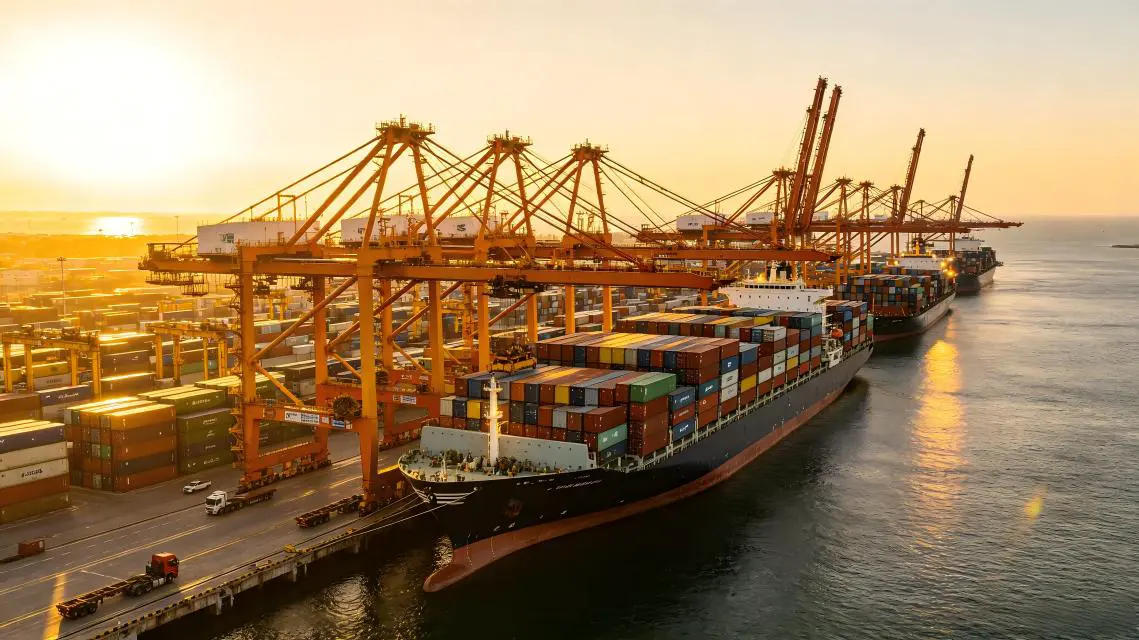
With bilateral trade between Vietnam and South Korea surpassing $80 billion annually, container shipping from Vietnam to South Korea has become a critical link in Asia’s supply chain. Yet, many importers still struggle with opaque pricing, unclear transit expectations, and the paperwork maze of trade agreements like VKFTA — all while trying to figure out whether Busan or Incheon is the right port for their cargo.
This guide breaks down everything: 2026 rate benchmarks by port pair, FCL vs. LCL decision rules, VKFTA duty optimization tactics, cargo-specific packing and compliance tips, a complete step-by-step shipping process, and door-to-door DDP logistics. Whether you are shipping a full container of electronics from Ho Chi Minh City or a small LCL batch of textiles from Hai Phong, you will find actionable answers here.
Vietnam–Korea Trade & Why Container Shipping Dominates
Vietnam and South Korea are deeply intertwined trading partners. Key Vietnamese exports to Korea include electronics and components, textiles and garments, machinery, footwear, seafood, and wood products — much of it manufactured in the industrial belts around Ho Chi Minh City (Binh Duong, Dong Nai) and northern provinces (Hanoi, Bac Ninh, Hai Duong). For businesses sourcing across multiple ASEAN markets, Vietnam also serves as the ideal export hub for shipping from Vietnam to Singapore and shipping from Vietnam to Malaysia, both leveraging the same southern port infrastructure at Cat Lai.
Container shipping is the default mode on this corridor for good reason. The sea distance is short — approximately 3,000 km from Hai Phong to Busan — and direct sailings run multiple times per day on high-frequency lanes. Compared to air freight, which costs 4–8× more per kilogram, ocean freight keeps landed costs predictable for high-volume cargo. And under the Vietnam–Korea Free Trade Agreement (VKFTA) and RCEP, the tariff environment heavily favors Vietnamese-origin goods entering South Korea — making this one of the most cost-efficient intra-Asia trade lanes available today.
Our Industry Insight: At our Vietnam operations desk, we consistently see importers save 10–25% on total landed cost simply by switching from CIF port-to-port to a properly structured DDP door-to-door arrangement with a forwarder that knows both Vietnam export customs and Korea’s UNI-PASS import clearance system. The savings come from avoiding demurrage at Busan, coordinating trucking in advance, and filing Form VK correctly on the first attempt.
Container Shipping Routes, Ports & Transit Times
Choosing the right port pair is the single most impactful decision on your transit time and freight cost. Below is the complete route matrix with indicative Q3 2026 benchmarks.
| Origin Port (VN) | Destination Port (KR) | Transit Time | Sailing Frequency | Indicative Rate (20GP) | Primary Carriers |
|---|---|---|---|---|---|
| Hai Phong | Busan | 4–6 days | 2–4× daily | $550–$600 | Yang Ming, MSC, ONE, Maersk, Evergreen |
| Hai Phong | Incheon | 5–7 days | ~4/week | $550–$570 | Maersk, MSC, Evergreen |
| Ho Chi Minh (Cat Lai) | Busan | 5–8 days | Weekly | $550–$570 | Maersk, Evergreen, SITC |
| Ho Chi Minh | Incheon | 7–9 days | Weekly | $580–$620 | Maersk, ONE, HMM |
| Da Nang | Busan | 10–14 days | Bi-weekly | $600–$700 | Regional carriers |
Rates are indicative ocean freight benchmarks only (port-to-port base rate) as of July 2026. Actual quotes vary with cargo weight, container type, seasonality, and carrier capacity. Surcharges (BAF, THC, documentation) are additional.
Which port should you pick? Hai Phong offers the fastest and most frequent sailings to Korea — ideal for northern Vietnam manufacturers. Ho Chi Minh City (Cat Lai / Cai Mep) serves the southern industrial heartland with competitive rates but slightly longer transit. Da Nang is a viable option for central Vietnam cargo, though frequency is lower. On the Korean side, Busan is the larger, more connected hub; Incheon is best when your final destination is the Seoul metropolitan area or greater Gyeonggi province.
While this corridor offers some of the fastest ocean transit times in Asia at just 4–9 days, longer-haul routes like shipping from Vietnam to the USA naturally require 18–40 days depending on whether your cargo is destined for the West Coast or East Coast — a useful benchmark when planning multi-market supply chains.
Container Types, FCL vs. LCL & 2026 Shipping Costs
Picking the right container and load type directly affects your per-unit shipping cost. Here is how to decide.
Container Types at a Glance
| Container Type | Capacity | Max Payload | Best For |
|---|---|---|---|
| 20GP (20ft) | ~28 CBM | 21–28 tons | Heavy/dense cargo: machinery, metal parts, tiles |
| 40GP (40ft) | ~56 CBM | 26–28 tons | Voluminous/light cargo: furniture, textiles, foam |
| 40HC (High Cube) | ~68 CBM | 26–28 tons | Bulky light cargo — the sweet spot for most exporters |
| Reefer | Varies | Varies | Temperature-controlled: seafood, produce, pharma |
FCL vs. LCL: The Quick Decision Rule
FCL (Full Container Load) means you pay a fixed per-container rate. Your cargo is the only shipment inside; no consolidation delays. FCL becomes cheaper per unit when your cargo exceeds approximately 12–15 CBM.
LCL (Less than Container Load) means you share container space with other shippers and pay per cubic meter — typically $10–$30/CBM on the Vietnam–Korea lane. LCL is more cost-effective below 8–10 CBM, but expect an additional 2–4 days for consolidation and deconsolidation at both ends.
| Cargo Volume | Recommended Mode |
|---|---|
| < 8 CBM | LCL |
| 8–15 CBM | Quote both — compare total landed cost |
| > 15 CBM | FCL (usually cheaper per unit) |
The Full Cost Picture (Beyond Ocean Freight)
Many first-time importers underestimate the total cost beyond the ocean freight base rate. A realistic budget includes: ocean freight + BAF (Bunker Adjustment Factor) + THC (Terminal Handling Charge at both ports) + documentation fees (B/L, customs declaration) + export customs brokerage in Vietnam + import customs brokerage in Korea + inland trucking at both ends. Hidden costs to watch: demurrage (port storage charges) and detention (late return of carrier’s container) can add hundreds of dollars if you do not clear cargo and return the empty container within the free-time window — typically 5–7 days.
For a broader perspective on freight costs from Vietnam, shipping cost from Vietnam to USA varies significantly by destination coast and season, while sea freight from Vietnam to Australia adds its own layer of complexity with BMSB seasonal compliance requirements affecting both cost and transit time.
VKFTA, Import Duties & How to Minimize Your Landed Cost
The Vietnam–Korea Free Trade Agreement (VKFTA) is the single largest cost lever available to importers on this lane. Under VKFTA, the vast majority of Vietnam-origin goods enter South Korea at 0% or significantly reduced import duty — but only if you provide the correct documentation.
The key document is Form VK — the VKFTA-specific Certificate of Origin, issued by the Vietnam Chamber of Commerce and Industry (VCCI). To qualify, your product must meet the Regional Value Content (RVC) rule: at least 40% of the product’s value must originate in Vietnam. Required supporting documents include the Commercial Invoice, Packing List, B/L, and a manufacturing cost statement.
Here is what VKFTA savings look like in practice:
| Product Category | HS Chapter | MFN Duty (without VKFTA) | VKFTA Duty (with Form VK) | Savings on $50,000 Shipment |
|---|---|---|---|---|
| Textiles & Garments | 61–62 | 13% | 0% | $6,500 |
| Footwear | 64 | 13% | 0% | $6,500 |
| Wood Furniture | 94 | 8% | 0–5% | $1,500–$4,000 |
| Electronics | 85 | 0–8% (mostly 0%) | 0% | Minimal for most items |
Real-Life Scenario: A garment importer in Seoul ordered 500 cartons of woven shirts from a factory near Hai Phong — CIF value $42,000. Without Form VK, Korean Customs assessed 13% duty: $5,460. After we guided the factory through the VCCI Form VK application (submitting the manufacturing cost breakdown proving 62% Vietnam origin content), the shipment cleared at 0% duty. The Form VK cost roughly $40 in processing fees and saved the importer over $5,400 — a 135× return on documentation effort.
On top of import duty, South Korea applies a 10% VAT on the CIF value plus duty. The calculation formula: Import Duty = CIF Value × Duty Rate; VAT = (CIF Value + Import Duty) × 10%. Even when duty is zero under VKFTA, the 10% VAT still applies.
Cargo-Specific Container Shipping Guide
Different commodities demand different handling. Below are practical guidelines by cargo type for the Vietnam–Korea lane.
Electronics & Components
Use anti-static wrapping, moisture-barrier bags, and shock-absorbent cushioning. Palletize for forklift handling. High-value electronics should always carry marine cargo insurance — theft and impact damage are real risks. Check whether your product requires KC Certification (Korea Certification mark) before shipment; non-compliant goods may be held at Korean customs.
Textiles & Garments
The biggest win here is VKFTA: most textiles qualify for 0% duty with Form VK. Use 40HC containers to maximize volume for lightweight garments. For high-end apparel, GOH (Garment on Hanger) containers are available. Pack folded items in cartons with moisture protection — humidity during sea transit can damage fabric.
Furniture & Wood Products
Any solid wood or wood packaging material must be ISPM 15 compliant — heat-treated and stamped. Korean customs strictly enforces this: non-compliant wooden pallets or crates face re-export or destruction at the importer’s cost. Use corner protectors, foam padding, and shrink wrap. 40HC containers are the go-to choice for bulky furniture.
Machinery & Heavy Equipment
Use 20GP containers for dense, heavy machinery (watch payload limits). For oversized equipment, Open Top or Flat Rack containers are necessary. Secure cargo with steel chains and wooden bracing; apply anti-rust coating for sea transit. Korean safety certification (KCs) may be required for industrial machinery — verify with your Korean buyer in advance.
Seafood & Perishables
Requires reefer containers with precise temperature and ventilation settings. Korea’s MFDS (Ministry of Food and Drug Safety) may inspect shipments; product registration is sometimes required. Essential documents: Health Certificate, Catch Certificate (seafood), and Phytosanitary Certificate (plant products). Always choose direct routes — Hai Phong to Busan is the fastest cold chain lane.
Step-by-Step: Vietnam Export to Korea Import Process
Here is the complete container shipping workflow in six steps.
Step 1 — Pre-Shipment Planning. Select your Incoterms (FOB, CIF, or DDP) based on how much control you want over the logistics chain. Choose a freight forwarder with proven Vietnam–Korea lane experience and VKFTA documentation expertise. Estimate total budget using the cost breakdown in Section 3.
Step 2 — Booking & Documentation. Submit your booking request to the carrier or forwarder and receive a Booking Confirmation (S/O). Prepare your documentation package: Commercial Invoice, Packing List, Bill of Lading (B/L), Form VK (Certificate of Origin), and Vietnam Export Customs Declaration. For wood products, add a Fumigation Certificate; for food or agricultural goods, add Health and Phytosanitary Certificates.
Step 3 — Vietnam Export Customs Clearance. File your electronic customs declaration through Vietnam’s VNACCS/VCIS system. Physical inspection occurs in roughly 5–10% of shipments. Accurate HS code classification is critical — misclassification can trigger delays, fines, or reclassification at the Korean border.
Step 4 — Container Loading & Port Departure. Truck the container from factory to port. For FCL, load at the factory; for LCL, cargo goes to the CFS warehouse for consolidation. Submit the VGM (Verified Gross Mass) declaration — without it, your container will not be loaded. Complete all customs formalities at least 24–48 hours before the vessel’s cut-off time.
Step 5 — Ocean Transit & Tracking. Track your vessel via the carrier’s website or your forwarder’s portal. Monitor ETD (Estimated Departure) and ETA (Estimated Arrival). If your container gets “rolled” to the next vessel due to overbooking, your forwarder should negotiate priority space on the next available sailing.
Step 6 — Korea Import Clearance & Last-Mile Delivery. The carrier sends an Arrival Notice 2–3 days before ETA. File your import declaration through Korea’s UNI-PASS electronic customs system with the B/L, Invoice, Packing List, and Form VK. Pay import duty and VAT to obtain cargo release. Retrieve the Delivery Order (D/O), truck the container to your final destination, and return the empty container to the designated depot within the free-time window.
Door-to-Door, DDP & End-to-End Logistics Solutions
For importers who want zero customs hassle, door-to-door shipping and DDP (Delivered Duty Paid) are the most convenient options on this lane.
A door-to-door service covers: factory pickup anywhere in Vietnam → export customs clearance → ocean freight → Korea import customs clearance → duty and VAT payment → last-mile trucking to your warehouse or store in Korea. This is ideal for first-time importers, e-commerce sellers restocking Korean fulfillment centers, and any business without an in-house customs broker.
DDP vs. DDU: Under DDP, the shipper or freight forwarder pays Korean import duty and VAT on your behalf — you receive the goods at your door with nothing else to handle. Under DDU (Delivered Duty Unpaid), you pay the Korean duties and taxes directly upon import. DDP typically costs 10–15% more than handling import clearance yourself, but for many importers, the time saved and compliance risk eliminated far outweigh the premium. The same DDP door-to-door model works across most destinations from Vietnam — whether you are moving a container from Vietnam to Canada for North American distribution, or shipping to Europe via shipping from Vietnam to Germany as a gateway to the EU single market.
Our Industry Insight: For Korean-bound shipments under DDP, we always pre-clear customs documentation 48 hours before vessel arrival using UNI-PASS. This single habit has reduced our average port-to-door delivery time at Busan from 5 days to under 3 days — because the container never sits waiting for paperwork.
Seasonal Planning & Risk Management
Timing matters on the Vietnam–Korea lane. Here are the key seasonal factors to plan around.
Vietnam’s Tet Holiday (January/February) is the biggest disruption. Factories close for 1–2 weeks, port operations slow, and both container and trucking capacity drop sharply. If you need cargo to arrive in Korea by late January, have everything ready and booked by early December. Work with a forwarder that runs a pre-Tet booking service to lock in container allocation before the rush.
Korean holidays — particularly Seollal (Lunar New Year, Jan/Feb) and Chuseok (Korean Thanksgiving, Sep/Oct) — slow customs processing and domestic delivery. Schedule arrivals to avoid these holiday windows.
Typhoon season (June–November) affects Vietnam’s central and northern coasts. Expect 1–3 day delays per significant storm event. Hai Phong routes are more exposed than Ho Chi Minh City routes during this period.
Container shortages can emerge during Q3–Q4 peak season. A forwarder with strong carrier relationships can secure equipment allocation when space tightens. Marine cargo insurance — costing just 0.3–0.5% of cargo value (roughly $150–$250 on a $50,000 shipment) — is a small price for full loss and damage protection.
Frequently Asked Questions
How long does container shipping from Vietnam to South Korea take?
4–9 days for direct routes. Hai Phong → Busan is the fastest at 4–6 days. Ho Chi Minh → Incheon takes 7–9 days. Add 2–4 days for LCL consolidation.
How much does a container cost from Vietnam to South Korea?
As of Q3 2026, a 20GP container ranges from $550 to $700 depending on the port pair. A 40GP/40HC ranges from $700 to $1,100. LCL costs $10–$30 per CBM.
What documents are needed for Vietnam to South Korea container shipping?
Commercial Invoice, Packing List, Bill of Lading, Form VK (Certificate of Origin for VKFTA benefits), and the Vietnam Export Customs Declaration. Food, wood, and regulated products require additional certificates.
Do I need to pay Korean import duty on Vietnamese goods?
Most Vietnamese goods qualify for 0% or reduced duty under VKFTA — provided you submit Form VK. Without it, standard MFN rates (0–13%) apply. Korean VAT of 10% applies in all cases.
Which is cheaper: FCL or LCL?
FCL is cheaper per unit when shipping 15 CBM or more. LCL is more cost-effective for smaller volumes under 8–10 CBM. Between 8–15 CBM, request quotes for both and compare total landed costs.
Which Korean port should I choose — Busan or Incheon?
Busan offers more frequent sailings, slightly lower rates, and is ideal for southern Korea. Incheon is the best choice when your final destination is the Seoul metropolitan area or Gyeonggi province.
Can I ship door-to-door from Vietnam to South Korea?
Absolutely. DDP door-to-door service covers factory pickup, export clearance, ocean freight, Korea import clearance, duty/VAT payment, and last-mile delivery — all under a single invoice with no hidden fees.
Ready to Ship? Get Your Quote in Hours
Container shipping from Vietnam to South Korea is fast, affordable, and well-served — whether you need a full container from Ho Chi Minh to Busan or a small LCL shipment from Hai Phong to Incheon. The keys to success: leverage VKFTA to slash or eliminate Korean import duties, match your container type to your cargo profile, plan around Tet and typhoon season, and choose the right port pair for your supply chain. Beyond Korea, our network covers destinations worldwide — from shipping from Vietnam to the UK for European markets, to North American and Asia-Pacific lanes — all managed by a single Vietnam-based team.
Need a transparent, obligation-free quote for your next Vietnam–Korea container shipment? Contact VNForwarder — our Vietnam-based team delivers custom quotes within 2–4 hours, manages your entire shipment from factory to Korean doorstep, and provides 24⁄7 support with a dedicated account manager. No hidden fees, no surprises.