

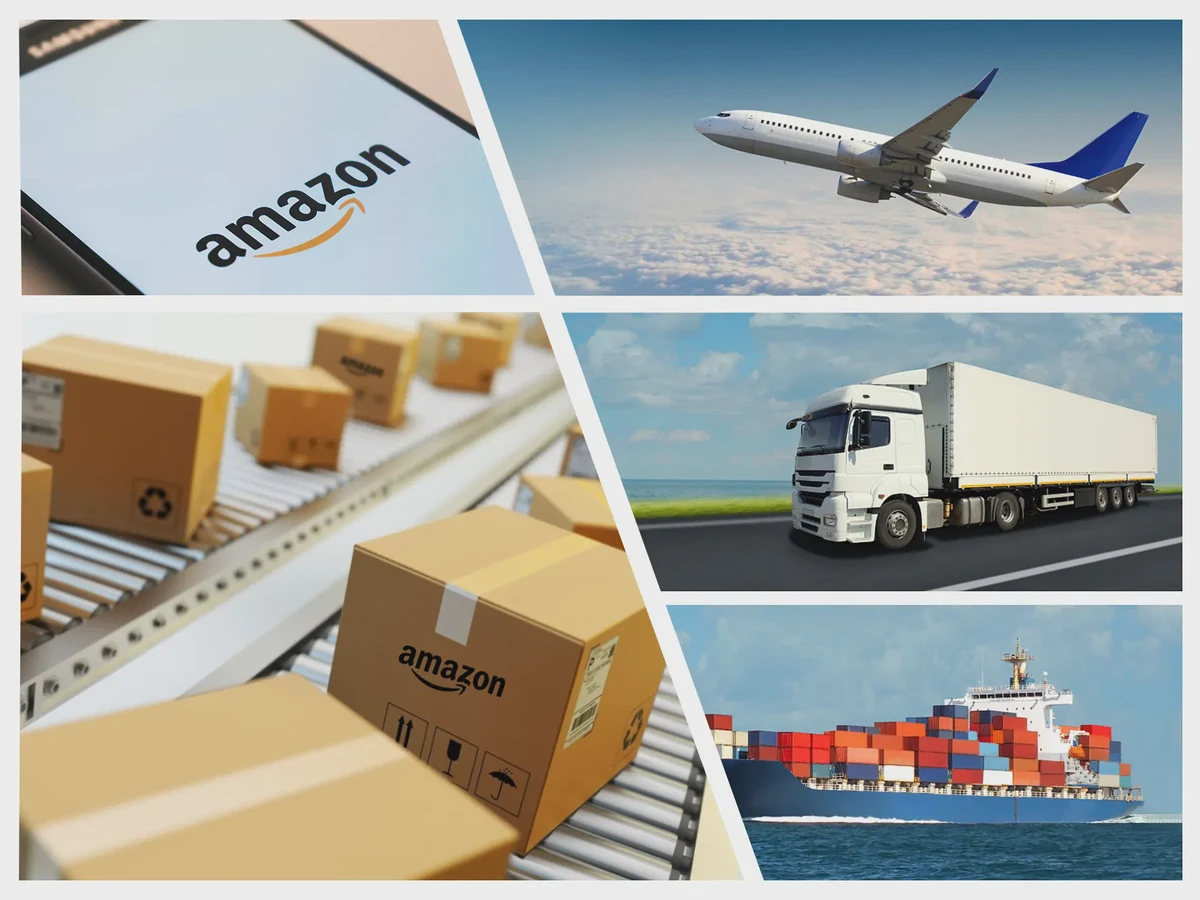
Shipping inventory from a Vietnamese factory to an Amazon FBA warehouse in the United States is one of the fastest-growing logistics lanes in Southeast Asia. As more sellers diversify sourcing away from China, Vietnam has become a top-tier origin for furniture, home goods, textiles, kitchen products, and pet supplies — all categories that sell heavily on Amazon US. But Amazon FBA shipping from Vietnam to USA works differently from a standard B2B import: your goods must arrive at the fulfillment center compliant, labeled, and within Amazon’s strict receiving windows, or you face refusal, relabeling fees, or stranded inventory.
This guide covers the complete journey — from choosing between FCL, LCL, and air freight, through Vietnamese export customs and US import compliance, to the final FNSKU labeling and delivery appointment at the FBA dock. Whether you are a first-time seller sending your first 200-carton trial order or a seven-figure brand moving full containers monthly, you will finish this article knowing exactly how the process works and what it genuinely costs.
Why Sellers Are Shipping FBA Inventory from Vietnam
Vietnam’s manufacturing base has matured well beyond garments and footwear. Today the country produces a deep catalog of Amazon-ready goods: solid wood and rattan furniture from Binh Duong, ceramic and lacquerware home decor from Hanoi, stainless steel kitchenware from Hai Phong, bamboo and seagrass storage products, silicone and plastic housewares, and an expanding electronics assembly sector in Bac Ninh and Hai Duong. Labor costs remain roughly 30–40% below China’s coastal provinces, and trade agreements like CPTPP give many Vietnamese exports preferential tariff treatment in the US market.
For Amazon FBA sellers, Vietnam also offers a practical consolidation advantage. Many sellers source from two to five Vietnamese factories simultaneously. A freight partner with warehouse capacity in Ho Chi Minh City or Hai Phong can collect cargo from each supplier, perform quality inspection, relabel everything under a single shipment ID, and consolidate it into one LCL or FCL booking — something that is far harder to coordinate when suppliers are spread across a country where you have no local presence.
If you are still evaluating Vietnam as a sourcing origin, our step-by-step guide on how to import from Vietnam covers supplier verification and payment terms before you ever book a shipment.
Your Three Shipping Options: FCL, LCL, and Air Freight
Every FBA shipment from Vietnam to the US falls into one of three modes. The right choice depends on volume, budget, and how urgently Amazon needs the stock.
FCL (Full Container Load)
FCL means you book an entire container — typically a 20ft, 40ft, or 40ft High Cube — exclusively for your inventory. For FBA sellers, FCL becomes economical at roughly 15 CBM and above, which for most product categories translates to 300–600 cartons. The container is sealed at the Vietnamese factory or prep warehouse and opened only at the Amazon fulfillment center (or at your 3PL if you use one), which minimizes handling damage and theft risk.
A 40ft High Cube fits roughly 68 CBM of cargo — enough for a serious replenishment cycle. Direct services from Cai Mep to Los Angeles can complete port-to-port in as little as 16–18 days, and our detailed breakdown of sea freight from Vietnam to USA covers port selection, carrier options, and route strategy in depth.
LCL (Less than Container Load)
LCL is the standard choice for smaller trial orders and mid-volume sellers. Your cartons share container space with other shippers, and you pay per cubic meter (minimum typically 1 CBM). LCL works well for FBA shipments in the 2–15 CBM range — usually 50–400 cartons depending on product size.
The trade-offs are handling and time. Your cargo is consolidated at a Container Freight Station (CFS) in Vietnam and deconsolidated at a US CFS before final trucking to the FBA warehouse. This adds roughly 5–10 days to total transit and introduces extra touchpoints, so solid export cartons and proper palletization matter more in LCL than in any other mode.
Air Freight
Air freight is the premium option for restock emergencies, new product launches, or high-value, low-bulk items (electronics accessories, jewelry, supplements). Direct flights from Tan Son Nhat (SGN) or Noi Bai (HAN) to Los Angeles, San Francisco, or New York deliver airport-to-airport in 2–4 days, with door-to-FBA-warehouse totals of 5–10 days including customs clearance and ground delivery. The cost is significant — typically 4–6 times sea freight per kilogram — but for sellers facing a stockout of a top-10 ASIN, air freight is often cheaper than losing the Best Seller badge. Remember that air cargo is billed on chargeable weight, the higher of actual and volumetric weight, so bulky lightweight products are disproportionately expensive by air.
| Factor | FCL (40ft HC) | LCL | Air Freight |
|---|---|---|---|
| Typical FBA volume | 15–68 CBM | 1–15 CBM | 100 kg – 2,000 kg |
| Port-to-port transit | 16–25 days (US West Coast) | 20–35 days | 2–4 days |
| Door-to-FBA total | 25–40 days | 30–45 days | 5–10 days |
| Cost profile | Lowest per unit | Moderate | Highest |
| Damage/theft risk | Lowest | Moderate | Low |
| Best for | Established sellers, stable demand | Trial orders, mixed suppliers | Stockouts, launches, high-value |
The Complete FBA Shipping Process, Step by Step
Understanding the full chain prevents the two most common seller mistakes: booking freight before the goods are actually ready, and sending inventory to the wrong Amazon warehouse.
Step 1: Create the Shipment Plan in Seller Central
Everything starts in Amazon Seller Central. Create a shipping plan, enter your quantities, and Amazon assigns the destination fulfillment center (FC) — commonly ONT8, LGB8, or SMF3 on the West Coast, and ABE8, CLT2, or DFW7 further east. Download the FNSKU barcode labels Amazon generates. You cannot skip this step: freight booked without a confirmed FC destination is freight booked blind.
Step 2: Quality Inspection and FBA Prep in Vietnam
Before anything leaves the factory, your goods should pass a quality inspection — either your own third-party inspector or your forwarder’s QC team. Typical checkpoints for FBA-bound cargo include workmanship, carton drop-test integrity, and verifying that each unit matches the purchase order.
Then comes FBA prep: applying FNSKU labels to every sellable unit (or every carton for case-packed goods), ensuring poly bags meet Amazon’s suffocation-warning requirements, applying “Sold as Set” labels to bundles, and checking that no carton exceeds Amazon’s 50 lb (22.7 kg) weight limit unless it contains a single oversized unit. Our general guide to Amazon FBA shipping from Vietnam walks through prep-center standards, label placement, and packaging compliance in detail.
Step 3: Export Customs Clearance in Vietnam
Your forwarder files the Vietnamese export customs declaration with a Commercial Invoice, Packing List, and, where applicable, a Certificate of Origin (CO). Vietnam’s export clearance is normally straightforward — most consumer goods clear in 1–2 working days — but accuracy matters: the invoice value, HS codes, and carton counts must match the physical cargo exactly, because US Customs will compare against the same data set. Declared-value undervaluation, a tempting shortcut some sellers ask for, is customs fraud and can result in seizure; see our Vietnam customs clearance guide for what legitimate documentation looks like.
Step 4: Ocean or Air Transit
For sea freight, cargo loads at Cat Lai, Cai Mep, or Hai Phong depending on supplier location. West Coast transit runs 18–25 days; East Coast cargo via the Panama Canal takes 30–40 days. During transit, your US customs broker prepares the ISF (Importer Security Filing) — the “10+2” data set that must be filed at least 24 hours before vessel loading at origin. A missed or late ISF carries a $5,000 penalty exposure, and it is your responsibility as the importer of record, not your forwarder’s.
Step 5: US Import Clearance and Final Delivery
At the US port, your customs bond covers duty payment, and the broker files the entry with CBP (US Customs and Border Protection). Duties are calculated on the HTS code classification and declared value; if your goods qualify under CPTPP rules of origin and hold a valid CO, preferential rates may apply. Once cleared, containers are picked up for final delivery — but here is the critical FBA detail: Amazon requires a delivery appointment (Carrier Central booking), and most FCs need appointments booked 7–14 days ahead. Professional FBA freight teams schedule that appointment while the vessel is still at sea, so cargo does not sit in a drayage yard accruing storage charges while waiting for a slot.
What Does It Cost? A Realistic 2026 Budget
Rates fluctuate with fuel, capacity, and season (expect peak-season surcharges from August through October, plus a pre-Tet surge in December–January), but the following ranges reflect current market levels for a standard shipment of general merchandise:
- FCL ocean (40ft HC, Cai Mep → Los Angeles): all-in freight plus origin/destination handling typically runs $3,500–$6,000 per container depending on the carrier and contract level — that is roughly $55–$90 per CBM at full 68 CBM utilization.
- LCL ocean: $60–$120 per CBM port-to-port, plus CFS charges at both ends ($35–$70 per CBM combined). For a 5 CBM FBA shipment, budget $600–$1,100 all-in ocean leg.
- Air freight: $4.50–$7.50 per chargeable kilogram from Ho Chi Minh City to Los Angeles, with a 45–100 kg minimum. A 300 kg air shipment typically costs $1,600–$2,600.
- FBA prep (inspection + labeling + palletizing) in Vietnam: $150–$400 per shipment depending on unit count and complexity.
- US-side costs: customs bond ($100–$350/year single-entry or continuous), duties per your HTS classification, drayage and delivery to the FC ($300–$900 for a full container depending on distance).
Add Amazon’s own FBA inbound placement and fulfillment fees on top, and always model your landed cost per unit — not just the freight quote — before committing to a replenishment cycle.
Customs and Compliance: Where FBA Shipments Get Stuck
The most common reasons an FBA shipment from Vietnam stalls in US customs are avoidable. First, ISF filing errors or delays — as noted above, the 24-hour pre-loading deadline is unforgiving. Second, HTS misclassification: furniture, for example, can fall under headings ranging from 9401 (seats) to 9403 (other furniture) with duty rates spanning 0% to 6%, and some categories carry anti-dumping exposure. Our guide to HS codes for importing from Vietnam explains how to verify your classification before the goods ship, not after.
Third, regulatory flags: food-contact items (FDA), wooden products (Lacey Act declaration), children’s products (CPSC), and textiles all carry additional requirements. A Vietnamese-made bamboo cutting board needs an FDA Prior Notice; a rattan chair needs a Lacey Act filing. If you are shipping under DDP (Delivered Duty Paid) terms so your Vietnamese side handles everything including US duties, make sure your partner actually has the US import infrastructure to do it legally — our DDP shipping from Vietnam guide explains how legitimate DDP works and which red flags to watch for.
Common Mistakes That Cost FBA Sellers Money
- Shipping to the wrong FC. Amazon reassigns destinations during shipment planning. Verify the FC code on the final confirmation, and confirm your forwarder has checked it against the Bill of Lading consignee address.
- Poor export cartons. Single-wall or under-spec cartons collapse during LCL handling. Demand double-wall BC-flute cartons from your Vietnamese supplier — the cost difference is pennies per unit.
- Late labeling. Applying FNSKU labels at the US 3PL instead of in Vietnam adds $0.30–$0.60 per unit. Labeling at origin in Vietnam costs a fraction of that.
- Ignoring the receiving window. Amazon FCs reject early or unscheduled deliveries. Build your timeline backward from the delivery appointment, not from the vessel arrival date.
- Booking freight before goods are ready. Vietnamese factories routinely run 1–2 weeks late on first orders. Confirm actual carton dimensions and gross weight with a warehouse measurement before booking, or you will pay re-booking and rollover fees.
Frequently Asked Questions
How long does Amazon FBA shipping from Vietnam to USA take?
Door-to-warehouse, expect 25–40 days by FCL sea freight to the US West Coast, 30–45 days to the East Coast, and 30–45 days for LCL (the consolidation steps add time). Air freight delivers in 5–10 days door-to-door. Add 1–2 weeks of buffer around Chinese New Year and the August–October peak season.
Can I ship directly from my Vietnamese supplier to an Amazon FBA warehouse?
Technically yes, but it is rarely wise. Most factories are not set up for FNSKU labeling, Amazon carton compliance, or US customs paperwork — errors lead to refused or mislabeled inventory. The standard practice is to route cargo through a prep operation in Vietnam (or a US 3PL) that handles inspection and labeling before the FBA leg.
Do I need a customs bond and an EIN to import into the US as an FBA seller?
Yes. US customs requires importers to have a customs bond (single-entry or continuous) and most brokers will require an EIN or a customs-assigned importer number. Neither is difficult to obtain, but neither can be skipped.
Is DDP available for FBA shipments from Vietnam?
Yes — legitimate DDP service exists where your Vietnamese forwarder handles export clearance, ocean/air freight, US import clearance, duty payment, and delivery to the FC under one quote. Verify that the DDP provider pays duties through proper channels with an ISF and entry filing, not through grey-channel split shipments that expose your inventory to seizure.
Get Your FBA Shipment Moving
VNForwarder has moved Amazon FBA inventory from Vietnam to US fulfillment centers since 2018 — handling factory pickup, QC inspection, FNSKU labeling, export clearance, ocean and air freight, ISF filing, and appointment-based delivery to FCs from Los Angeles to New Jersey. Quotes come back within 2–24 hours with transparent, all-in pricing and no hidden fees, and every FBA client gets a dedicated account manager plus 24⁄7 support. Send us your shipment details — carton count, dimensions, weight, and destination FC — and we will return a complete door-to-warehouse quote.