

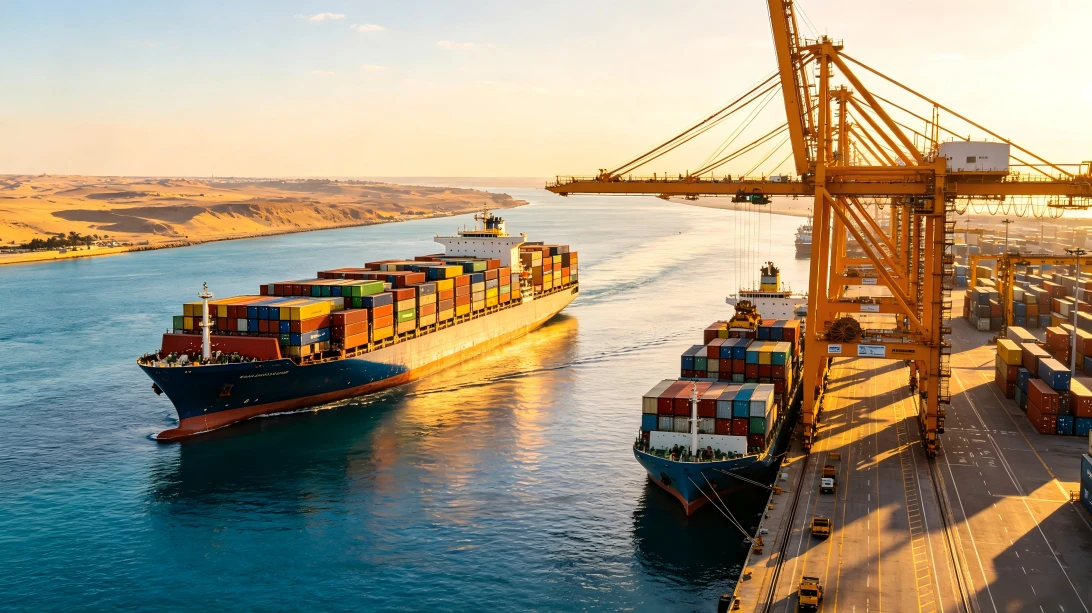
How long does shipping by sea from Vietnam to UK take? That is the make-or-break question for any importer, Amazon seller, or procurement manager sourcing from Vietnamese factories. Get the timeline wrong, and you are sitting on empty shelves during peak retail season. Get it right, and your supply chain runs like clockwork while competitors scramble.
Yet most online answers are frustratingly vague — “30 to 64 days” — with no explanation of why the spread is so wide or where exactly those days go. As a Vietnam-based freight forwarder managing weekly sailings from Ho Chi Minh City, Hai Phong, and Da Nang to every major UK port, we know the real answer lives in the details: which port pair, which container type, which season, and which carrier. Whether you need FCL, LCL, or door-to-door solutions, our dedicated shipping from Vietnam to UK service covers every major port pair on this corridor. This guide gives you the exact numbers, a stage-by-stage door-to-door breakdown, and the six variables that determine whether your cargo arrives in 35 days or 55.
Vietnam to UK Sea Freight Transit Time: The Quick Answer
Here is the bottom line before we dive deep. The table below shows typical sea freight durations from Vietnam to the United Kingdom for both full-container and shared-container shipments.
| Shipping Mode | Port-to-Port | Door-to-Door |
|---|---|---|
| Sea Freight (FCL) | 30–35 days | 44–52 days |
| Sea Freight (LCL) | 32–38 days | 50–58 days |
| Air Freight (for reference) | 3–5 days | 6–14 days |
A Full Container Load (FCL) sailing from Cat Lai Port in Ho Chi Minh City to Felixstowe — the UK’s busiest container port — typically completes the ocean crossing in 28 to 32 days under normal conditions. Add factory pickup, Vietnam export customs clearance, port handling, UK import customs clearance via the CDS system, and final inland delivery, and a realistic door-to-door window is 44 to 52 days.
Less than Container Load (LCL) — where your cargo shares container space with other shippers — adds 4 to 7 days because of origin consolidation and destination deconsolidation. We will quantify that difference in Section 4.
These are typical ranges for 2026. They assume normal port operations, no major canal disruptions, and properly prepared documentation. The six factors that can shift these numbers — in either direction — are covered in detail below.
The Actual Shipping Route: What Path Does Your Cargo Take from Vietnam to the UK?
Understanding why transit takes 30+ days requires knowing where your container actually travels. The standard Vietnam-to-UK shipping route follows one of the world’s most critical trade corridors:
Departure (Vietnam) → South China Sea → Singapore Strait → Strait of Malacca → Indian Ocean → Red Sea → Suez Canal → Mediterranean Sea → Strait of Gibraltar → English Channel → Arrival (UK Port)
That is approximately 8,500 nautical miles from Cat Lai to Felixstowe. The Suez Canal — a 193-kilometer artificial waterway in Egypt — is the single most important chokepoint on this journey. Transit through the canal itself takes roughly 12 to 16 hours under normal traffic, but congestion or geopolitical disruptions can add 2 to 5 days to your schedule. The 2021 Ever Given incident demonstrated how dependent Vietnam-UK supply chains are on this single passage; when Suez is blocked, vessels must reroute around Africa’s Cape of Good Hope, adding 10 to 14 days to the voyage.
Not all containers sail direct. Many services from Hai Phong or Da Nang transship at regional hubs — most commonly Singapore or Port Klang (Malaysia) — where your container is offloaded and transferred to a larger mother vessel bound for Europe. Each transshipment adds 3 to 7 days to total transit time, plus introduces additional handling risk. For importers distributing goods into continental Europe beyond the UK, we also provide dedicated shipping from Vietnam to Germany routes through Hamburg and Bremerhaven with similar Suez Canal transit profiles.
Real-world insight: We recently moved a 40ft container of furniture from a factory in Binh Duong Province to a distribution center in Manchester. The client initially booked a transshipment route via Singapore because it was $180 cheaper. After we explained that the transshipment would add 5 days and their UK warehouse lease was costing them £120/day in holding fees, the math flipped — the direct sailing to Felixstowe saved them £420 in net landed cost despite the nominally higher freight rate.
Door-to-Door Timeline: Where Every Day Goes (Phase-by-Phase Breakdown)
“30 to 35 days port-to-port” tells you how long the ship takes. It does not tell you how long your supplier’s factory door to your UK warehouse door actually takes. Here is the full 7-phase breakdown for a standard FCL door-to-door shipment from Vietnam to the UK:
| # | Phase | Duration | What Happens |
|---|---|---|---|
| 1 | Factory Pickup & Inland Transport | 1–2 days | Container trucked from factory to port (Binh Duong → Cat Lai: ~1 day; Hanoi → Hai Phong: ~1 day) |
| 2 | Vietnam Export Customs Clearance | 1–2 days | Customs declaration filed; 1 day if docs are complete, 2–3 days if inspected |
| 3 | Port Waiting & Vessel Loading | 2–4 days | Container staged at terminal; loaded per vessel cut-off schedule (weekly sailings mean 0–7 day wait) |
| 4 | Ocean Transit (Port-to-Port) | 28–35 days | Actual sailing time; direct vs transshipment makes the biggest difference here |
| 5 | UK Port Discharge & Unloading | 1–2 days | Automated terminals at Felixstowe and Southampton move quickly; smaller ports may take longer |
| 6 | UK Import Customs Clearance (CDS) | 2–5 days | Normal clearance 2–3 days via CDS; with UKVFTA CO and pre-clearance, as fast as 1 day; flagged inspections add 3–7 days |
| 7 | UK Inland Delivery | 2–4 days | Truck from port to destination; London ~1 day, Manchester ~2 days, Scotland ~3–4 days |
Total summary:
- Best case (direct sailing + clean docs + nearby destination): 37–44 days
- Typical case (standard conditions with minor buffers): 44–52 days
- Worst case (transshipment + customs inspection + peak season congestion): 55–65 days
This table reveals why “58 to 64 days” is the figure you frequently see from international platforms — they build in maximum buffers. With a Vietnam-based freight forwarder that maintains direct carrier contracts and pre-clears customs, 44 to 52 days is the realistic standard.
FCL vs LCL: How Container Choice Affects Shipping Time
Your choice between FCL (Full Container Load) and LCL (Less than Container Load) is not just a cost decision — it directly impacts your timeline.
With FCL, your container is sealed at origin and remains sealed until it reaches the destination port or your warehouse. No third party opens it, no cargo is co-mingled, no consolidation delays occur.
LCL follows a different path. At the origin Container Freight Station (CFS) in Vietnam, your cargo waits until enough shipments from different shippers accumulate to fill a container — typically 1 to 3 days. At the destination CFS in the UK (usually near Felixstowe or London Gateway), the container is opened and each shipper’s cargo is separated, labeled, and staged for individual delivery — adding another 2 to 4 days.
| Factor | FCL | LCL |
|---|---|---|
| Port-to-Port Transit | 30–35 days | 32–38 days |
| Consolidation Overhead | 0 days | +2–3 days (origin) |
| Deconsolidation Overhead | 0 days | +2–4 days (destination) |
| Total Extra Time vs FCL | — | +4–7 days |
| Best For | ≥15 CBM, regular shipments | 1–15 CBM, infrequent shipments |
A common misconception is that LCL “only takes a few extra days.” During peak season — especially the pre-Tet rush in Vietnam or the August-to-October holiday shipping window — consolidation delays can stretch to 5–7 days because cargo volumes spike and CFS warehouses operate at capacity.
Decision threshold: If your shipment is approaching 15 CBM, upgrading to FCL not only reduces your per-CBM cost but also saves you 4 to 7 days. The breakeven is often lower than importers expect once inland trucking and destination handling charges are factored in.
Vietnam Port to UK Port: Transit Times Compared
Not all Vietnam-UK routes are equal. Your factory’s location — and the port it feeds into — can shift your ocean transit time by up to 7 days.
| Vietnam Origin Port | UK Destination Port | FCL Port-to-Port | Key Notes |
|---|---|---|---|
| Cat Lai (Ho Chi Minh City) | Felixstowe | 28–32 days | Fastest Vietnam-UK lane; weekly direct sailings |
| Cat Lai (Ho Chi Minh City) | Southampton | 30–34 days | Strong frequency; good for southern UK delivery |
| Cat Lai (Ho Chi Minh City) | London Gateway | 30–35 days | Best for Greater London and Midlands destinations |
| Hai Phong | Felixstowe | 30–35 days | Northern Vietnam origin; often transships via Singapore |
| Hai Phong | Southampton | 32–36 days | Slightly longer due to additional transshipment handoffs |
| Da Nang | Southampton | 32–37 days | Central Vietnam departure; fewer weekly sailings |
Cat Lai Port serves southern Vietnam’s manufacturing heartland — Binh Duong, Dong Nai, and Ho Chi Minh City’s industrial zones — and offers the most frequent direct sailings to the UK (3 to 5 per week across major carriers like Maersk, MSC, and CMA CGM). This is why Cat Lai → Felixstowe is the fastest lane: high vessel frequency means your container waits less time at the terminal, and direct routings eliminate transshipment handoffs.
Hai Phong, serving northern factories around Hanoi and Bac Ninh, has fewer direct UK-bound sailings. Many Hai Phong services stop at Singapore or Port Klang before continuing west, adding 2 to 4 days. The trade-off is lower inland trucking cost for northern factories — a truck from Hanoi to Hai Phong takes a few hours and costs a fraction of the two-day haul to Cat Lai.
Practical advice: If you source from southern Vietnam, use Cat Lai — it is the fastest option regardless of UK destination. If you source from the north, weigh the inland transport savings of Hai Phong against the extra 2 to 4 days of ocean transit. For time-sensitive cargo, trucking south to Cat Lai may be the smarter schedule play.
6 Factors That Can Extend (or Shorten) Your Transit Time
Even the best-planned shipment can see its timeline shift by days or weeks. Here are the six variables that matter most on the Vietnam-to-UK lane.
Factor 1: Peak Seasons & Tet Holiday
Tet (Vietnamese Lunar New Year) — typically late January to mid-February — is the single most disruptive event on the Vietnam export calendar. Factories close for 1 to 2 weeks. In the 3 to 4 weeks before Tet, every exporter rushes to ship before the holiday, creating severe container shortages and port congestion at Cat Lai and Hai Phong. We have seen pre-Tet delays of 5 to 15 days.
The European holiday retail season (mid-August through mid-October) creates a second surge as UK importers rush goods in time for Black Friday and Christmas. Combined with back-to-school inventory pushes, this window consistently drives up freight rates and stretches transit times by 3 to 7 days.
Factor 2: Port Congestion
Cat Lai Port — Vietnam’s busiest container terminal, handling over 6 million TEUs annually — experiences recurring congestion during peak export months. Waiting time for a berth can extend from the normal 1 day to 3 to 5 days during crunch periods.
On the UK side, Felixstowe handles roughly 4 million TEUs per year. While operations are generally efficient, periodic labor disputes have caused disruptions. The port’s 2022 worker strike, for example, created a backlog that took weeks to clear.
Factor 3: Direct vs Transshipment
A direct sailing from Cat Lai to Felixstowe takes roughly 28 to 32 days. A transshipment via Singapore or Port Klang adds 3 to 7 days. A double transshipment — rare but possible on less-traveled routes — can add 7 to 14 days. Always request the vessel routing schedule from your forwarder before booking.
Factor 4: Weather & Monsoon Season
The South China Sea typhoon season (May through November) can delay vessel departures or force port closures in Vietnam. The Indian Ocean monsoon (June through September) sometimes reduces vessel speed, adding 1 to 2 days. Winter storms in the English Channel can occasionally delay UK port calls, though this is less common.
Factor 5: UK Customs Clearance & the CDS System
All UK imports now go through the Customs Declaration Service (CDS) , which replaced the older CHIEF system. Standard clearance takes 2 to 5 days when documentation is accurate. With a valid Certificate of Origin (CO) under the UK-Vietnam Free Trade Agreement (UKVFTA) and pre-clearance filed before vessel arrival, clearance can drop to 1 to 2 days.
If your shipment is flagged for physical inspection — more likely for food, agricultural goods, or incorrectly classified HS codes — add 3 to 7 days. Incorrect or incomplete paperwork can result in customs holds of 5 to 10 days or, in the worst case, re-export.
Factor 6: Cargo Type & Special Inspections
Standard commercial goods — textiles, furniture, footwear, general machinery — flow through customs without extra scrutiny. Special categories face additional checks:
- Food and agricultural products require UK DEFRA health inspections, adding 3 to 7 days.
- Wooden furniture and timber products need fumigation or heat treatment certificates. Without them, cargo may be held at the border indefinitely.
- Dangerous goods (DG) require special documentation, segregated stowage on the vessel, and additional port handling, adding 2 to 3 days.
Our industry insight: A UK furniture importer recently lost 12 working days on a Hai Phong → Felixstowe shipment because the Vietnamese supplier forgot to include a fumigation certificate for the wooden pallets. The container was flagged by UK Border Force at Felixstowe, held for inspection, and ultimately required on-site fumigation treatment before release. A simple document check at origin would have prevented every day of that delay. This is why our Vietnam-based operations team physically verifies documentation against cargo before any container leaves for the port.
How to Reduce Your Sea Freight Time from Vietnam to UK
Knowing what can go wrong is half the battle. Here are six practical strategies to land on the faster end of the transit time spectrum.
Book direct sailings, not transshipment routes. When you confirm a booking, explicitly ask your forwarder: “Is this a direct sailing or does it transship?” Direct saves 3 to 7 days. The freight premium is usually $150 to $300 per container — often less than the inventory carrying cost of the extra days.
Ship outside the Tet and peak-season windows. The optimal months for stable transit times are March through May and early October through mid-November. Avoid late December through February (Tet) and late August through early October if your schedule has flexibility.
Prepare UK customs documentation before the vessel sails. File your CDS entry, ensure your EORI number is active, and secure your UKVFTA Certificate of Origin while the vessel is still at sea. This enables pre-clearance and cuts UK customs time from 3 to 5 days down to 1 to 2.
Match your port to your factory location. Southern factories (Binh Duong, Dong Nai, Long An) should route through Cat Lai for the fastest ocean leg. Northern factories (Hanoi, Bac Ninh, Hai Duong) face a real trade-off: shorter inland trucking via Hai Phong vs faster ocean transit via Cat Lai. For time-sensitive shipments, the southern route often wins despite the longer truck haul.
Consolidate LCL shipments into FCL when approaching 15 CBM. If you are consistently shipping 12 to 15 CBM per order, combining into a full container eliminates consolidation delays and typically lowers your per-unit cost. The 4 to 7 day time saving is a bonus on top of the freight savings.
Work with a Vietnam-based freight forwarder. A forwarder with boots on the ground in Vietnam — not just a remote booking platform — can monitor port conditions in real time, maintain direct relationships with carriers and customs brokers, and physically verify your cargo and documents before sailing. This local presence is the single biggest lever for reducing avoidable delays.
For extreme urgency, consider a sea-air hybrid: ship from Vietnam to Dubai or Singapore by sea (7 to 10 days), then fly to Heathrow (1 to 2 days). Total door-to-door time is 12 to 18 days at roughly half the cost of pure air freight. These optimization principles apply across all major Vietnam export lanes. For shipments heading across the Atlantic, our shipping from Vietnam to USA service follows the same strategy of direct sailings and pre-clearance to keep your supply chain predictable.
Sea Freight vs Air Freight from Vietnam to UK: When Does Speed Justify Cost?
Sea freight wins on cost; air freight wins on speed. But the real question is whether that speed pays for itself.
| Dimension | Sea Freight (FCL) | Air Freight |
|---|---|---|
| Port-to-Port | 30–35 days | 3–5 days |
| Door-to-Door | 44–52 days | 6–14 days |
| Best Cargo Type | Bulk, heavy, low-to-mid value | Small-volume, high-value, perishable |
| Cost Relative to Sea | Baseline | 4–8× sea freight cost |
Air freight makes financial sense when the value of faster delivery outweighs the freight premium. Examples: high-margin electronics where early market entry captures premium pricing; seasonal fashion that loses value every day it sits in transit; emergency restocks where a stockout costs more than the air freight surcharge. For a container of ceramic tiles or basic furniture? Sea freight is the only rational choice.
A practical hybrid: use sea freight for your baseline inventory and air freight for urgent top-up shipments. This dual-mode approach gives you both cost efficiency and supply chain resilience. The same strategy works well on other high-volume Vietnam export lanes — for example, combining sea freight from Vietnam to Australia (12 to 18 days ocean transit) with targeted air freight keeps your Australian distribution agile without breaking the budget.
Plan Your Vietnam-to-UK Shipment with Confidence
Understanding how long shipping by sea from Vietnam to UK takes is not about memorizing a single number — it is about knowing the range, the variables, and the levers you can pull.
Here is what to remember: Plan for 44 to 52 days door-to-door with FCL, 50 to 58 days with LCL. The fastest ocean lane is Cat Lai to Felixstowe at 28 to 32 days port-to-port. The biggest time thieves are Tet holiday rushes, transshipment routings, and incomplete UK customs documentation. Mitigate them with direct sailings, off-peak booking, and pre-clearance.
At VNForwarder, we have spent over a decade moving cargo from Vietnam to the UK. Our local teams at Cat Lai and Hai Phong know the carriers, the customs brokers, and the seasonal rhythms that determine whether your container sails on schedule or sits waiting. We deliver quotes within 2 to 4 hours, offer transparent all-in pricing, and provide a dedicated account manager who tracks your shipment from factory floor to UK warehouse.
Whether you need FCL, LCL, or a full DDP door-to-door solution — with all Vietnam export procedures, ocean freight, UK import clearance, duty payments, and inland delivery handled under one agreement — contact VNForwarder for a clear, accurate quote. No hidden fees. Just professional freight forwarding from Vietnam to the world.