

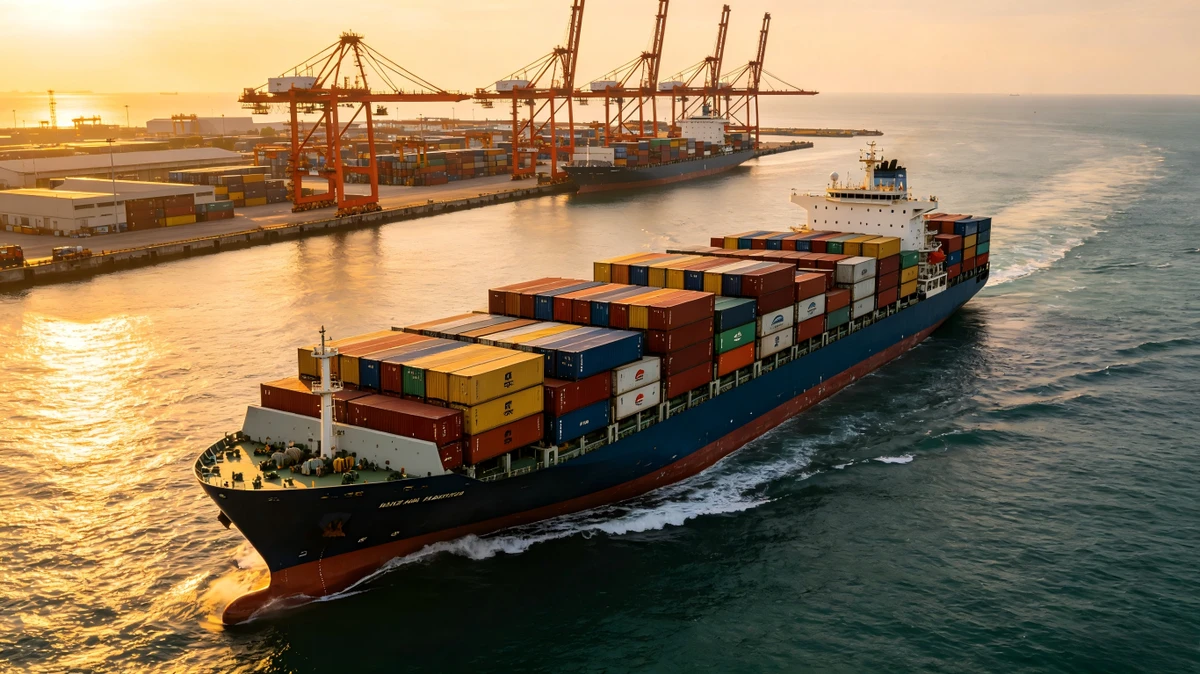
Container shipping from Vietnam to USA is the backbone of one of the fastest-growing trade corridors in the world. With Vietnam’s exports to the United States reaching approximately $153.2 billion in 2025, according to the US Census Bureau, thousands of importers rely on ocean freight to move electronics, textiles, furniture, and footwear across the Pacific every month. Yet most online guides offer generic “Asia-to-USA” advice that misses the Vietnam-specific realities — Tet Holiday factory closures, Cat Lai port congestion, and the critical choice between FCL and LCL — that make or break a shipment.
This guide covers everything you need to know about Shipping from Vietnam to USA in 2026. You’ll find exact cost benchmarks for FCL and LCL, port-to-port transit times, Vietnam export customs procedures, US import compliance requirements, Incoterms guidance, and real-world scenarios from operations we run every day. If you need air freight for urgent cargo, see our separate guide — here we focus exclusively on sea freight containers.
Why Vietnam Is a Critical Sourcing Hub for US Importers
Vietnam has evolved into one of the most strategic sourcing destinations for American businesses since the Bilateral Trade Agreement was signed in 2001. Tariffs on many Vietnamese goods dropped from roughly 40% to approximately 3%, and manufacturing investment has poured into the country over the past two decades.
Today, Vietnam is the top supplier in several categories critical to US supply chains:
- Electronics and machinery: Samsung, Apple suppliers, and component manufacturers cluster in Bac Ninh and Hanoi.
- Textiles and garments: Vietnam is the world’s second-largest textile exporter, with major production around Ho Chi Minh City and Hanoi.
- Footwear and furniture: Binh Duong and Dong Nai provinces specialize in shoes and wood furniture for the US market.
- Seafood and agriculture: The Mekong Delta and central coast supply shrimp, fish, and coffee.
Vietnam’s export strength extends well beyond North America. We also manage significant Shipping from Vietnam to Australia volume, particularly for furniture and seafood exports subject to Australia’s strict BMSB compliance regime.
North vs. South Vietnam: Where Your Factory Determines Your Port
Choosing the wrong port can add $200–$500 in domestic trucking and delay your shipment by days. Vietnam’s manufacturing is geographically concentrated, and your factory location should dictate your port of export:
| Manufacturing Region | Key Products | Optimal Port | Inland Trucking |
|---|---|---|---|
| Northern Vietnam (Hanoi, Bac Ninh, Hai Phong) | Electronics, textiles, machinery | Hai Phong Port | 1–3 hours |
| Southern Vietnam (Ho Chi Minh City, Binh Duong, Dong Nai) | Shoes, furniture, garments, agriculture | Cat Lai Port (HCM) | 1–4 hours |
| Central Vietnam (Da Nang, Quang Nam) | Furniture, seafood, handicrafts | Da Nang Port | 1–2 hours |
At VNForwarder, we operate consolidation warehouses near both Cat Lai and Hai Phong. If your factory is in the north but your forwarder only offers Cat Lai departures, you’re paying for unnecessary trucking across the entire country.
Container Shipping Methods: FCL vs. LCL vs. DDP Sea Freight
Not every shipment needs a full container, and not every importer wants to manage US customs. Here’s how the three primary sea freight options compare for Vietnam-to-USA trade:
| Method | Transit Time | Cost Level | Best For |
|---|---|---|---|
| FCL Sea Freight | 18–40 days | Low | Large-volume inventory replenishment |
| LCL Sea Freight | 22–45 days | Low-Medium | 1–15 CBM shipments, SMEs |
| DDP Sea Freight Door-to-Door | 20–50 days | Medium-High | Importers without US customs broker |
FCL (Full Container Load) gives you exclusive use of a 20-foot or 40-foot container. It’s the most cost-effective option when you have enough cargo to fill most of the space — typically 10–15 CBM or more.
LCL (Less than Container Load) lets you pay only for the space you use. Your cargo shares a container with other shipments. It’s ideal for smaller volumes, but transit takes longer due to consolidation and deconsolidation.
DDP (Delivered Duty Paid) is a door-to-door service where your forwarder handles everything: Vietnam pickup, export customs, ocean freight, US import customs, duty payment, and final delivery. It’s the simplest option if you don’t have a US customs broker or want predictable costs.
FCL Container Shipping From Vietnam to USA
Choosing the Right Container Type
Vietnam’s export diversity means one size does not fit all. Selecting the wrong container type can damage cargo, inflate costs, or cause loading failures at the factory.
| Container Type | Capacity | Best For | Common Vietnam Exports |
|---|---|---|---|
| 20GP | ~33 CBM | Dense, heavy cargo | Tiles, metal parts, machinery |
| 40GP | ~67 CBM | Standard large shipments | Furniture, textiles, electronics |
| 40HQ | ~76 CBM | Bulky, lightweight cargo | Furniture, foam products, plastics |
| Reefer | Varies | Temperature-controlled | Seafood, frozen foods, pharmaceuticals |
| Flat-Rack / Open-Top | Varies | Oversized cargo | Machinery, large furniture, project cargo |
| GOH | Varies | Hanging garments | Textiles, ready-made clothing |
40HQ vs. 40GP: For lightweight Vietnam exports like furniture and footwear, the 40HQ (high cube) adds approximately 8% more volume at the same footprint. If your cargo is volume-heavy rather than weight-heavy, the HQ is almost always the better choice.
Reefer containers are essential for Vietnamese seafood and frozen agricultural exports. Vietnam’s seafood industry ships massive volumes to the USA, and a standard dry container would ruin the product.
FCL Shipping Costs From Vietnam to USA (2026)
The following benchmarks reflect market rates we negotiate regularly with carriers like MSC, Maersk, ONE, and COSCO for standard dry containers in mid-2026.
| Origin Port | Destination | 20GP | 40HQ |
|---|---|---|---|
| Ho Chi Minh (Cat Lai) | Los Angeles | ~$2,200 | ~$3,100 |
| Ho Chi Minh (Cat Lai) | New York | ~$3,100 | ~$4,100 |
| Hai Phong | Los Angeles | ~$2,300 | ~$3,200 |
| Hai Phong | New York | ~$3,200 | ~$4,200 |
What drives FCL rate fluctuations?
- Carrier choice: MSC, Maersk, ONE, and COSCO operate direct services from Cat Lai and Hai Phong. Premium carriers charge more but offer better schedule reliability.
- Direct vs. transshipment: Direct sailings to Los Angeles take 18–25 days. Transshipment via Singapore or Busan adds 3–7 days but may cost 10–15% less.
- Fuel surcharge (BAF): Bunker Adjustment Factor fluctuates with oil prices and can add $100–$400 per container.
- Peak season surcharge (PSS): Applied during Q4 (August–October), typically $200–$600 per container.
- Container availability: Post-Tet shortages or sudden demand surges can spike rates temporarily.
LCL Container Shipping From Vietnam to USA
In our experience at VNForwarder, LCL is the practical choice when your shipment is too small to justify a full container but too large for cost-effective air freight. Most Vietnam-to-USA LCL cargo falls in the 2–10 CBM range.
LCL Pricing (Per CBM, 2026)
| Origin Port | Destination | Rate per CBM |
|---|---|---|
| Ho Chi Minh | Los Angeles | ~$210–$230 |
| Ho Chi Minh | New York | ~$220–$240 |
| Hai Phong | Los Angeles | ~$220–$240 |
| Hai Phong | New York | ~$230–$250 |
The LCL break-even point: LCL is typically cheaper than FCL when your cargo is under 10–15 CBM. Above that threshold, the per-unit cost of FCL drops below LCL, and you also gain the security of a sealed container.
How LCL Works in Practice
The process involves more handling than FCL, which is why transit takes longer:
- Supplier pickup: Cargo collected from your Vietnamese factory.
- Consolidation: Cargo brought to a warehouse and combined with other shipments into one container.
- Export customs: Unified customs clearance for the consolidated container.
- Ocean freight: Container sails to the USA.
- Deconsolidation: At the US port, cargo is separated and prepared for individual delivery.
- Final delivery: Trucking to your warehouse or Amazon FBA center.
At VNForwarder, we run weekly LCL consolidation services from both Cat Lai and Hai Phong. Instead of managing separate small shipments from multiple suppliers, we consolidate cargo at our Vietnam warehouse, handle unified export customs clearance, and deliver a single consolidated shipment to your US distribution center. This is especially valuable for Amazon sellers sourcing from multiple Vietnamese factories.
Risks to Manage With LCL
- Higher handling damage risk: Your cargo is loaded and unloaded alongside other shipments. Proper export packaging is critical.
- Co-loading restrictions: Hazardous materials, strong-smelling goods (like certain rubber products), or fragile items may be restricted from standard LCL.
- Longer transit: Expect 3–7 extra days at origin for consolidation and 2–5 extra days at destination for deconsolidation.
DDP & Door-to-Door Container Shipping From Vietnam to USA
DDP (Delivered Duty Paid) is the most hands-off option for US importers. Under DDP, your forwarder takes responsibility for the entire journey from your supplier’s factory in Vietnam to your door in the USA.
What’s Included in DDP Sea Freight
| Stage | What’s Covered |
|---|---|
| Vietnam pickup | Factory or supplier warehouse collection |
| Export customs | Vietnam Customs declaration, inspection coordination |
| Ocean freight | FCL or LCL shipping to US port |
| US import customs | ISF filing, CBP entry, duty/tax calculation |
| Duty & tax payment | All customs duties, MPF, HMF paid on your behalf |
| Inland delivery | Trucking from US port to final destination |
DDP vs. DDU vs. DAP: Quick Comparison
| Term | Export Customs | Ocean Freight | Import Customs | Duties/Taxes | Final Delivery |
|---|---|---|---|---|---|
| DDP | Forwarder | Forwarder | Forwarder | Forwarder | Forwarder |
| DDU | Forwarder | Forwarder | Forwarder | You pay | Forwarder |
| DAP | Forwarder | Forwarder | You manage | You pay | Forwarder |
Cost implications: DDP typically adds 15–25% to your base ocean freight rate, but it eliminates the need to hire a US customs broker, pay surprise storage fees, or manage trucking coordination. For many SMEs and first-time importers, the total landed cost under DDP is actually lower than FOB once you account for hidden expenses.
When DDP makes sense: First-time importers without a US customs broker, Amazon FBA sellers who need hassle-free delivery to fulfillment centers, and any business that prioritizes budget predictability over absolute cost minimization.
At VNForwarder, we offer single-quote DDP with no hidden fees. Your dedicated account manager coordinates both the Vietnam export side and the US import side, so you deal with one point of contact from factory pickup to final delivery.
Container Shipping Times From Vietnam to USA: Detailed Breakdown
Transit time is where planning pays off. The difference between a well-planned shipment and a poorly planned one can be two weeks — and thousands of dollars in demurrage or stockout losses.
Port-to-Port Transit Times
| Vietnam Origin | US West Coast (LA/LB) | US East Coast (NY/NJ) |
|---|---|---|
| Ho Chi Minh (Cat Lai) | 18–25 days | 30–40 days |
| Hai Phong | 20–28 days | 32–42 days |
| Da Nang | 20–28 days | 32–42 days |
Why is Hai Phong slightly slower to the West Coast than Cat Lai? While Hai Phong is closer to northern factories, most direct Trans-Pacific services originate from Cat Lai. Cargo from Hai Phong often transships through Busan or Kaohsiung before connecting to US-bound vessels. However, for northern factories, the 1–2 day sailing difference is more than offset by 8–12 hours saved in domestic trucking.
Door-to-Door: The Real Timeline
Add these realistic buffers to port-to-port estimates:
| Stage | Time Added |
|---|---|
| Vietnam inland trucking | +1–3 days |
| Vietnam export customs | +1–2 days |
| US customs clearance | +2–5 days |
| US inland delivery | +2–7 days |
FCL door-to-door total: West Coast 25–38 days, East Coast 38–52 days.
LCL door-to-door total: Add 3–7 days at origin for consolidation and 2–5 days at destination for deconsolidation.
Direct Sailing vs. Transshipment
- Direct sailings: Cat Lai → Los Angeles in 18–22 days. More reliable, less handling, premium pricing. Carriers like MSC, Maersk, and ONE offer direct strings.
- Transshipment: Cat Lai → Singapore/Busan → Los Angeles in 22–28 days. Cheaper by 10–15% but adds transit risk if the connecting vessel is delayed.
At VNForwarder, we always disclose whether your booking is direct or transshipment so you can make an informed decision based on your timeline and budget.
Seasonal Variations That Affect Every Shipment
Tet Holiday (January–February): Vietnam’s Lunar New Year shuts down factories for 1–2 weeks and tightens container availability dramatically. We recommend booking 8 weeks in advance for Tet-adjacent sailings.
Q4 Peak Season (August–October): Pre-holiday inventory rush from US retailers drives rates up 10–20% and tightens space. Book 6 weeks ahead.
Chinese New Year Spillover (February–March): Vietnam suppliers dependent on Chinese components may delay production, pushing March shipments back by 1–2 weeks.
Common Delay Factors
- Port congestion: LA/Long Beach chassis shortages and Cat Lai backup during peak weeks can add 2–7 days.
- Customs exams: CBP holds for ISF discrepancies or random inspections add 3–14 days.
- Blank sailings: Carriers occasionally skip sailings to manage capacity, rolling cargo to the next vessel (+7 days).
- Weather and geopolitics: Typhoons in the South China Sea or canal restrictions can reroute vessels and extend transit. In our experience, building a 5–7 day buffer into your inventory planning eliminates most weather-related surprises.
Complete Container Shipping Cost Breakdown (2026)
For a route-by-route price analysis, read our dedicated guide to Shipping Cost from Vietnam to USA. The ocean freight rate is only part of the story. To budget accurately, you need to account for origin charges, destination charges, and the hidden fees that catch unprepared importers off guard.
Vietnam Origin Charges
| Charge | Estimated Cost | Notes |
|---|---|---|
| Terminal Handling Charge (THC) | $130–$200 per container | Port handling at Cat Lai / Hai Phong |
| Bill of Lading fee | ~$45 | Issued by carrier or NVOCC |
| Container seal fee | ~$10 | Security seal on container door |
| VGM administration | ~$25 | Verified Gross Mass declaration |
| Vietnam customs clearance | $80–$150 | Export declaration via VNACCS |
| Inland trucking to port | $100–$400 | Depends on factory distance from port |
USA Destination Charges
| Charge | Estimated Cost | Notes |
|---|---|---|
| Terminal Handling Charge (dest.) | $300–$600 per container | Port handling at LA/LB, NY/NJ, etc. |
| Customs clearance / broker fee | $150–$300 | Formal entry processing |
| ISF filing fee | $25–$50 | Mandatory for all ocean imports |
| Duties & taxes | 0%–25%+ | Based on HS code and product value |
| Merchandise Processing Fee (MPF) | 0.3464% of value (CBP) | Min $31.67, max $614.35 |
| Harbor Maintenance Fee (HMF) | 0.125% of value (CBP) | Based on cargo value |
| Inland trucking from port | $500–$2,500 | Depends on distance to final destination |
| Chassis / demurrage / detention | $50–$200/day | If container sits at port beyond free time |
Total Landed Cost Example
Let’s break down the real cost of shipping a 40HQ of furniture from a factory in Binh Duong to a Los Angeles warehouse:
| Cost Component | Amount |
|---|---|
| Ocean freight (Cat Lai → LA, 40HQ) | $3,100 |
| Vietnam origin charges | ~$400 |
| US destination charges (broker, THC, trucking) | ~$1,200 |
| Duties (0% for most furniture under HTS 9403) | $0 |
| MPF + HMF (~0.47% of $25,000 cargo value) | ~$118 |
| Total Landed Cost | ~$4,818 |
This is why DDP quotes are attractive: instead of managing 8–10 separate line items, you receive one predictable figure.
Hidden Fees to Watch
- Currency Adjustment Factor (CAF): Applied by some carriers when exchange rates fluctuate.
- War risk surcharge: Occasional addition for certain routing areas.
- Documentation amendments: $50–$100 per change if you need to correct a B/L after sailing.
- Container cleaning fee: If your container is dirty upon return, the carrier charges $100–$300.
- Storage at CFS: LCL cargo that sits at the Container Freight Station beyond free time incurs daily storage.
Disclaimer: The cost benchmarks in this guide reflect market conditions in mid-2026 and are provided for planning purposes only. Actual rates vary by carrier, sailing schedule, commodity type, and seasonal demand. Contact VNForwarder for a firm quote tailored to your specific shipment.
Vietnam Export Customs Clearance for Container Shipments
In our experience at VNForwarder, the Vietnam side of customs is where most preventable delays originate. Most guides skip this entirely — yet a hold at Cat Lai or Hai Phong can derail your US delivery schedule just as easily as a CBP exam in Los Angeles.
The Vietnam Export Process Step-by-Step
- Export license verification: Certain products (wood, minerals, chemicals) require an export license from Vietnamese authorities. Check before production begins.
- Documentation preparation: Commercial invoice, packing list, and sales contract must match exactly. Discrepancies are the #1 cause of inspection.
- Customs declaration (VNACCS): Your forwarder submits the declaration electronically through Vietnam’s Automated Cargo Clearance System.
- Risk assessment: Vietnam Customs runs every declaration through a risk management system. Low-risk shipments clear automatically; high-risk shipments are flagged for physical inspection.
- Container loading and release: Once cleared, the container is trucked to the port, weighed for VGM (Verified Gross Mass), and loaded onto the vessel.
Required Vietnam Export Documents
| Document | Purpose |
|---|---|
| Commercial Invoice | Customs value, product description, buyer/seller details |
| Packing List | Carton count, gross weight, dimensions, marks |
| Sales Contract / Purchase Order | Proof of transaction |
| Export Customs Declaration | Electronic filing via VNACCS |
| Bill of Lading | Issued after container loading; negotiable document of title |
| Certificate of Origin | Required for preferential tariff claims |
| Export License | For restricted goods (timber, minerals, etc.) |
| VGM Declaration | Mandatory since SOLAS 2016; container weight verification |
Common Causes of Delay on the Vietnam Side
- Incorrect HS code classification: Vietnam Customs uses HS codes to assess duty and risk. Wrong codes trigger automatic inspection.
- Invoice vs. packing list mismatches: Even a one-carton difference can flag your shipment.
- Missing export license: Attempting to export restricted goods without proper licensing results in immediate detention.
- Pre-Tet customs rush: In the two weeks before Tet Holiday, customs queues double. Submit declarations early.
- Late VGM submission: Carriers will not load a container without a submitted VGM. Missing the cutoff means missing the sailing.
At VNForwarder, our operations team submits customs declarations daily at both Cat Lai and Hai Phong. We pre-classify HS codes for our regular clients and maintain direct communication channels with Vietnam Customs officials to resolve issues before they become delays.
USA Import Customs & Compliance for Vietnam-Origin Container Goods
Clearing US Customs and Border Protection (CBP) is the final hurdle. Vietnam-origin goods face the same standard procedures as all imports per CBP regulations, plus some specific compliance risks that importers often overlook.
ISF 10+2: The Non-Negotiable Filing
The Importer Security Filing (ISF), commonly called “10+2,” is mandatory for all ocean container imports to the USA. It must be filed with CBP at least 24 hours before the vessel loads cargo at the Vietnam port.
According to US Customs and Border Protection (CBP), late or incorrect ISF filings carry penalties of $5,000 to $10,000 per violation. The filing includes 10 data elements from the importer and 2 from the carrier, covering seller, buyer, manufacturer, ship-to party, container stuffing location, and consolidated details.
At VNForwarder, we file ISF on behalf of our DDP clients as part of our standard service. For FOB and CIF shipments, we remind clients to confirm their US broker has filed before the deadline.
Anti-Dumping & Countervailing Duties (AD/CVD) Alert
Certain Vietnam-origin products face anti-dumping and countervailing duties in addition to standard tariffs. These duties — enforced by the US Department of Commerce and the International Trade Commission (ITC) — can add 50% to 300% to your landed cost and are not always obvious at the quoting stage.
High-risk categories include:
| Product Category | Duty Risk | How to Verify |
|---|---|---|
| Steel products | High | ITC/Commerce Department AD/CVD database |
| Solar cells & modules | High | Check Commerce Department case listings |
| Hardwood plywood | Medium-High | Verify HTS code against active investigations |
| Frozen shrimp & fish | Medium | Check for ongoing seafood AD proceedings |
| Polyethylene carrier bags | Medium | Review current case status online |
Before placing a large order, always verify whether your specific HTS code is subject to active AD/CVD proceedings. A freight forwarder with Vietnam expertise can flag this risk during the quoting phase.
Product-Specific Compliance Requirements
| Agency | Regulates | Common Vietnam Exports Affected |
|---|---|---|
| FDA | Food, drugs, cosmetics, medical devices | Coffee, seafood, supplements, cosmetics |
| FCC | Electronics and wireless devices | Bluetooth accessories, phones, IoT devices |
| EPA | Vehicles, engines, chemicals | Small engines, certain chemical products |
| CPSC | Consumer product safety | Children’s toys, textiles, furniture |
| USDA | Meat, poultry, plant products | Agricultural goods, wood products |
Each agency — FDA, FCC, EPA, CPSC, and USDA — has its own documentation and labeling requirements. Failing to comply can result in cargo holds, refusals, or forced re-export at your expense.
CBP Examination Types
- VACIS scan: Non-intrusive X-ray scan. Fastest resolution, usually same day.
- Intensive exam: Physical unloading and inspection of container contents. Adds 3–14 days and $500–$2,000 in exam fees.
- Agency hold: FDA, USDA, or CPSC review. Timeline varies by agency workload and product complexity.
You can minimize examination risk by ensuring accurate documentation, consistent valuation, and clean shipping history.
Documentation Checklist: Vietnam Export + USA Import
Missing a single document can stall your shipment for days. Use this checklist to prepare everything before cargo is ready to move.
| Document | Vietnam Export | USA Import | Notes |
|---|---|---|---|
| Commercial Invoice | ✅ Required | ✅ Required | Must match purchase order value |
| Packing List | ✅ Required | ✅ Required | Include carton-level detail |
| Bill of Lading | ✅ Required | ✅ Required | Negotiable document for sea freight |
| Certificate of Origin | ⚠️ Conditional | ⚠️ Conditional | For duty preference claims |
| Export Customs Declaration | ✅ Required | ❌ N/A | Filed via VNACCS |
| ISF Filing | ❌ N/A | ✅ Required (sea) | Due 24 hours before loading |
| Customs Bond | ❌ N/A | ✅ Required | Single entry or continuous bond |
| Power of Attorney | ❌ N/A | ✅ Required | For your customs broker |
| Product Certifications | ⚠️ Conditional | ⚠️ Conditional | FDA, FCC, EPA as needed |
| VGM Declaration | ✅ Required | ❌ N/A | Mandatory for all containers |
Pro tip: Start preparing documents 7–10 days before cargo readiness. In our experience at VNForwarder, 80% of customs delays stem from last-minute documentation errors that could have been caught with a simple pre-submission review.
Choosing the Right Incoterm for Vietnam→USA Container Shipments
In our experience advising US importers since 2018, the Incoterm you choose defines who pays for what — and who bears the risk if something goes wrong. For Vietnam-to-USA container shipping, the wrong Incoterm can cost you thousands in unexpected fees.
Incoterms 2020 Comparison for Sea Freight
| Incoterm | Seller Pays | Buyer Pays | Best For | Hidden Cost Risk |
|---|---|---|---|---|
| EXW | Minimal | Everything | Experienced importers with a Vietnam agent | High — buyer manages all logistics |
| FOB | To port + loading | Ocean freight + US import | Importers with a US broker; cost control | Low |
| CIF | To destination port | US import customs + delivery | Importers wanting rate visibility | Medium — destination charges surprise many buyers |
| DDU | To destination, no duty | Import duties + taxes | Importers with broker but no US transport | Medium |
| DDP | Everything | Nothing | First-time importers, FBA sellers, hassle-free seekers | Low — all-in quote, no surprises |
VNForwarder Recommendations by Importer Type
- Experienced B2B importer with a US broker: Choose FOB or CIF. You control carrier selection and can often save 8–12% versus DDP by managing your own US-side logistics.
- SME or first-time importer: Choose DDP. The simplicity and cost predictability outweigh the modest premium. You avoid customs broker fees, unexpected storage charges, and trucking coordination headaches.
- Amazon FBA seller: Choose DDP door-to-door to your FBA warehouse. Amazon has strict delivery requirements; a forwarder experienced in FBA logistics handles labeling, palletization, and appointment scheduling.
- Large-volume regular shipper: Negotiate an annual FCL contract under FOB terms. Volume commitments with carriers like MSC or Maersk can lock in favorable rates for 12-month periods.
Top Container Shipping Routes & Ports: Vietnam to USA
Understanding the port ecosystem on both ends helps you choose faster, cheaper, and more reliable routings.
Vietnam Export Ports
Cat Lai (Ho Chi Minh City)
- Largest container port in Vietnam
- Handles approximately 40% of all Vietnam-USA container volume
- Direct sailings to Los Angeles and Oakland available
- Congestion risk during Q4 peak and pre-Tet rush
- Best for: Southern factories (Binh Duong, Dong Nai, HCMC)
Hai Phong
- Northern Vietnam’s primary gateway
- Growing capacity with new terminal expansions
- Strong connections to electronics and textile factories in Bac Ninh and Hanoi
- Best for: Northern factories (Hanoi, Bac Ninh, Hai Phong)
Da Nang
- Central Vietnam’s hub
- Smaller volume but efficient and less congested
- Best for: Furniture and handicraft exporters in Quang Nam and Da Nang
USA Destination Ports
| US Port | Transit from Cat Lai | Strengths | Best For |
|---|---|---|---|
| Los Angeles / Long Beach | 18–25 days | Largest gateway; most sailing options | West Coast distribution |
| New York / New Jersey | 30–40 days | Primary East Coast entry; rail to Midwest | East Coast / Midwest delivery |
| Savannah | 30–40 days | Fastest-growing; efficient operations | Southeast distribution |
| Oakland | 20–28 days | Alternative to congested LA/LB | Northern California / Pacific Northwest |
| Seattle-Tacoma | 22–28 days | Direct Trans-Pacific routing | Pacific Northwest delivery |
| Houston | 32–42 days | Gulf Coast access | Southern / Central US inland |
For importers planning to distribute across North America, we also offer Container from Vietnam to Canada with full door-to-door support.
Manufacturing Cluster → Optimal Port Mapping
Use this as a quick reference for planning your first shipment:
| Product Type | Factory Location | Vietnam Port | US Port | Container Type |
|---|---|---|---|---|
| Furniture | Binh Duong | Cat Lai | LA/LB or Savannah | 40HQ / Flat-Rack |
| Electronics | Bac Ninh | Hai Phong | LA/LB or NY/NJ | 40GP |
| Textiles / Garments | Ho Chi Minh City | Cat Lai | LA/LB | 40HQ / GOH |
| Seafood | Mekong Delta | Cat Lai | LA/LB | Reefer |
| Machinery | Hanoi | Hai Phong | LA/LB or Seattle | Flat-Rack / Open-Top |
| Footwear | Dong Nai | Cat Lai | LA/LB | 40HQ |
Amazon FBA Container Shipping From Vietnam to USA
Vietnam is rapidly becoming a top sourcing destination for Amazon sellers, especially in home goods, kitchenware, textiles, and electronics accessories. Container shipping to Amazon FBA warehouses requires more than standard ocean freight — it demands compliance with Amazon’s strict inbound receiving standards.
FBA Container Shipping Options
| Method | Transit | Best For |
|---|---|---|
| LCL + DDP | 25–35 days door-to-door | 2–10 CBM replenishments, mid-volume sellers |
| FCL + delivery | 20–30 days port-to-port + final leg | Large-volume sellers with 15+ CBM monthly |
Why not air freight for FBA? Air is rarely cost-effective for Amazon replenishment unless you’re launching a new product or facing an urgent stockout. Most established Vietnam-based Amazon sellers use LCL or FCL sea freight with DDP to control costs.
VNForwarder’s FBA Value-Added Services
Shipping to Amazon is not the same as shipping to a standard warehouse. Small mistakes lead to inbound rejection, which means storage fees, relabeling costs, and lost sales velocity.
- Quality inspection at origin: We inspect goods at our Vietnam warehouse before they ever enter a container. Catching defects in Vietnam is infinitely cheaper than after arrival at an Amazon FC.
- FNSKU labeling: Each unit must carry the correct Amazon barcode. We apply labels in Vietnam to ensure compliance.
- Amazon-compliant packaging: Carton dimensions, weight limits, and polybag requirements vary by category. We pack to spec.
- Palletization: Amazon requires B-21 grade pallets, 40×48 inches, 4-way entry. We build and wrap pallets at our facility before export.
- Delivery appointment scheduling: Amazon FCs require appointments. We coordinate delivery windows so your cargo doesn’t sit at the dock.
Common FBA Mistakes to Avoid
- Incorrect carton labeling: Mixed SKUs in one carton without proper labeling cause immediate rejection.
- Missing pallet specifications: Sending floor-loaded FCL instead of palletized cargo can result in refusal at the FC door.
- Non-compliant packaging: Insufficient dunnage or incorrect polybag suffocation warnings lead to rework charges.
Real-World Container Shipping Scenarios
Theory is useful, but real operations teach the lessons that matter. Here are three shipments we’ve managed at VNForwarder in the past year.
Case Study 1: Electronics FBA Seller (LCL + DDP)
Profile: An Amazon seller based in Austin, Texas, sourcing Bluetooth accessories from a factory in Dong Nai Province.
Challenge: The seller was shipping 3 CBM per month and previously used air freight for every replenishment. Costs were eating their margin, and they needed a reliable sea freight solution that still met Amazon’s delivery windows.
Solution: VNForwarder set up a weekly LCL consolidation from Cat Lai to Los Angeles, with DDP door-to-door delivery to Amazon FBA warehouses. Cargo is collected from the factory, consolidated at our HCMC warehouse, and shipped under a single customs declaration.
Result: 35% reduction in logistics costs compared to their previous all-air strategy. Zero FBA stockouts during Q4 peak season. The seller now plans inventory 6 weeks ahead instead of 2.
Case Study 2: Furniture Importer (FCL DDP)
Profile: A furniture retailer in Chicago importing 40HQ containers of rattan furniture from a factory in Binh Duong.
Challenge: First-time importer with no US customs broker. Worried about hidden costs, customs complexity, and damage during handling.
Solution: VNForwarder provided a single DDP quote covering factory pickup, export packing reinforcement, ocean freight to Chicago, US customs clearance, and final delivery to the retailer’s warehouse. We also conducted a pre-shipment inspection at the factory to verify quality before loading.
Result: Predictable landed cost with no surprise fees. Damage was reduced by 30% through direct container loading at the factory (instead of multiple handling steps). The importer has since scaled to two containers per month.
Case Study 3: Textile Wholesaler (FCL FOB)
Profile: A Los Angeles-based wholesaler importing 20GP containers of garments from Hanoi-area factories.
Challenge: Experienced importer with an established US customs broker. Needed to minimize freight costs and secure flexible sailing schedules to match their seasonal inventory cycles.
Solution: VNForwarder negotiated an annual FCL contract under FOB Hai Phong terms with a major carrier. The buyer manages US import through their own broker; we handle Vietnam export coordination and carrier space allocation.
Result: 12% freight cost savings versus spot market rates. Guaranteed space on weekly direct sailings during Q4 peak. The wholesaler now books containers 8 weeks ahead with confidence.
Expert Tips for Smoother Container Shipping From Vietnam
After managing thousands of Vietnam-to-USA container shipments since 2018, these are the practices that separate smooth operations from expensive surprises.
Booking Timeline
- FCL: Book 4–6 weeks in advance. Extend to 8+ weeks before Tet or Q4 peak.
- LCL: Book 2–3 weeks in advance. Weekly consolidations offer more flexibility than FCL.
Documentation Accuracy
Double-check your HS codes against the USITC HTS Search Tool before shipment. A single digit error can trigger a customs hold, exam, or incorrect duty assessment. Ensure your commercial invoice value matches your payment records — CBP cross-references both.
Peak Season Planning
Q4 (August–October) and pre-Tet (December–January) are the highest-risk periods for space shortages and rate spikes. If your business depends on holiday inventory, lock in rates and space by July.
Carrier and Routing Selection
Direct sailings from Cat Lai and Hai Phong (MSC, Maersk, ONE) offer more reliable transit than transshipment services. The 3–7 day savings often justify the modest premium, especially for time-sensitive inventory.
Cargo Insurance
Don’t rely on carrier liability under COGSA, which caps liability at roughly $500 per package. For high-value Vietnam exports, purchase all-risk cargo insurance covering the full commercial invoice value. It’s inexpensive peace of mind.
Container Loading Best Practices
Vietnam’s humid climate can damage cargo during the 3–4 week ocean transit. Use moisture absorption packs for textiles and electronics. Secure heavy cargo with proper lashing to prevent shifting. For furniture, use corner protectors and sufficient dunnage.
Currency Hedging
USD/VND exchange rate fluctuations can affect your supplier pricing by 3–5% within a quarter. Consider locking in exchange rates for large orders to protect your margins.
FAQ: Container Shipping From Vietnam to USA
How much does a container from Vietnam to USA cost in 2026?
A 20GP container to the US West Coast costs approximately $2,200–$2,500, while a 40HQ runs $3,100–$3,500. East Coast destinations add $800–$1,500. LCL rates range from $210–$250 per CBM depending on the route.
How long does container shipping take from Vietnam to USA?
FCL port-to-port transit is 18–25 days to the US West Coast and 30–40 days to the East Coast. Door-to-door delivery adds 7–15 days depending on inland distances and customs clearance speed.
What is the cheapest way to ship a container from Vietnam to USA?
For volumes under 10–15 CBM, LCL sea freight is typically the cheapest option. For larger volumes, FCL offers the lowest cost per unit. DDP costs more upfront but eliminates surprise fees that can exceed the premium.
Do I need a customs broker for Vietnam to USA shipping?
Yes, formal entry into the USA requires a customs broker. Under DDP terms, your freight forwarder handles this. Under FOB or CIF, you need to engage your own broker or possess the expertise to file entries yourself.
What documents do I need to ship from Vietnam to USA?
Required documents include the commercial invoice, packing list, bill of lading, ISF filing (for sea freight), customs bond, and product-specific certifications (FDA, FCC, etc.) as applicable. A Certificate of Origin may be needed for certain tariff claims.
Can I ship directly to Amazon FBA from Vietnam by sea freight?
Yes. Most Amazon sellers use LCL or FCL sea freight combined with DDP delivery to their FBA warehouse. The key is working with a forwarder experienced in Amazon’s strict labeling, packaging, and appointment requirements.
What is the best port in Vietnam for USA exports?
Cat Lai (Ho Chi Minh City) is optimal for southern factories in Binh Duong and Dong Nai. Hai Phong is best for northern factories around Hanoi and Bac Ninh. Choosing based on factory proximity minimizes inland trucking cost and time.
Are there anti-dumping duties on Vietnam goods entering the USA?
Certain products face anti-dumping and countervailing duties, including steel, solar panels, plywood, and shrimp. These duties are separate from standard tariffs and can add 50% to 300% to your landed cost. Verify your HTS code against the Commerce Department database before ordering.
How do I avoid delays at US customs?
File your ISF on time, ensure HS code accuracy, provide complete and consistent documentation, and use a reputable customs broker or experienced freight forwarder. Preparing documents 7–10 days before cargo readiness prevents most common delays.
Should I choose FCL or LCL from Vietnam?
Choose FCL if you have 10–15+ CBM, need cargo isolation, or want the lowest per-unit cost. Choose LCL if you have 1–10 CBM and want to avoid paying for empty container space.
Conclusion
Container shipping from Vietnam to USA involves more than booking ocean space. It requires understanding Vietnam’s export customs procedures, selecting the right port based on your factory location, choosing between FCL and LCL, navigating US import compliance, and picking the Incoterm that matches your operational capabilities.
The importers who succeed are the ones who plan holistically. They match cargo volume to container type, factory location to export port, and internal resources to the right Incoterm. They build buffer time for Tet and Q4 peak seasons. And they work with partners who understand both sides of the Pacific — not just one.
At VNForwarder, we’ve been based in Vietnam since 2018, managing container exports from Cat Lai, Hai Phong, and Da Nang to Los Angeles, New York, Savannah, and beyond. We also provide reliable Shipping from Vietnam to Canada for businesses expanding their North American distribution. If you’re ready to ship your container from Vietnam to the USA, get a transparent quote in 2–4 hours — with no hidden fees, a dedicated account manager, and end-to-end support from our Vietnam-based team.