

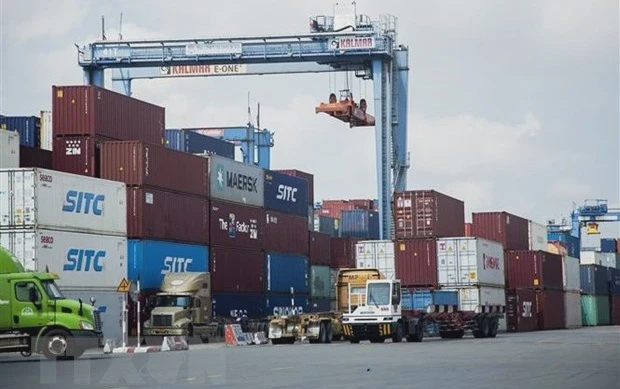
Vietnam’s trade engine hit a new gear during the week of September 1–7, 2026, and the numbers that came out of Hanoi last week will shape freight bookings for the rest of the year. The National Statistics Office confirmed that total trade turnover for the first eight months of 2026 reached a record US$770.14 billion, up 28.7% year-on-year, with single-month trade in August alone touching $109.7 billion. For B2B importers, cross-border e-commerce sellers, and SMEs buying from Vietnamese factories, last week’s news was not about a single dramatic event but about scale: more containers, more air cargo, more cold chain, and more paperwork moving through the system than ever before. This last-week round-up distills the developments that mattered and turns them into concrete actions for your next shipment.
A Record $770 Billion in Eight Months
The headline figure released on September 3 put Vietnam’s January–August trade at $770.14 billion, the highest eight-month total the country has ever recorded. Exports climbed 22.4% year-on-year to $374.84 billion, while imports surged 35.3% to $395.3 billion, leaving a trade deficit of $20.46 billion. Behind the totals sit two structural facts every shipper should understand. First, the foreign-invested sector generated 80.1% of exports—$300.37 billion—meaning global electronics, footwear, and furniture brands continue to route massive volumes through Vietnamese factories. Second, 33 export items each exceeded $1 billion in turnover, and just seven product groups accounted for 70% of all shipments, so cargo concentration in a handful of commodity lanes is intensifying.
For freight planning, this scale has direct consequences. The U.S. remained Vietnam’s largest export market at $122 billion in eight-month turnover, which keeps trans-Pacific capacity—and trans-Pacific rate pressure—firmly in focus as peak season approaches. China, at $161.9 billion, is Vietnam’s largest import source, and the 35.3% jump in imports implies heavy north–south flows of machinery, components, and raw materials feeding export factories. Importers booking FCL space from Ho Chi Minh City or Haiphong should expect busier terminals and tighter equipment availability through Q4, particularly on the Vietnam–U.S. West Coast and Vietnam–Northern Europe loops. LCL shippers benefit from the volume because consolidators can maintain weekly direct services, but cutoff discipline becomes critical when sailings run full. If your supplier’s cargo-ready date slips even a few days in this environment, your boxes are the first candidates to roll.
Samsung’s $500B Milestone Signals an Air-Cargo Supercycle
Electronics logistics stole part of the spotlight last week when Samsung reported that its four Vietnamese factories booked a combined US$2.31 billion in profit for the first half of 2026, up 23.5% year-on-year, and that cumulative phone exports from Vietnam since 2009 crossed the $500 billion mark. Samsung Thai Nguyen alone generated $16.2 billion in revenue, and global analysts attributed the group’s profit surge to memory and storage chips driven by expanding AI applications.
Why does a Korean conglomerate’s earnings report belong in a freight round-up? Because Vietnam’s electronics output is freight demand. High-value smartphones, components, and semiconductor-related cargo move by air, and Samsung’s volumes are a leading indicator for belly-hold and freighter capacity out of Noi Bai and Tan Son Nhat. With AI-driven chip demand pulling premium electronics through Vietnamese plants, air freight rates on key corridors to the U.S. and Europe face sustained upward pressure through the traditional Q4 peak. E-commerce sellers competing for the same capacity on Vietnam–U.S. lanes should plan for firmer pricing and longer booking lead times—seven to ten days ahead is now the prudent standard for anything time-sensitive. If your cargo is mid-value and schedule-tolerant, consider splitting the plan: air freight for launch stock, ocean FCL or LCL for replenishment, and DDP door-to-door service where you want a single accountable partner managing customs at both ends.
The 3–4 Hour Customs Race Reaches Southeast Asia
Cold chain was the week’s other big theme. On September 4, Malaysia Airports signed a tripartite memorandum with China Henan Aviation Group and a Malaysian producer to pilot a “Smart Durian Fast Track” between Kuala Lumpur and Zhengzhou that aims to clear fresh durians through Chinese customs in just three to four hours using an inspect-on-arrival, release-upon-compliance model. The initiative targets China’s booming durian import market—roughly 1.87 million tonnes worth $7.49 billion in 2025, with first-half 2026 imports up 47% year-on-year.
Vietnamese exporters are already major players in that market, shipping $846 million of durians to China in the first half of 2026 for an 18% share, behind Thailand’s 81%. The competitive message of last week’s announcement is blunt: neighboring origins are investing heavily in speed, and speed in perishables is won or lost at customs, not at sea. Vietnamese authorities and exporters will feel pressure to match fast-track clearance, expand cold-chain capacity at airports and border gates, and streamline phytosanitary certification. For importers of Vietnamese fruit, seafood, coffee, and other perishables, the practical lesson is to treat documentation as part of the cold chain: a reefer set at minus 18 degrees buys nothing if the cargo sits three days in inspection because the health certificate, phytosanitary papers, and commercial invoice do not align. Shippers moving temperature-controlled cargo should confirm their forwarder’s cold-chain handling capabilities—pre-cooling, reefer plug-in at origin and transshipment ports, and real-time temperature monitoring—before booking, and should pre-alert documents to the destination broker so clearance formalities are completed before the vessel or aircraft arrives.
New Export Channels and a Busy Sourcing Calendar
Two quieter stories rounded out the week. Vietnamese officials announced plans to help domestic brands export to the U.S. and China through TikTok Shop, signaling that social-commerce channels are becoming a formal part of the country’s export machinery alongside traditional B2B. And VIFA ASEAN 2026 opened in Ho Chi Minh City with more than 600 booths of furniture and handicraft suppliers, reinforcing Vietnam’s position as a sourcing destination for home-furnishing importers ahead of the holiday selling season.
Both stories point the same direction: export order flow is diversifying beyond giant factory groups into small and mid-sized sellers, which means more LCL consignments, more e-commerce parcel consolidations, and more first-time exporters who need guidance on Incoterms, export declarations, and bill of lading requirements. Importers working with smaller Vietnamese suppliers should build extra onboarding time into their sourcing calendar—confirming who prepares the export customs declaration, who books the freight, and who pays which charges under FOB, CIF, or EXW terms avoids expensive misunderstandings when the first shipment is already at the port.
What This Means for Your Next Shipment
Last week’s record numbers describe a logistics market that is growing faster than its infrastructure, which rewards preparation and punishes improvisation. Five actions stand out:
- Book earlier than your instinct suggests. With eight-month trade up 28.7%, secure FCL space three to four weeks ahead for peak-season sailings and LCL space at least two weeks out.
- Treat documents as cargo. Align the commercial invoice, packing list, Certificate of Origin, and B/L before the truck arrives at the terminal—especially for agri-perishables chasing fast-track clearance.
- Separate urgent from economical. Use air freight selectively for high-value or deadline-driven cargo, and lock ocean rates with defined validity windows for the rest.
- Pressure-test your cold chain. For reefer cargo, verify pre-cooling, plug-in availability, and destination pre-clearance with your forwarder and broker.
- Scrutinize all-in pricing. On busy lanes, ask for a full breakdown—ocean or air rate, BAF, terminal handling, documentation, and destination charges—so surcharges cannot erode your landed-cost advantage.
Get a Clear Quote in Hours
VNForwarder is a Vietnam-based freight forwarder helping B2B importers and e-commerce sellers move cargo from Vietnam to global markets. We quote FCL, LCL, air freight, DDP door-to-door, cold-chain, and Amazon FBA shipments within 2–4 hours, with transparent all-in pricing, a dedicated account manager, and 24⁄7 customer support backed by a local network at Vietnam’s major ports and airports. If last week’s record trade numbers mean more of your supply chain runs through Vietnam, contact VNForwarder today and get a competitive quotation for your next shipment.