

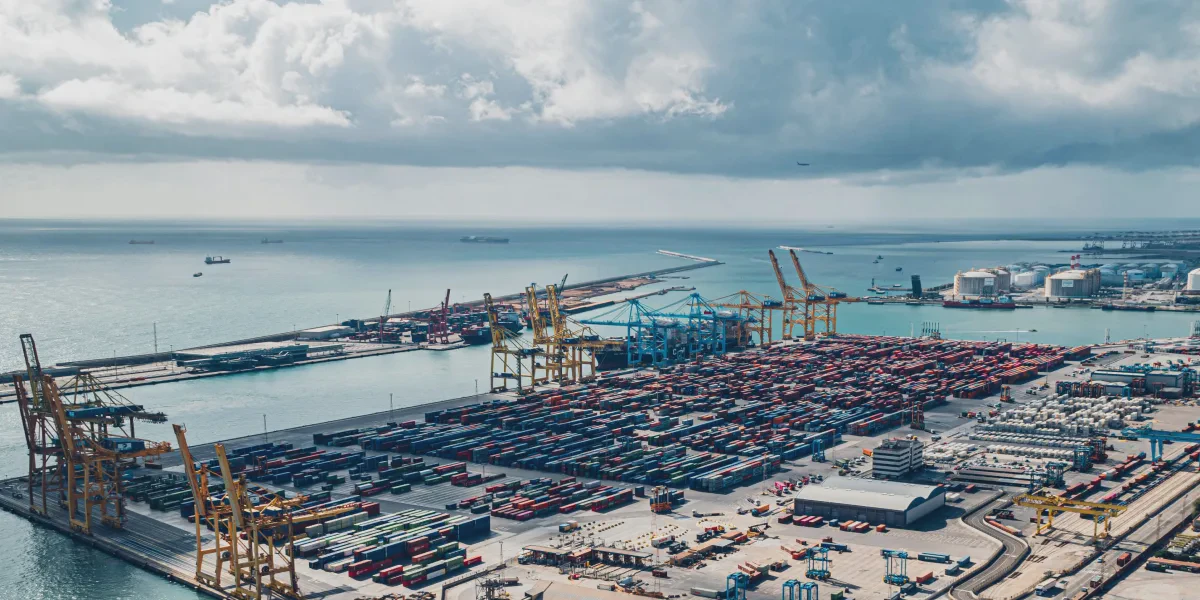
Vietnam’s logistics market kept moving through the week of August 25–31, 2026, and the story was less about dramatic shocks than about steady pressure building ahead of the traditional peak season. For B2B importers, e-commerce sellers, and SMEs that rely on Vietnamese suppliers, last week delivered a clear message: capacity is slowly normalizing at the country’s main export gateways, but trade-policy uncertainty and stricter compliance checks mean the paperwork side of a shipment now matters just as much as the freight rate. This last-week round-up looks at the developments that shaped Vietnam’s freight-forwarding environment and translates them into practical actions for anyone moving cargo from Vietnam to global markets.
Cai Mep and Cat Lai Find Their Rhythm
The most welcome news out of southern Vietnam last week was operational rather than political. Vessel waiting times at Cai Mep and Cat Lai eased noticeably compared with the tight conditions that dominated much of August, as major liner operators reinstated several previously blanked sailings and adjusted their schedules to absorb the post-summer cargo flow. The improvement did not appear overnight; it was the result of carriers redeploying capacity back into the Asia–Europe and trans-Pacific trades after months of Red Sea diversions had stretched the global fleet. With more vessels arriving on schedule, exporters booking FCL shipments from Ho Chi Minh City gained more predictable cut-off dates, while LCL consolidators found it easier to secure weekly sailing slots and avoid the rolling delays that had forced some cargo to wait for the next available vessel.
That said, “easier” is not the same as “easy.” Container availability at depots around Ho Chi Minh City remained uneven, especially for 40-foot high-cube units, and several forwarders reported that last-minute bookings still carried a premium. The lesson for importers is straightforward: if your supplier in Vietnam has confirmed production dates, lock in space early. A booking confirmed two weeks before cargo ready date almost always beats a spot-market gamble, particularly when peak-season demand begins to layer on top of already busy lanes. The improvement is especially useful for project cargo and oversized machinery that moves on flat-rack or open-top containers, since these non-standard units are often the first to be rolled when vessels are overbooked. With schedules stabilizing, exporters of industrial equipment, furniture, and automotive parts can plan factory loading dates with more confidence and reduce the costly downtime that comes from uncertain vessel availability.
Washington’s Trade Spotlight Stays on Vietnam
Trade policy stayed on everyone’s radar last week as U.S. officials continued to signal that Vietnam will remain under close review for origin compliance and possible tariff adjustments. While no final measures were announced during the seven-day window, the steady drumbeat of statements from Washington reinforced what forwarders and customs brokers have been telling clients for months: claiming Vietnam origin is no longer a box-checking exercise. Authorities on both sides of the Pacific are looking for evidence that real transformation happened in Vietnam—not just repackaging, minor assembly, or transit masking.
For importers, this means the Certificate of Origin (C/O), commercial invoice, packing list, and bill of lading (B/L) must tell a consistent story. Discrepancies between the HS code on the export declaration and the import entry, vague product descriptions, or invoices that do not match the value declared to Vietnamese customs can all trigger inspections, denial of preferential duty treatment, or even allegations of illegal transshipment. Last week’s signal was simply that enforcement intensity is rising, and the importers who will sleep best are the ones who audit supplier documentation before the cargo reaches the port. SMEs without an in-house trade-compliance team should treat this as a reason to work with a forwarder that reviews export documents as part of the standard booking process rather than as an optional add-on.
Air Cargo Enters Peak-Season Mode
On the air side, the conversation shifted from “Is peak season here?” to “How much will it cost?” Freight forwarders reported firmer pricing out of Tan Son Nhat and Noi Bai as electronics, fashion accessories, and e-commerce parcels began to compete for the same belly-hold and freighter capacity. Rates on key lanes such as Vietnam–United States and Vietnam–Europe moved up slightly, but the more important change was the tightening of space: flights that had been available on a few days’ notice in July now required bookings a week or more in advance.
Time-sensitive shippers should remember that air freight from Vietnam is fast—typically 3–7 days to major global destinations—but it is also exposed to operational risk. Weather, slot restrictions, and security incidents can all ripple through a single airport quickly. Splitting urgent cargo across two flights, building a one- or two-day buffer into promised delivery dates, and confirming that your forwarder has 24⁄7 coverage are small steps that pay for themselves the first time a disruption occurs. The trend is particularly relevant for garment buyers, electronics resellers, and perishable suppliers who cannot afford a missed flight, as well as for Amazon FBA sellers facing strict inbound receiving windows at U.S. and European fulfillment centers.
Customs Digitalization Speeds Up, But Demands Cleaner Data
Another theme from last week was the accelerating digitalization of Vietnamese customs processes. The General Department of Vietnam Customs has been pushing exporters toward tighter electronic matching between e-invoices, export declarations, and supporting documents, and last week several ports reported faster green-channel clearances for companies that had already aligned their data. The flip side was equally visible: shipments with mismatched values, missing HS codes, or inconsistent product descriptions faced longer inspection queues.
The practical takeaway is that clean data is now a competitive advantage. Importers should ask their Vietnamese suppliers to provide e-invoices and export declarations in formats that can be reconciled easily with the import paperwork at destination. When the numbers match at both ends, customs clearance becomes a formality rather than a project.
Fuel and Rate Volatility Remain Part of the Equation
Oil markets continued to nudge bunker costs around last week, which kept Bunker Adjustment Factor (BAF) and emergency fuel surcharges in the fine print of ocean freight quotations. Some carriers held base ocean rates steady but adjusted the surcharge lines, while others shortened the validity window on spot quotes from two weeks to one week. For importers, the headline rate is only part of the landed cost. A quote that looks cheap on day one can become expensive if fuel surcharges, terminal handling charges, and documentation fees are not disclosed upfront. Always ask for an all-in cost breakdown and a clear validity period before you commit. For shippers moving under DDP terms, this is even more important, because the forwarder is responsible for the entire landed cost including duties and taxes; any undisclosed surcharge that appears after the cargo has already sailed can wipe out the margin that made the Vietnam supplier attractive in the first place.
What This Means for Your Next Shipment
Last week’s developments add up to a market that is manageable but no longer forgiving of sloppy planning. Here are five actions importers should take now:
- Confirm sailing schedules two weeks ahead. With capacity normalizing but still uneven, early booking protects both FCL and LCL shipments from rolling delays and last-minute premiums.
- Audit your origin paperwork. Make sure the C/O, invoice, packing list, and B/L describe the same product, the same value, and the same manufacturing story.
- Lock in rate validity. Ask your forwarder for an all-in quote with a defined validity window, especially for DDP or DDU door-to-door shipments where multiple cost components move together.
- Book air freight earlier than usual. Peak-season demand is already tightening space out of Tan Son Nhat and Noi Bai; a seven-day lead time is now the safer norm.
- Build contingency into your delivery promise. Whether you are supplying a B2B customer or replenishing Amazon FBA inventory, a small buffer absorbs the unexpected port, airport, or customs delay.
Get a Clear Quote in Hours
VNForwarder is a Vietnam-based freight forwarder helping B2B importers and e-commerce sellers move cargo from Vietnam to global markets. We quote FCL, LCL, air freight, DDP door-to-door, and Amazon FBA shipments within 2–4 hours, with transparent pricing, a dedicated account manager, and 24⁄7 customer support. If you are sourcing from Vietnam and want a forwarder that combines local port relationships with clear, fast communication, contact VNForwarder today for a competitive quotation.