
Vietnam stopped treating small parcels as paperwork-light on Monday. Circular 142/2026/TT-BTC, effective 16 November 2026, rewrites the clearance procedure for everything moving through the designated postal operator or an international express carrier — inbound, outbound and in transit, and, according to carrier notices, documents as well as goods.
The fee is small: VND 10,000 per shipment, with the de minimis duty line of VND 1,000,000 left standing. The operational cost is not. Every consignment now needs its own declaration tied to an identified person, so the consignee's legal name, address, monitored email, mobile and a tax or personal ID number have to be in the booking before pickup — not collected after the parcel lands.
That moves the risk you carry. Freight rates can be hedged; a parcel held because the consignee's name on the booking does not match the commercial invoice cannot. This is customs clearance risk, not a courier fee line.
What took effect on 16 November
The Ministry of Finance issued it on 29 September 2026, signed for the minister by Deputy Minister Nguyen Duc Chi. It amends the two texts that have governed this channel since 2015 — Circular 49/2015/TT-BTC for the designated postal operator and Circular 191/2015/TT-BTC for international express services — plus their amendments in Circulars 56/2019 and 29/2025. There is no grace period in the text.
Four changes do the work. The simplified lanes now test more than value: goods must also be free of licence, condition or specialised-inspection requirements. Electronic identification and authentication becomes a condition of clearing. Express carriers may pay duties, fees and penalties on the owner's behalf from money deposited with customs in advance, self-declaring and self-paying for those entries. And the paperwork changes: separate goods lists for imports and exports, a new reconciliation table, and "yellow" and "red" channels renamed Channel 2 and Channel 3, with physical inspection only on Channel 3.
The three lanes, and who still gets the fast one
Postal imports sit in Group 1, express imports in Group 2, and everything else in Group 3, which means formal clearance. The value test is the duty exemption in Decree 134/2016 as amended: a customs value of VND 1,000,000 or less, or import duty payable of VND 100,000 or less.
| Lane | Who qualifies | What clearance looks like |
|---|---|---|
| Group 1 — postal | Within the duty-free limit, or within the gift limit (VND 2,000,000, or tax below VND 200,000, at most four times a year), with no licence or specialised inspection | Simplified declaration, identification by the declarant, recipient asked to cooperate |
| Group 2 — express | Within the duty-free limit, with no licence or specialised inspection | Simplified declaration, identification required, carrier may pay tax for you |
| Group 3 — everything else | Above the thresholds, or goods under a licence, condition or specialised inspection | Formal declaration with B/L or airway bill, invoice, packing list and, where preference is claimed, a Certificate of Origin |
The second condition catches buyers out: a serum, a supplement, a food or a toy can be worth VND 200,000 and still leave the simplified lanes, because those categories need registration or inspection whatever the price. On the export side the postal lane tests customs value below VND 5,000,000, zero-rated export duty and no export licence; anything above it joins the formal procedure.
Identity is now part of the declaration
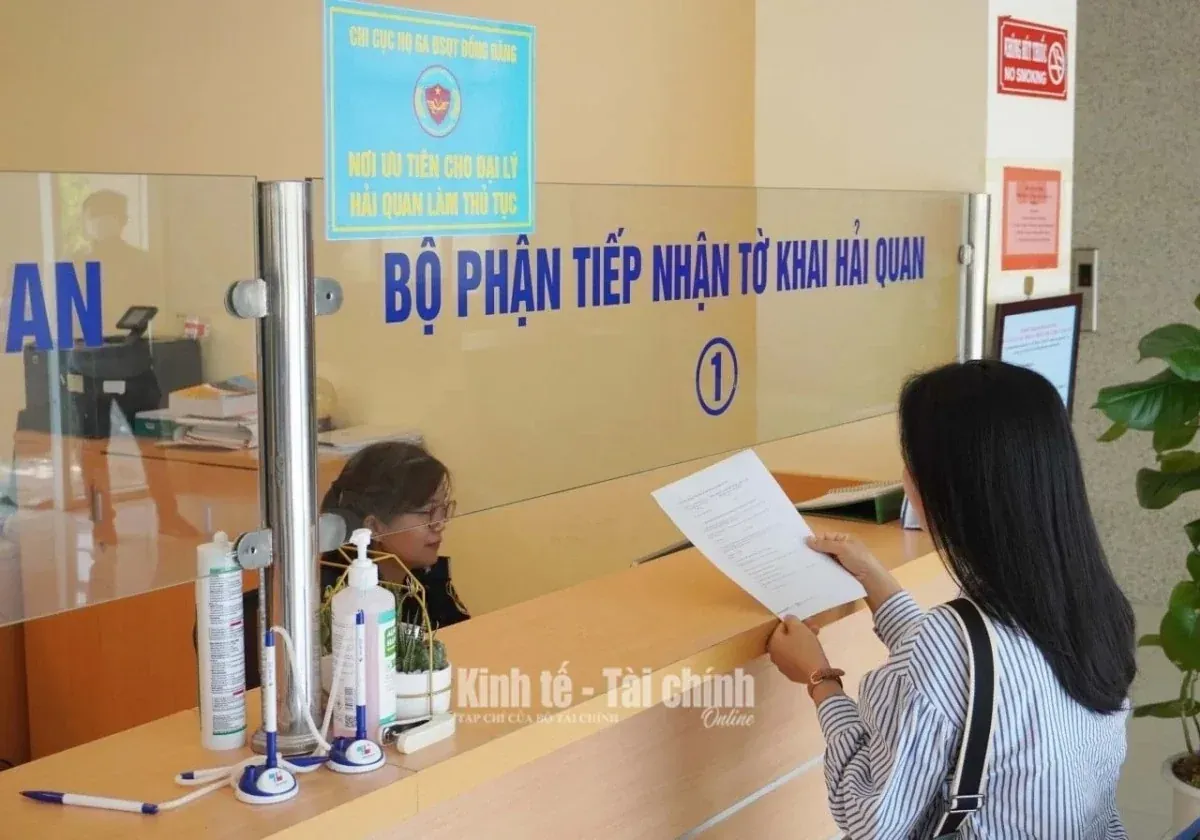
Under the amended wording the declarant must complete electronic identification and authentication when clearing Group 1 postal goods and Group 1 or Group 2 express goods. Usually the declarant is the carrier, not the buyer or seller; where it is, it must notify the sender (for exports) or recipient (for imports) to cooperate with customs.
Carriers have turned that into booking rules. DHL's customs alert of 6 November 2026 states that all import and export shipments, documents included, need an individual declaration regardless of value, with an identification number supplied at clearance: a tax identification number for business-to-business shipments, a personal identification number for B2C and C2C, and a passport number for foreign recipients. A KMD member notice of 9 November repeats the requirement but frames it as applying to shipments entering Vietnam. Where they differ, treat the outbound scope as unresolved and confirm with your carrier: the circular covers exported goods, the customer guidance does not.
What breaks a parcel is rarely the missing number; it is the mismatch. A trading name where the registered legal entity is required, a warehouse address used as the delivery address, an email nobody monitors, a personal parcel addressed to a company with no tax number. Any of those ends at a declaration that cannot be matched to a verified party. Document discipline that used to matter on FCL bookings now applies to a two-kilo carton.
The VND 10,000 fee, and the VAT that never came back
Both notices bill a customs fee of VND 10,000 per shipment on every consignment, de minimis parcels and documents included; KMD puts it at roughly US$0.38. Exemptions are narrow: humanitarian and non-refundable aid, eligible gifts and donations, and goods under diplomatic immunity. DHL absorbs the fee on document shipments and charges it on non-document ones. The figure matches the customs fee in Circular 86/2025/TT-BTC.
Per parcel it is noise. At volume it is not: 10,000 parcels a month comes to VND 100 million before any duty, VAT or broker fee, plus an identity check on every consignment.
Do not read the surviving duty exemption as tax relief. Since 18 February 2025, when Decision 01/2025/QD-TTg repealed the 2010 rule, low-value express parcels have paid VAT; the VND 1,000,000 line covers import duty only. VAT applies at 10%, with the temporary 8% reduction still running on many goods until 31 December 2026. The new declaration is how customs attaches that tax to a named person.
What this changes per shipment type
| What you move | What bites from 16 November | What to do about it |
|---|---|---|
| Tender packs, contracts, document samples | Individual declaration, plus a VND 10,000 fee that DHL absorbs on documents | Use a carrier that has confirmed its document workflow; allow a day of ramp-up |
| Samples and spares under VND 1,000,000 | The simplified lane survives, but needs a verified recipient and a compliant product | Put the consignee ID number in the PO template, not in an email thread |
| D2C and marketplace parcels | Per-parcel declaration, VAT on every parcel, formal clearance if the product is regulated | Re-price landed cost, and check registration before promising a delivery date |
| LCL and air consolidations | No new per-parcel fee, but the identity discipline now reaches the house bill and packing list | Consolidate deliberately — see the arithmetic below |
| FCL | Unchanged in substance | Nothing beyond consistent documents |
The consolidation line deserves a number. On 13 November the Vietnam Container Freight Index put the composite at US$4,879 per FEU, with the US West Coast at US$8,021, the US East Coast at US$9,785 and Northern Europe at US$3,494 — all from Ho Chi Minh City, port-to-port, before THC and inland delivery. With rates drifting down, moving 30 cartons a week as one air consolidation or one LCL booking gets cheaper relative to 30 identity checks. Worth reading first: how volumetric weight turns a light carton into a billable kilo, and how a consolidated air freight booking from Vietnam to the US works.
The next change is already drafted
Two things matter more than the fee. First, the line itself. In September the Customs Department proposed cutting the threshold for small consignments to VND 100,000, or to import duty of VND 10,000 or less, across all channels. It sits in Article 29 of a draft decree on export and import duties now out for comment; a parallel draft on e-commerce customs reportedly keeps the VND 1 million line, and the two do not agree. Nothing has been issued. The direction is down, so a landed-cost model built on VND 1,000,000 parcels needs a second scenario at VND 100,000.
Second, Law 11/2026/QH16, passed on 23 August 2026 and effective 1 March 2027, makes e-commerce platform operators customs declarants, requires electronic identification of platform traders, extends bonded-warehouse storage to 24 months, lets customs suspend clearance ex officio on suspected counterfeits and caps post-clearance audits at 20 days plus one 20-day extension. Circular 142 is the first instalment, not a one-off.
What importers should do this week
- Fix the data template. Legal name, full street address, monitored email, mobile number, and a TIN, personal ID or passport number — mandatory at PO creation, refused at booking if absent.
- Check the product, not just the price. Anything needing a licence or specialised inspection sits outside the simplified lanes at any value; cosmetics, supplements, food, toys and some electronics are the usual offenders.
- Decide who is importer of record. Under DDP you or your forwarder carries the clearance obligation and therefore the identity requirement; under DAP it sits with the buyer. The Incoterms 2020 breakdown shows where risk and formalities transfer.
- Consolidate the tail. Fewer, larger consignments mean fewer declarations and fewer holds — the same logic that makes choosing between Cat Lai, Cai Mep and Hai Phong worth doing properly.
- Build a buffer. Expect one to three days of extra handling through the November–December ramp-up and before Tet, when customs has also flagged tighter valuation checks.
If you need a route, a landed-cost comparison or a clearance partner already inside the new rules, VNForwarder can price customs clearance and door-to-door options against your parcel profile — including Amazon FBA replenishment, where per-parcel declarations are the wrong tool.
FAQ
Does the new rule really apply to documents? DHL's 6 November 2026 alert says yes: all import and export shipments, documents included, need an individual declaration regardless of value, with a VND 10,000 fee that DHL absorbs on documents. KMD's 9 November notice frames it as shipments entering Vietnam. The circular covers exported, imported and transit goods, so confirm the outbound treatment before relying on it.
Is the VND 1,000,000 exemption gone? For duty, no: consignments with a customs value of VND 1,000,000 or less, or duty payable of VND 100,000 or less, stay exempt. What ended on 18 February 2025 was the VAT exemption. A draft decree would cut the duty line to VND 100,000, but it has not been issued.
Who files the declaration for my parcel? Usually the postal operator or express carrier, acting on your behalf — which is why the circular obliges them to notify the sender or recipient to complete electronic identification. If the consignee never verifies, the text sets the notification duty but not the consequence, so assume the parcel waits.
How much more does each parcel cost? VND 10,000 in fees, about US$0.38 on the carrier's own conversion, plus VAT at 10% on the CIF value. Budget the handling time rather than the fee: one held consignment costs more in delay than a year of fees on the same volume.