Vietnam is one of the world's fastest-growing export economies, and almost everything leaving the country by sea passes through one of two port systems: the Ho Chi Minh City cluster in the south and Hai Phong in the north. If you are importing from Vietnam — whether you source furniture from Binh Duong, electronics from Bac Ninh, or garments from Hai Duong — one of the first operational decisions your supplier or freight forwarder will ask about is which port your cargo will ship from.
That choice is not a formality. It directly affects your FCL or LCL ocean freight rate, the number of direct sailings available each week, inland trucking costs, customs clearance speed, and sometimes even whether your goods can be loaded on schedule during peak season. This guide compares Vietnam's two main gateways in detail so you can make an informed call, and explains how to coordinate the decision with your factory.
Vietnam's Two-Port System in a Nutshell
Vietnam stretches more than 1,600 kilometers from north to south, and its manufacturing base is split accordingly. The north — provinces like Bac Ninh, Hai Phong, Hai Duong, and Hung Yen — hosts Samsung's supplier ecosystem, electronics assembly, footwear, and increasingly high-tech investment. The south — Ho Chi Minh City, Binh Duong, Dong Nai, Long An — is the traditional heartland for garments, furniture, footwear, food, and consumer goods.
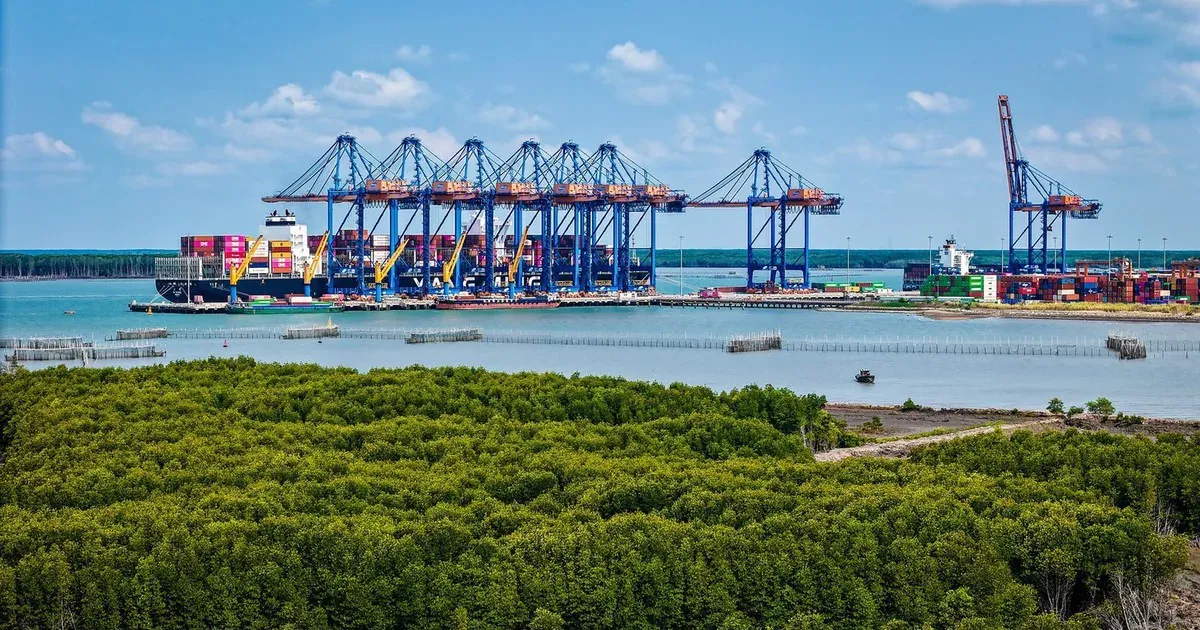
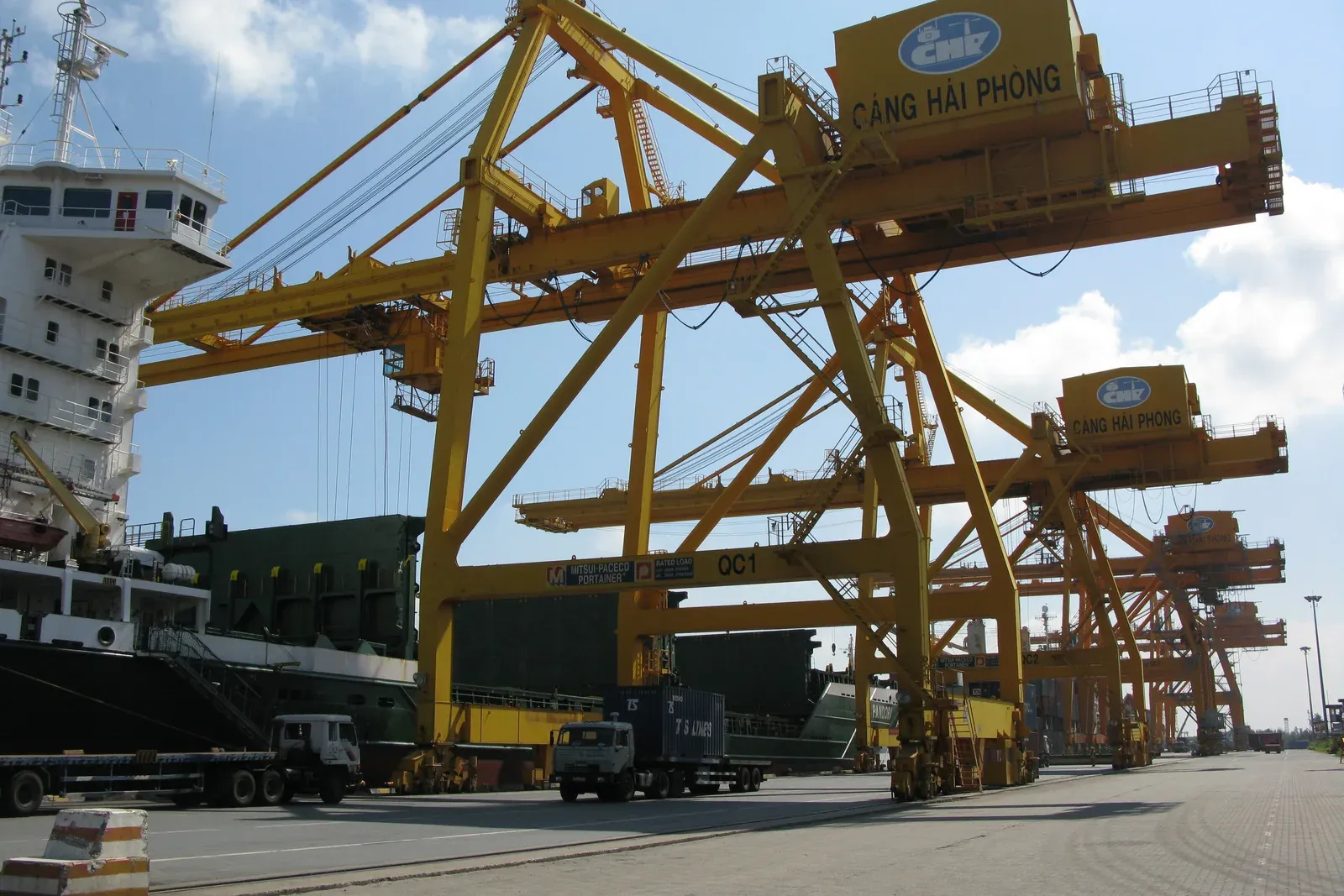
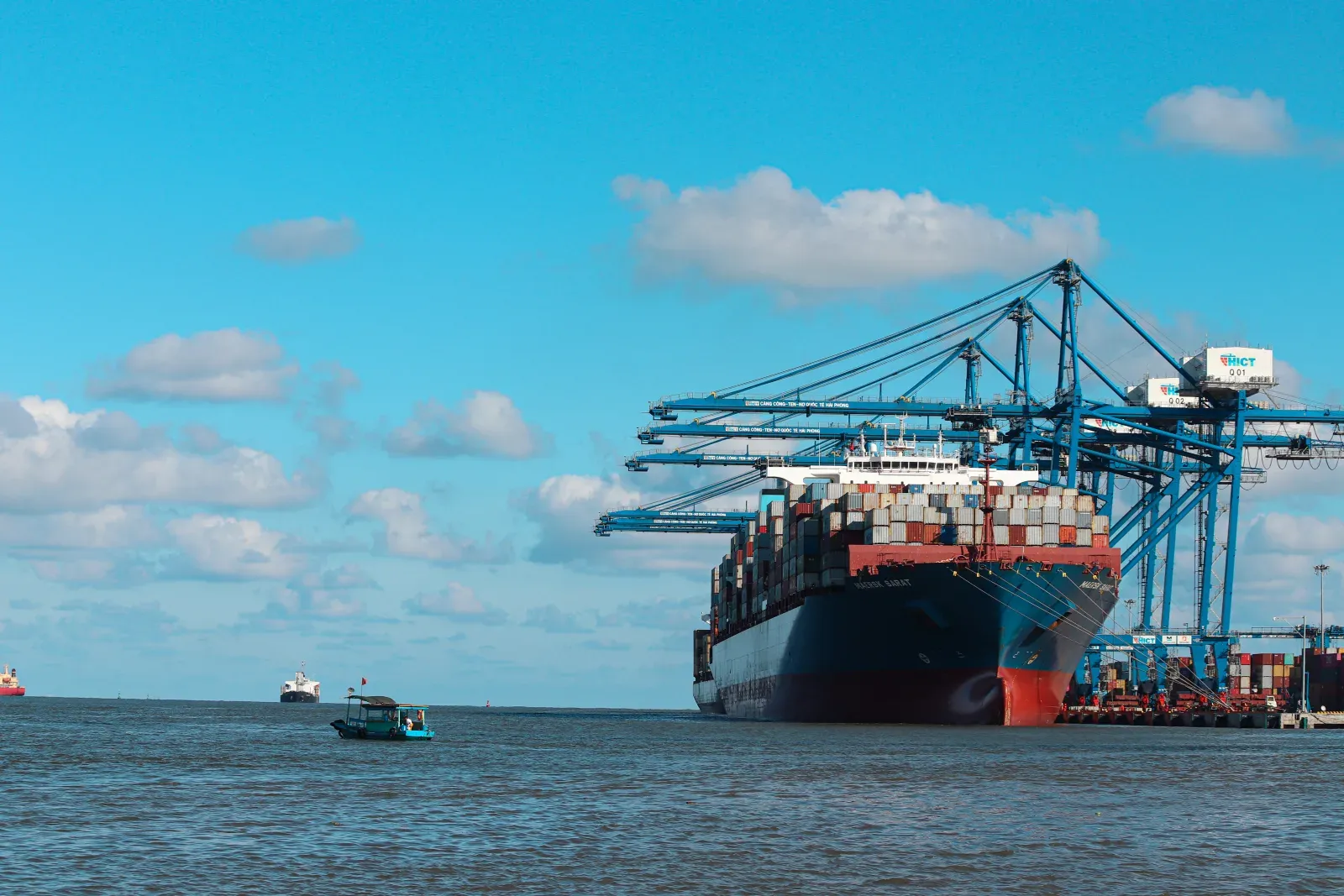
Each region is served by its own deep-water gateway. In the north, Hai Phong is the primary port, with the newer Lach Huyen deep-sea terminal handling the largest vessels. In the south, Cat Lai in Ho Chi Minh City is Vietnam's busiest container terminal by volume, supplemented by the newer Cai Mep–Thi Vai deep-water complex further down the Saigon River in Ba Ria-Vung Tau province.
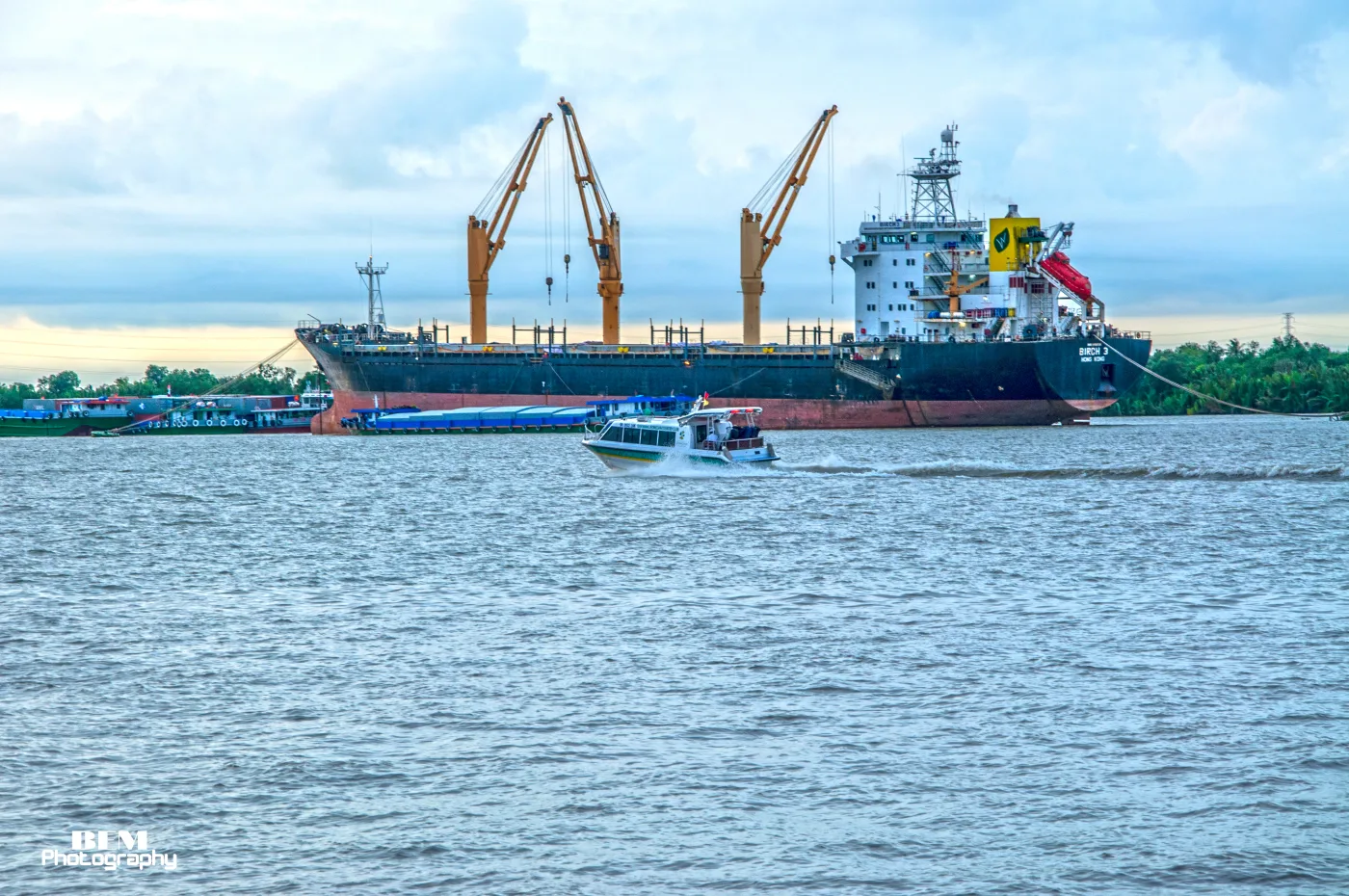
A useful rule of thumb: factories within roughly 150 km of Hanoi ship from Hai Phong; factories in and around Ho Chi Minh City ship from Cat Lai or Cai Mep. The grey zone is central Vietnam — Da Nang and the central coast — where cargo can rationally go either way, usually decided by carrier schedules and rates.
Port Infrastructure and Vessel Capacity Compared
The physical capabilities of the two gateways have converged in recent years, but differences remain that matter for large shippers.
| Factor | Ho Chi Minh City (Cat Lai / Cai Mep) | Hai Phong (Lach Huyen & legacy terminals) |
|---|---|---|
| 2025 container volume | ~9+ million TEU (Cat Lai + Cai Mep complex) | ~3.5 million TEU (whole port system) |
| Max vessel capacity | Cai Mep accepts 18,000+ TEU ultra-large vessels | Lach Huyen accepts 14,000–18,000 TEU vessels; older berths limited |
| Main terminal operator | Saigon New Port (SNP), SSIT, CMIT | HICT (Hai Phong International Container Terminal), HPPC |
| Inland access | Dense highway network to the Mekong Delta and southern industrial parks | Expressway links to Hanoi (~120 km) and northern industrial provinces |
| Congestion risk | Moderate–high at Cat Lai during peak season; Cai Mep relieves pressure | Lower, but typhoon season can disrupt schedules |
The most important takeaway from this table is the Cai Mep factor. For many years, southern exporters complained that Cat Lai's river draft limited vessel size, forcing transshipment via Singapore or Hong Kong. Cai Mep–Thi Vai, about 80 km southeast of the city center, now takes direct calls from the largest container ships on Asia–Europe and trans-Pacific loops, meaning FCL shippers with volume can book direct sailings from the south to Rotterdam, Los Angeles, or Savannah without a transshipment leg. Hai Phong's Lach Huyen terminal achieved the same for the north, so neither side now has a structural disadvantage on vessel size — but the specific carrier alliance serving your trade lane may call at only one of them.
Sailing Schedules and Transit Times by Trade Lane
The number of weekly direct sailings differs noticeably between the two ports, and this is often the decisive factor for time-sensitive cargo.
| Trade Lane | From Ho Chi Minh City | From Hai Phong |
|---|---|---|
| US West Coast | 4–6 direct sailings/week, 14–18 days | 1–2 direct sailings/week, 16–20 days |
| US East Coast | 2–4/week via Panama or Suez, 28–35 days | 1–2/week, 30–38 days |
| North Europe (Rotterdam/Hamburg) | 3–5/week, 28–34 days | 2–3/week, 30–36 days |
| East Asia (China, Korea, Japan) | Daily feeder/direct options | Daily options, shorter position to China ports |
| Singapore transshipment hub | 1–2 days feeder | 1–2 days feeder |
| Australia | 2–3/week, 10–14 days | 1–2/week, 12–16 days |
For trans-Pacific cargo in particular, the south clearly leads on frequency. If your delivery window to Los Angeles or Long Beach is tight, a Tuesday cutoff at Cat Lai or Cai Mep will almost always beat waiting several extra days in Hai Phong. For North Europe, the difference narrows. For intra-Asian trade, Hai Phong's proximity to Chinese and Korean ports gives it a slight edge, which matters for regional supply chains feeding semi-finished goods back and forth.
Freight Rates: What the North–South Gap Looks Like
Rate differentials between the two ports shift with capacity and season, but a consistent pattern exists: south Vietnam usually offers more competitive ocean freight on long-haul lanes because of denser competition among carriers and higher volumes, while the north can be cheaper on regional Asian lanes.
Indicative FCL market rates (all-in port-to-port, 2026 levels) illustrate the pattern:
| Route | 20ft from HCMC | 20ft from Hai Phong | 40ft HCQ from HCMC | 40ft HCQ from Hai Phong |
|---|---|---|---|---|
| To Los Angeles | $1,800–$2,400 | $2,000–$2,700 | $2,600–$3,400 | $2,900–$3,800 |
| To Rotterdam | $2,200–$2,900 | $2,300–$3,000 | $3,100–$4,000 | $3,300–$4,200 |
| To Sydney | $800–$1,200 | $900–$1,300 | $1,400–$1,900 | $1,500–$2,100 |
| To Shanghai | $300–$500 | $250–$450 | $450–$700 | $400–$650 |
Treat these as directional figures rather than quotes — spot rates move weekly — but the relative gap is stable. The key insight is that port-to-port rate is only part of the equation. Inland logistics can flip the total: trucking a 40ft container from Hai Duong to Lach Huyen might cost $80–$150, while moving the same box from a Binh Duong factory to Cai Mep runs $100–$200. Always compare door-to-door, not port-to-port. If you are evaluating DDP arrangements, the inland leg is bundled into your quote anyway, which is one reason many importers prefer door-to-door pricing from Vietnam.
Inland Logistics: Factory Location Decides the Port
Since inland trucking in Vietnam is priced per kilometer and road quality varies, the economics usually point to the nearest gateway:
- Northern industrial provinces (Bac Ninh, Hai Duong, Hung Yen, Vinh Phuc, Hanoi outskirts): Lach Huyen is 60–120 km away — an easy same-day move. Routing this cargo south would add 1,700+ km of trucking, roughly $900–$1,300 per container, and 2–3 days. Never rational.
- Southern industrial provinces (Binh Duong, Dong Nai, Long An, Ba Ria-Vung Tau): Cat Lai is 20–60 km; Cai Mep 60–100 km. Sending these boxes north adds similar absurd cost.
- Central Vietnam (Da Nang, Quang Nam, Hue): genuinely flexible. Da Nang's own port handles smaller volumes, but for international FCL, forwarders often truck to either Cat Lai (~900 km) or Hai Phong (~900–1,000 km). Decisions here are driven by carrier schedules and which trade lane you ship.
- Mekong Delta seafood and agricultural exporters: these goods must use southern ports; there is no viable northern alternative.
The practical step is simple: ask your supplier for the factory's exact address early, and have your forwarder quote both routings when the location is ambiguous. Rates differ enough between ports that a one-line address change can shift your landed cost by several hundred dollars per container.
Customs Clearance Considerations
Customs clearance speed is comparable at both gateways in normal conditions — documentation is processed through Vietnam's national single-window system, and electronic declarations are standard. Typical clearance for low-risk green-channel shipments runs 1–2 working days at either port.
Where differences appear:
- Peak season congestion (September–December): Cat Lai handles roughly three times the volume of any northern terminal, so random inspection queues and yard density can add 1–3 days during the pre-holiday rush. Hai Phong is calmer in volume terms.
- Specialized inspections: cargoes subject to specialized department checks (wood packaging heat treatment, food safety, cosmetics registration) see similar processing at both, but southern customs houses process far more of these categories, so officers there are often faster on routine product lines.
- Typhoon disruptions: Both coasts are affected, but Hai Phong sits squarely in the northern typhoon corridor (July–October), and Lach Huyen has recorded multiple weather closures in recent years. Cai Mep's open-sea location is less sheltered than Cat Lai but suffers fewer full-day closures.
Whichever gateway you use, the quality of your export documentation drives clearance speed far more than the port itself. An incomplete packing list or a misclassified HS code will cost you more days than any terminal difference. Our guide on Vietnam customs clearance walks through the full export document set, and the HS code lookup guide helps you avoid the classification errors that trigger delays.
Choosing by Cargo Type
Beyond geography, cargo characteristics can tip the decision:
- Garments, furniture, footwear (south): the supplier base sits in Binh Duong, Dong Nai, and Long An. These shipments flow through Cat Lai or Cai Mep by default, and the dense LCL consolidation market in Ho Chi Minh City means small shippers get better consolidation options and lower per-CBM rates.
- Electronics and high-tech (north): the Samsung ecosystem and its suppliers cluster around Bac Ninh and Thai Nguyen. These shippers use Hai Phong or, for some lines, direct factory-to-airport routings out of Noi Bai. If you are moving electronics, note that northern forwarders have deeper experience with high-value cargo security and ESD-compliant handling.
- Reefer and cold chain: southern Vietnam dominates seafood exports, so Cat Lai and Cai Mep offer more reefer plug capacity and more frequent reefer sailings. Northern reefer capacity at Lach Huyen is growing but thinner.
- Oversized and project cargo: both gateways handle breakbulk, but Cai Mep's deeper draft and heavy-lift berths give the south an edge for the heaviest lifts.
- Dangerous goods: approvals are faster in the south purely because DG volume is higher and carrier DG desks are more experienced with Vietnamese DG declarations at HCMC ports.
A Five-Step Process for Deciding
When planning a shipment from Vietnam, work through this sequence with your forwarder:
- Fix the factory location. Get the full address, not just the province — an industrial park 20 km farther north can change the optimal port.
- Map the trade lane. Identify which carriers serve your destination from each gateway and how many direct sailings exist per week (see the schedule table above).
- Quote door-to-door, both ways. When location allows, get parallel quotes including inland trucking, THC, documentation, and customs fees. Compare totals, not ocean rates alone.
- Check seasonal factors. Typhoon windows, Tet (Lunar New Year) factory closures, and the September–December pre-holiday rush all shift cutoff pressure and rates.
- Lock the Incoterm and routing together. Under FOB, the supplier nominates the forwarder and effectively controls port choice — negotiate port designation into your purchase terms if the routing matters to you. Under EXW, you control everything and can optimize freely. Our Incoterms 2020 explained guide breaks down how these terms shift cost and control.
If you are new to importing from Vietnam overall, start with our step-by-step import guide before diving into port selection — it puts the gateway decision in the context of supplier verification, payment terms, and quality control.
Common Mistakes Importers Make
The most frequent error is letting the supplier's default forwarder choose the routing without question. Factories book with whoever is cheapest for them, which is usually the nearest port — fine for them, but you may be paying for a suboptimal transshipment pattern on the ocean leg. The second mistake is comparing LCL quotes between a southern consolidator and a northern one without checking the deconsolidation port at destination, which can add $40–$80 per cubic meter in hidden charges. Third, importers often ignore container loading optimization: if your supplier ships LCL from Hai Phong weekly but your volumes have grown past 12–15 CBM, consolidating into a 20ft FCL from Cai Mep may cut both cost and transit time.
Frequently Asked Questions
Is Cat Lai the same as Ho Chi Minh City port? Cat Lai is the main terminal within the Ho Chi Minh City port system, located on the Saigon River. When people say "ship from Ho Chi Minh," they usually mean Cat Lai, though increasingly large vessels call at Cai Mep–Thi Vai about 80 km southeast. Confirm with your forwarder which terminal your booking uses.
Can I ship FCL from Hai Phong to the US West Coast directly? Yes. Lach Huyen terminal receives direct trans-Pacific calls, though with fewer weekly sailings than the south. Expect 16–20 days port-to-port. If schedule frequency matters, routing via Cai Mep with southern trucking may still win on total transit time.
Which port is better for Amazon FBA shipments from Vietnam? Most Amazon FBA cargo from Vietnam originates in southern factories, so Cat Lai/Cai Mep dominates in practice. The denser sailing schedule to Los Angeles and Long Beach — where major US west coast FCs sit — favors the south. See our Amazon FBA shipping from Vietnam to USA guide for the full delivery-appointment workflow.
Do port choice and Incoterm interact? Directly. Under FOB Hai Phong or FOB Ho Chi Minh City, the named port in your contract determines the seller's delivery obligation point. If you want control of the routing, either specify the port in the FOB clause precisely or buy on EXW/FCA terms and control the forwarder yourself.
How do I get a reliable door-to-door quote covering both options? Send your forwarder the factory address, cargo ready date, cargo details (weight, volume, HS code), and destination. A Vietnam-based forwarder with offices in both the north and south can quote each routing with real inland rates. VNForwarder operates across both gateways, providing transparent all-in quotes within 2–4 hours, a dedicated account manager for each shipment, and 24/7 support from our local team. Request a comparison quote at vnforwarder.com and we will lay out both routings side by side so you can see exactly where the money goes.