When a US buyer needs Vietnamese goods in days rather than weeks, air freight is the only option that works. Direct flights from Tan Son Nhat (SGN) in Ho Chi Minh City and Noi Bai (HAN) in Hanoi reach Los Angeles, San Francisco, Chicago, and New York in 2–4 days airport-to-airport — a fraction of the 16–25 days a container needs just to cross the Pacific. The trade-off is cost: air freight typically runs 4–6 times the price of sea freight per kilogram, which makes it the wrong choice for bulky low-value cargo and the only rational choice for urgent, high-value, or time-sensitive goods.
This guide explains exactly how air freight from Vietnam to USA works in 2026: what it costs per kilogram, how airlines calculate your billable weight, which airports and US gateways handle the traffic, what the customs process looks like on both ends, and how to decide when air beats ocean for your specific shipment.
When Air Freight from Vietnam Makes Sense
Air freight earns its premium in a narrow set of situations. Understanding them prevents the most common importer mistake: paying air rates for cargo that should have gone by sea.
| Scenario | Air or Sea? | Why |
|---|---|---|
| Fashion/apparel with seasonal deadlines | Air | Missing a retail window kills the margin anyway |
| Electronics, samples, tech components | Air | High value density; low weight |
| Restocking a fast-selling SKU before stockout | Air | Lost sales exceed freight premium |
| Product launch or trade-show materials | Air | Fixed immovable dates |
| Auto parts or AOG (aircraft on ground) parts | Air | Every hour of downtime is costly |
| Furniture, ceramics, raw materials | Sea | Too heavy/cheap to justify air rates |
| Full-container-volume restock | Sea | 15+ CBM by air is almost never rational |
As a rule of thumb, air freight becomes economically rational when the value-to-weight ratio of your goods exceeds roughly USD 15–20 per kg, or when the cost of delay (stockouts, penalties, lost contracts) exceeds the freight differential. Garments, footwear samples, smartphone accessories, medical devices, and perishables like dried fruit or specialty coffee routinely clear that bar; cement, tiles, and bottled beverages never do.
Air Freight Rates from Vietnam to USA (2026 Reference)
Rates fluctuate with fuel surcharges, seasonal demand, and capacity, but the following ranges reflect current market levels for general cargo from Ho Chi Minh City or Hanoi to major US gateways:
| Weight Break | Rate Range (USD/kg) | Typical Use Case |
|---|---|---|
| 45–100 kg | $6.50 – $8.50 | Samples, small trial orders |
| 100–300 kg | $5.20 – $6.80 | Mid-size e-commerce restock |
| 300–500 kg | $4.60 – $6.00 | Growing SME shipments |
| 500–1,000 kg | $4.10 – $5.40 | Regular commercial volumes |
| 1,000 kg+ | $3.80 – $5.00 | Freighter or consolidated pallet loads |
These are airport-to-airport base rates. Your all-in door-to-door cost adds a few line items that first-time shippers often miss:
- Fuel surcharge (FSC) and security surcharge (SSC): usually embedded in the quoted rate but confirm explicitly.
- Vietnam export charges: trucking to airport, export customs declaration, airline terminal handling, and screening fees — typically USD 120–280 per shipment.
- US import charges: airline handling at destination, customs brokerage (USD 80–150), MPF/HMF government fees, and any duty or tax owed.
- Pickup and delivery: last-mile trucking from the US gateway airport to your warehouse or Amazon FBA center.
A realistic all-in budget for a 500 kg air shipment from Ho Chi Minh City to a Los Angeles-area warehouse lands around USD 3,200–4,200 door-to-door, depending on cargo readiness and final delivery distance.
Chargeable Weight: The Number That Actually Decides Your Bill
Airlines do not bill on gross weight alone. They bill on chargeable weight — whichever is higher between the actual weight and the volumetric weight. The volumetric formula for air cargo is:
Volumetric weight (kg) = (Length × Width × Height in cm) ÷ 6,000
A carton of garments measuring 60 × 50 × 40 cm weighs only 8 kg on a scale, but its volumetric weight is (60 × 50 × 40) ÷ 6,000 = 20 kg. You pay for 20 kg. This is why exporters who optimize carton dimensions routinely cut air freight bills by 20–40% with zero change to the product itself. Our detailed walkthrough of air freight volumetric weight calculation shows worked examples and packaging tactics that lower your chargeable weight before you ever request a quote.
Transit Times: Vietnam Airport to Your US Door
| Segment | Typical Duration |
|---|---|
| Trucking + export customs in Vietnam | 1–3 days |
| Airport-to-airport flight (SGN/HAN → LAX/SFO/ORD/JFK) | 2–4 days (direct), 3–6 days (via transhipment) |
| US import clearance | 1–3 days |
| Final delivery to warehouse or FBA | 1–3 days |
| Total door-to-door | 5–10 days |
Direct freighter and belly-hold capacity from Vietnam has expanded significantly, with daily wide-body departures from SGN to LAX and regular services via Hanoi. Shipments through major hubs like Hong Kong, Taipei, or Seoul add 1–3 days but can lower the per-kg rate on heavier cargo — a trade-off worth pricing both ways when your schedule allows.
The Air Freight Process, Step by Step
The operational chain is shorter than ocean freight, but each step has its own failure points. Here is how a well-managed shipment flows:
- Booking and space confirmation. Your forwarder reserves airline capacity and issues a booking reference. During peak season (October–December) and after Vietnamese New Year (Tet), book 5–7 days ahead; off-peak, 2–3 days is usually enough.
- Cargo readiness and documentation. The Vietnamese supplier prepares the commercial invoice, packing list, and — where applicable — certificate of origin or fumigation certificate. Accurate HS codes and declared values determine both Vietnamese export clearance and US duty.
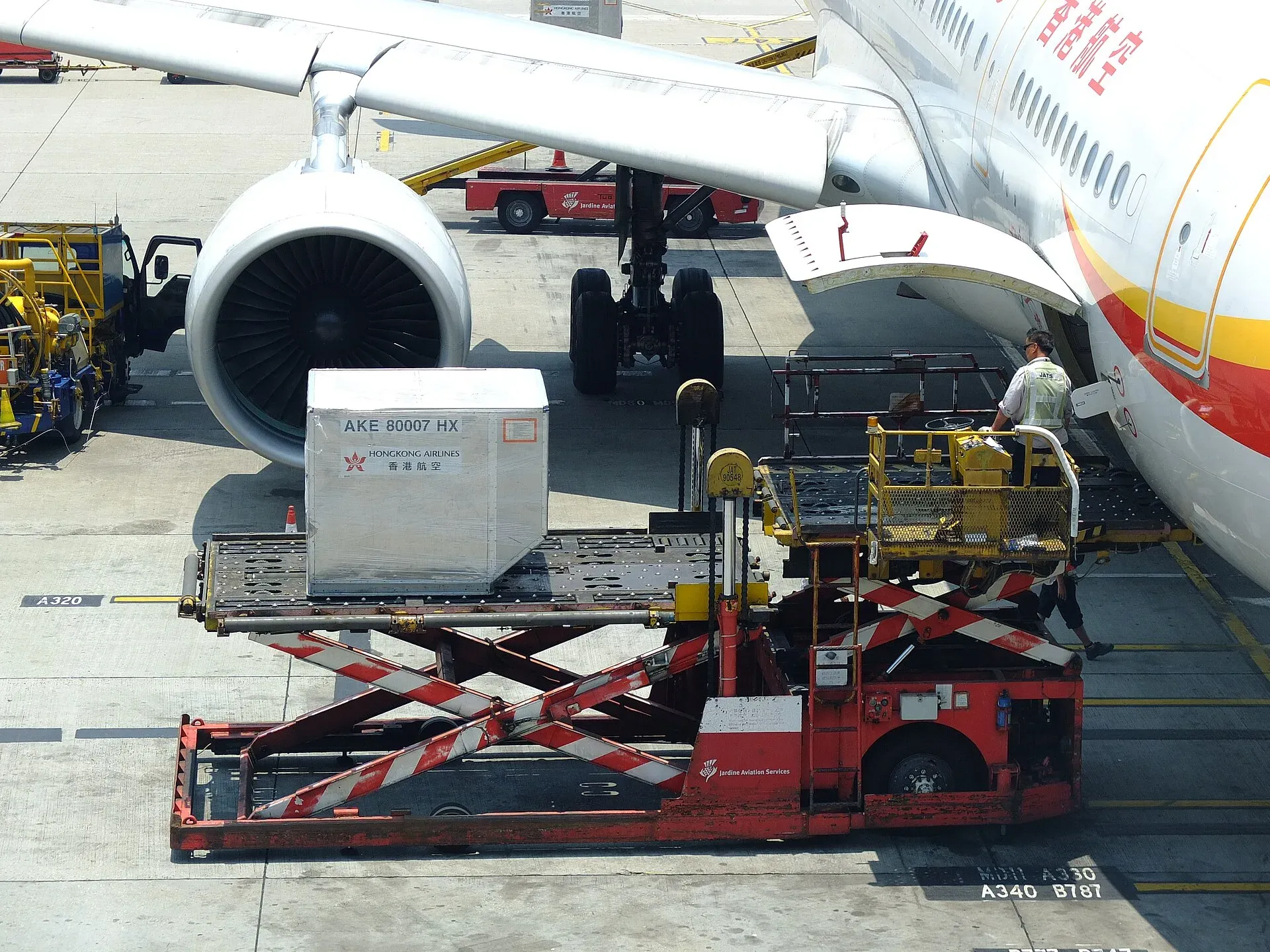
- Pickup and airport handling. Cartons are trucked to the airline's cargo terminal, weighed and measured (this is where chargeable weight is locked in), screened per aviation security rules, and built into ULDs or pallet positions.
- Export customs clearance. Vietnam's electronic customs system processes compliant declarations within hours; inspections, when triggered, add 1–2 days. Our Vietnam customs clearance guide covers the documents and common inspection triggers in detail.
- Flight and arrival. The aircraft departs, and the air waybill (AWB) becomes your tracking reference.
- US import clearance. A US customs broker files the entry, pays duties on your behalf, and coordinates any FDA, CPSC, or USDA holds if your product category requires it.
- Final delivery. Cargo moves from the airline terminal to your consignee — a 3PL, your warehouse, or an Amazon fulfillment center. If your shipment is headed to Amazon FBA, the receiving appointment and pallet compliance rules differ from standard B2B delivery, as covered in our guide to Amazon FBA shipping from Vietnam to USA.
Choosing Your Vietnam Departure Airport
Vietnam has two international gateways that handle essentially all export air cargo, and picking the right one affects both cost and schedule:
| Factor | Tan Son Nhat (SGN) — Ho Chi Minh City | Noi Bai (HAN) — Hanoi |
|---|---|---|
| Best for suppliers in | South Vietnam (HCMC, Binh Duong, Dong Nai, Long An) | North Vietnam (Hanoi, Hai Phong, Bac Ninh, Hai Duong) |
| Direct US flight frequency | Higher (daily wide-bodies to LAX) | Moderate (often via regional hubs) |
| Rate competitiveness | Often slightly cheaper per kg on large breaks | Competitive for northern-origin cargo |
| Typical trucking time to airport | 0.5–1 day from southern industrial zones | 0.5–1 day from northern industrial zones |
Shipping southern-made goods out of Hanoi (or vice versa) adds a full day of domestic trucking and frequently erases any rate advantage. The choice mirrors the ocean-port logic we covered in Ho Chi Minh City vs Hai Phong: align your export gateway with your supplier cluster.
Air Freight vs Sea Freight from Vietnam to USA: A Decision Framework
For shipments where both modes are technically viable, run the numbers across four dimensions:
Cost. Ocean LCL from Vietnam to the US West Coast runs roughly USD 60–110 per CBM; a full 20ft container door-to-door lands around USD 2,800–4,500. Air at USD 5/kg means a 500 kg shipment costs about what 10–15 CBM of ocean cargo does — so cargo over roughly 3–4 CBM of dense goods usually belongs on the water.
Speed. Air door-to-door in 5–10 days versus 25–40 days by ocean. If you are protecting a sales rank, meeting a contract date, or replacing a failed quality batch, those 3–5 weeks have a calculable cost.
Reliability. Air freight schedules slip by hours; ocean schedules slip by days (blank sailings, port congestion, rail backlogs). For predictable replenishment, air is the more reliable clock even at a premium.
Cargo constraints. Lithium batteries, liquids, powders, and strong magnets face airline restrictions that ocean carriers handle more leniently. Confirm cargo acceptance before you build a supply plan around air.
How to Cut Your Air Freight Bill Without Changing Modes
Experienced importers compress air costs through preparation, not negotiation alone. Consolidate multiple Vietnamese suppliers into one airport delivery so you clear higher weight breaks; compress cartons to push actual weight above volumetric weight; ship mid-week when space is looser; and pre-clear US customs documentation so the cargo does not sit in a bonded warehouse accruing storage fees. Choosing the right Incoterms also matters — shipping EXW versus FOB from Vietnam shifts airport handling costs between buyer and seller in ways that change your true all-in number, which is why we always price the whole door-to-door chain rather than the airline rate alone.
Frequently Asked Questions
How much does it cost to air freight 100 kg from Vietnam to USA? At current general-cargo rates, expect roughly USD 650–850 airport-to-airport, plus USD 250–450 in Vietnam origin and US destination charges — an all-in budget of USD 900–1,300 door-to-door depending on pickup and delivery locations.
Can I ship lithium batteries by air from Vietnam to USA? Yes, but only under IATA DGR rules: batteries must be UN 38.3 tested, state of charge capped at 30% for standalone cells, and packed under Section II or Section IB protocols depending on configuration. Many passenger airlines refuse them entirely, so expect routing on freighters and a surcharge.
What documents are needed for air freight from Vietnam to USA? Commercial invoice, packing list, air waybill (AWB), and — for regulated categories — certificates of origin, fumigation/ISPM 15 wood packaging compliance, or product-specific certificates (FDA prior notice for food, FCC for radio devices).
Is air freight from Vietnam to USA door-to-door? It can be. Freight forwarders offer true door-to-door service covering pickup at the Vietnamese factory, both customs clearances, and delivery at your US address — typically 5–10 days total. Verify whether the quote is airport-to-airport or door-to-door before comparing prices.
What is the cheapest airport to ship into in the USA? Los Angeles (LAX) generally offers the lowest per-kg rates from Vietnam due to flight frequency and competition, followed by San Francisco and Chicago. If your final destination is within a day's trucking of the West Coast, LAX arrivals usually minimize total cost.
Get an Air Freight Quote in Hours, Not Days
Air freight rewards fast decisions, and slow quoting kills that advantage. At VNForwarder, we return firm air freight quotes within 2–4 hours, with transparent all-in pricing that shows airline rate, origin charges, and estimated US destination costs on a single line — no fuel-surcharge surprises after your cargo is already at the airport. Our Ho Chi Minh City and Hanoi teams manage pickup, export clearance, and airline booking under one roof, and every shipper gets a dedicated account manager reachable around the clock. Send us your cargo dimensions, weight, and ready date, and we will have your Vietnam-to-USA air freight options on your desk the same day.