Vietnam and Singapore are two of ASEAN's most tightly connected trading partners, yet shippers still get wildly different quotes for the same lane. If you are moving electronics from Ho Chi Minh City, seafood from the Mekong Delta, furniture from Binh Duong, or machinery from Hanoi into a Singapore warehouse or retail distribution center, the shipping cost from Vietnam to Singapore in 2026 depends on the mode you pick, how your cargo is packed, and whether your paperwork captures the duty-free treatment the two countries already negotiated for you.
This guide gives you real 2026 rate levels for FCL, LCL, air freight, and land trucking between Vietnam and Singapore, explains every fee line you will see on a quote, and shows you where most importers leave money on the table.
Quick Answer: What Does Shipping from Vietnam to Singapore Cost in 2026?
Budget the following indicative ranges for standard commercial cargo. The Vietnam–Singapore lane is one of the shortest and most competitive in Southeast Asia, so rates here are considerably lower than trans-Pacific or Europe-bound trades. All figures are indicative market levels that move weekly with carrier capacity:
| Shipping mode | Volume basis | Typical rate (USD) | Transit time |
|---|---|---|---|
| FCL 20ft | Per container | $280 – $550 | 3 – 6 days |
| FCL 40ft / 40HQ | Per container | $420 – $750 | 3 – 6 days |
| LCL | Per CBM (min 1 CBM) | $25 – $48 / CBM | 4 – 8 days |
| Air freight | Per kg (chargeable weight) | $1.20 – $2.80 / kg | 1 – 3 days |
| Land trucking | Per CBM or per truck | $45 – $85 / CBM equivalent | 6 – 10 days |
Two things to watch before you compare quotes. First, LCL rates almost always exclude Singapore destination charges — wharfage, CFS handling, and delivery order fees that typically add SGD 90–180 per shipment regardless of volume. Second, because the Vietnam–Singapore sea leg is only three to five days, the premium for air freight buys you days, not weeks, which changes the break-even math compared with long-haul lanes.
Why This Lane Is Cheaper Than Most
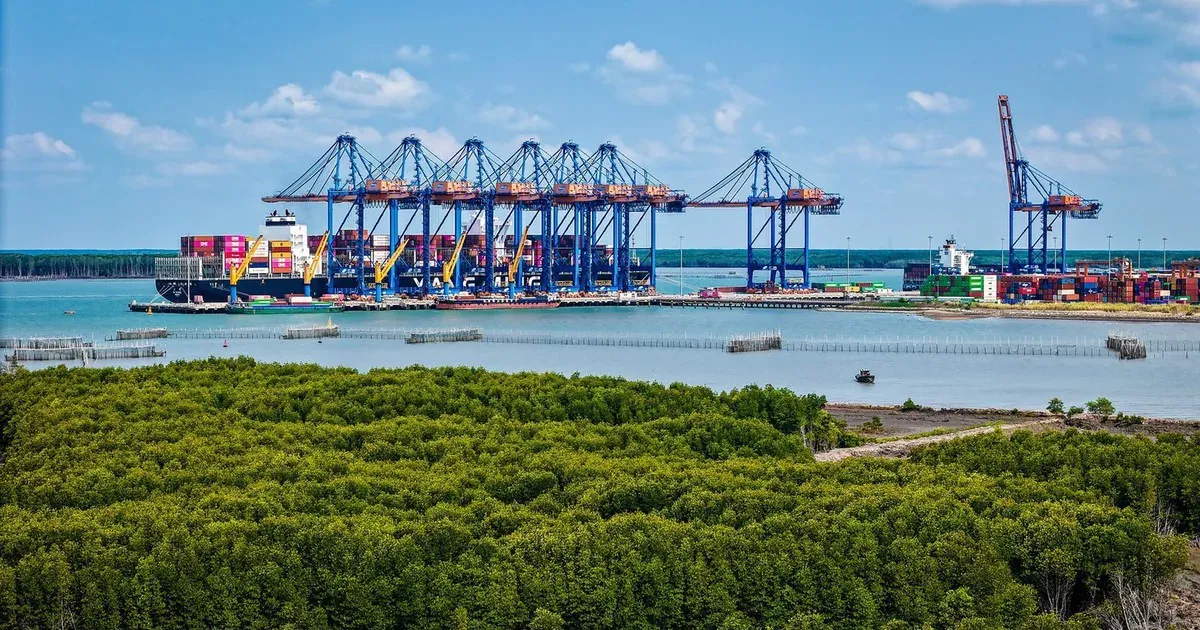
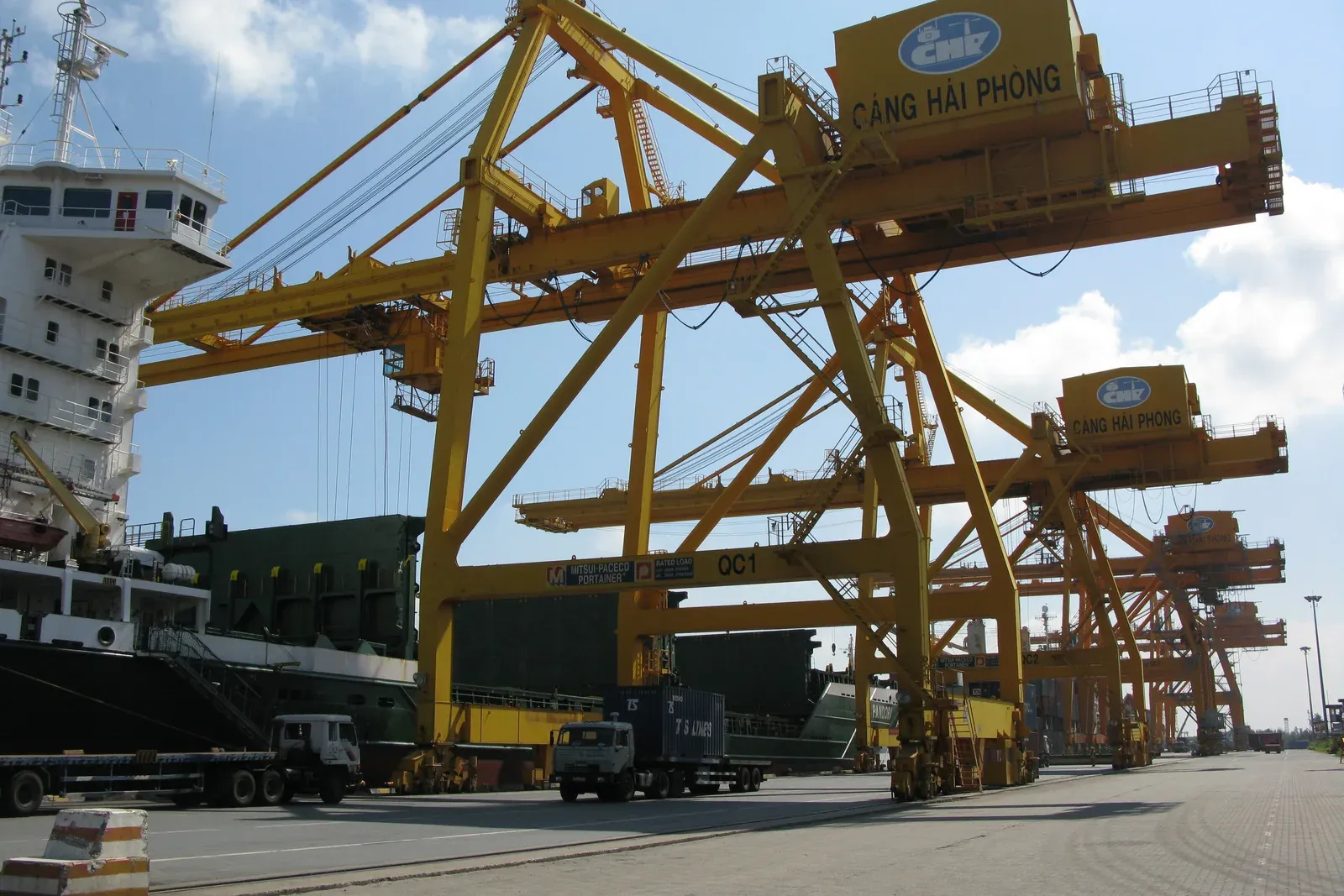
Singapore is the transshipment hub of Southeast Asia, which works in your favor as a direct importer. Dozens of weekly direct sailings connect Cat Lai and Cai Mep (serving Ho Chi Minh City) and Hai Phong and Lach Huyen (serving Hanoi) with PSA terminals in Singapore. Because so many carriers compete on this corridor with vessel space they need to fill, base ocean rates from Vietnam to Singapore sit among the lowest per nautical mile anywhere in the region. Equipment availability is also rarely a problem — boxes flow back to Vietnam loaded with Singaporean and transshipped cargo, so your forwarder seldom pays repositioning surcharges that inflate other intra-Asian lanes.
The air side is just as deep. Ho Chi Minh City and Hanoi enjoy multiple daily widebody and freighter services into Changi, which keeps general-cargo air rates low by regional standards. If your goods weigh under a few hundred kilograms and you are selling into Singapore's fast-moving retail or e-commerce channels, air is a genuinely affordable option here in a way it simply is not for Vietnam–Europe or Vietnam–US shipments.
The Main Cost Components of a Vietnam–Singapore Shipment
A typical invoice for this lane breaks down like this:
Origin charges in Vietnam. Factory trucking to the port, export customs declaration, terminal handling charges (THC), and bill of lading documentation. Expect roughly $80–$180 per FCL shipment or $40–$80 per LCL shipment. If you buy under EXW (Ex Works) terms you pay all of these; under FOB (Free On Board) your supplier builds them into the unit price. Our breakdown of Incoterms 2020 shows exactly where responsibility shifts on each term.
Ocean or air freight. The carrier's base rate for the main leg. On this short, high-frequency lane, rates spike mainly around Tet (Vietnamese Lunar New Year) and during the mid-year peak when regional retailers restock, but even peak surcharges here are mild compared with long-haul trades.
Singapore destination charges. THC or CFS handling at the Singapore end, port dues, delivery order fees, and cargo handling. These fixed charges are the reason very small LCL shipments can be uneconomical — SGD 90–180 of fixed fees on one CBM of low-value goods can exceed the ocean freight itself.
Customs clearance and GST. Singapore's customs process is famously fast and digital, and clearance fees are modest — typically SGD 40–80 per declaration through a forwarder or declaring agent. Almost all goods of Vietnamese origin enter duty-free under the ASEAN Trade in Goods Agreement (ATIGA), provided you hold a valid ATIGA Certificate of Origin (commonly called Form D). On top of any applicable duty, Singapore levies 9% GST on the customs value of imported goods, calculated on the CIF value.
Last-mile delivery. Trucking from the port or Changi airfreight terminal to your warehouse. Singapore's compact geography keeps this affordable — cross-island delivery of a pallet or two usually runs SGD 60–150, and full-container deliveries to an industrial address are commonly quoted as a flat SGD 120–250.
If you are new to importing from Vietnam generally, our step-by-step guide to importing from Vietnam walks through supplier verification, payment terms, and the full shipping sequence.
Sea Freight Costs: FCL vs LCL
Sea freight dominates Vietnam–Singapore trade volume, and the FCL-versus-LCL decision drives most of your cost.
FCL rates from Vietnam to Singapore (2026)
| Container type | Capacity | Rate range (USD) | Best for |
|---|---|---|---|
| 20ft dry container | ~28 CBM usable | $280 – $550 | 8 – 20 CBM of cargo, heavy or fragile goods |
| 40ft dry container | ~58 CBM usable | $420 – $750 | 25 – 55 CBM, furniture, consolidated cargo |
| 40HQ (high cube) | ~68 CBM usable | $450 – $780 | Volumetric cargo — cartons, light goods |
FCL is remarkably cost-effective on this lane. A 40HQ carrying 60 CBM at $600 all-in ocean works out to roughly $10 per CBM before origin and destination handling — cheaper per unit than almost any other export lane from Vietnam. If you are sourcing from multiple Vietnamese suppliers, consolidating their cargo into one FCL at a Ho Chi Minh City or Hai Phong warehouse is usually the single biggest saving available to you.
LCL rates and the minimum-charge trap
LCL runs $25–$48 per CBM with a one-CBM minimum, plus the fixed destination charges described above. Below roughly 10–12 CBM, LCL usually beats a full container on total cost; above that, do the math on FCL. Watch the minimum charge: some consolidators quote a one-CBM minimum while others apply weight-based minimums of 500–1,000 kg, which matters for dense cargo like tiles, stone, or metal components. For a full walkthrough of the paperwork side, see our guide to Vietnam customs clearance, which covers export declarations, certificates of origin, and how to avoid holds at Cat Lai.
One more LCL caution for this lane: because Singapore PSA runs some of the world's densest transshipment operations, LCL boxes are frequently re-handled. Pack for it — double-wall cartons, proper palletizing, and moisture protection — because claims on short-haul LCL cargo are common and carriers' liability is limited.
Air Freight from Vietnam to Singapore
Air freight on this corridor is priced for speed, and at $1.20–$2.80 per kilogram for general cargo it is genuinely accessible. Chargeable weight follows the standard 1:6 volumetric ratio (divide cubic centimeters by 6,000), so light, bulky cartons still pay as if they were heavier — our guide to air freight volumetric weight walks through the calculation with worked examples.
Reserve air for high-value electronics, fashion replenishment, spare parts, samples, or e-commerce stock with hard delivery windows. Singapore's electronics and semiconductor ecosystem pulls constant urgent shipments from Vietnamese suppliers, which is exactly why frequency is high and rates stay low. Dangerous goods, lithium batteries, and temperature-controlled cargo carry surcharges and require forwarders with the right airline accreditations — confirm this before your supplier books, not after.
Land Trucking: The Overlooked Third Option
Most importers never consider road freight for Vietnam–Singapore, but it exists and sometimes wins. Through-bills of lading and transit arrangements move trucks from southern Vietnam through Cambodia and Thailand, down Peninsular Malaysia, and across the Johor Causeway into Singapore — roughly 2,400 to 2,700 kilometers door to door, typically 6–10 days depending on border queues.
At $45–$85 per CBM equivalent, land trucking costs more than sea but less than air, and it offers a compelling middle ground for bulky, time-sensitive cargo such as exhibition materials, project cargo for construction timelines, or retail fixtures that cannot wait three weeks for consolidation but do not justify air rates. It also bypasses port congestion entirely, which matters during Tet crunch periods when Cat Lai and Cai Mep are at their most crowded. The caveats: cargo insurance per-vehicle rather than per-container, varying road conditions, and customs transit formalities at each border that demand a forwarder with genuine regional overland experience.
Customs, ATIGA, and the Form D Advantage
Here is where first-time importers most often overpay. Under ATIGA, goods meeting the agreement's rules of origin enter Singapore at zero duty — but only when the Vietnamese supplier provides a valid ATIGA Certificate of Origin (Form D). If your supplier ships without Form D, your goods default to Singapore's standard tariff rates, which are low by world standards (most consumer goods 0–5%) but are still a needless cost on volume.
The practical checklist:
- Confirm with your Vietnamese supplier before production ends that they can issue Form D, and build the requirement into your purchase order.
- Ensure the commercial invoice, packing list, and Form D all describe the goods identically — mismatched descriptions are the top cause of Singapore customs queries.
- Budget for 9% GST on CIF value, payable at import regardless of duty status.
- If you ship DDP (Delivered Duty Paid) with your forwarder handling Singapore clearance and GST payment, the duty-free Form D saving flows through to the all-in rate — which is one reason DDP quotes on this lane are so competitive. See how DDP shipping from Vietnam bundles every fee into a single figure.
Five Ways to Cut Your Vietnam–Singapore Shipping Cost
- Consolidate suppliers into one FCL. If two or three of your Vietnamese factories ship within the same month, a consolidation warehouse in Ho Chi Minh City or Hai Phong turns three LCL shipments into one half-price-per-unit container.
- Always demand Form D. On a $20,000 shipment, the difference between ATIGA duty-free entry and paying standard rates can be hundreds of dollars — for the cost of one certificate.
- Right-size the container. Do not pay for a 40HQ when a 20ft holds your cargo; our 20ft vs 40ft container comparison covers capacity planning in detail.
- Time around Tet and the mid-year peak. Rates on this lane are stable most of the year, but the four weeks before Tet and the June–August retail restock bring surcharges and tight space.
- Compare sea and air on chargeable weight, not gut feel. On this short lane, air freight for 200 kg of dense goods often costs only slightly more than LCL once destination fees are counted — and it arrives in a day instead of a week.
Frequently Asked Questions
How long does sea freight take from Vietnam to Singapore? Direct sailings take 3–6 days port to port, and door-to-door LCL typically lands in 5–9 days including consolidation and customs.
Is shipping from Vietnam to Singapore duty-free? Yes for most goods, under ATIGA — provided the Vietnamese supplier issues a valid Form D Certificate of Origin. Singapore's 9% GST still applies.
What is the cheapest way to ship a small parcel or samples to Singapore? For anything under about 100 kg, courier or consolidated air freight usually wins on total cost and speed; sea LCL minimum charges make very small shipments uneconomical.
Can I ship door-to-door with customs handled? Yes. DDP door-to-door service covers pickup at the Vietnamese factory, export clearance, freight, Singapore import clearance, GST, and delivery to your address in one quoted figure.
Which Vietnamese port should my supplier use? Ho Chi Minh City-area shippers use Cat Lai, Cai Mep, or Hiep Phuoc; northern shippers use Hai Phong or Lach Huyen. Cai Mep suits larger FCL volumes, while Cat Lai offers the densest sailing schedule for LCL. Our port comparison guide helps you decide when suppliers are in both regions.
Get an All-In Quote for Your Shipment
Rate tables tell you the market, but your cargo decides the final number. Container type, cargo readiness, incoterm, and whether you need Form D paperwork all shift the quote on this lane — in both directions. VNForwarder runs daily consolidations from Ho Chi Minh City and Hai Phong into Singapore, with 2–4 hour quotes, transparent per-line pricing, and 24/7 support backed by a dedicated account manager who knows your lane. Send your cargo details through VNForwarder and get one landed-cost figure covering freight, customs, and delivery — no surprises at the Singapore end.