
Vietnam's merchandise trade crossed US$1 trillion on 29 October 2026, two months before the year ended — the first time a Vietnamese year has reached that number. The same week, the benchmark cost of moving a container out of Asia went the other way: Drewry's World Container Index fell 3% to US$4,429 per 40ft container, with the trans-Pacific down 5–6% in seven days.
That combination defines the next six months for anyone buying from Vietnam. Record volume means tighter equipment, fuller terminals and more competition for space at the margin. Falling spot rates mean this week's price is lower than September's. Both stay true until carriers finish trimming capacity and factories close for Tet on 6 February 2027.
What Vietnam Actually Crossed on 29 October
The Customs Department confirmed the milestone on the afternoon of 29 October: exports of about US$493.6 billion, up 27.2% year on year, and imports of US$507.7 billion, up 37.6%. The Ministry of Industry and Trade estimates ten-month trade at US$1,010.6 billion, up 32.3%, with October alone at US$122.2 billion — a 47.6% jump and a record for any single month.
Three details inside those totals matter more than the headline:
- Foreign-invested enterprises generated US$778 billion, or 77.5% of all trade, up 37%. Domestic firms accounted for about US$223 billion, up 16%.
- Three product groups carried 54% of the total: computers and electronics, telephones, and machinery, together worth US$532 billion, up 49%. Processed and manufactured goods were 87.4% of exports.
- October flipped to a surplus of US$6.8 billion, the second consecutive monthly surplus, though the ten-month position is still a deficit of about US$12.7 billion on the ministry estimate — US$14.0 billion on the 29 October customs count.
The ladder behind the number: US$100 billion in 2007, the year Vietnam joined the WTO; US$500 billion in 2019; US$929.92 billion in 2025; US$1 trillion by 29 October 2026. Growth is spread across Japan (+18.6%), South Korea (+19.1%), Canada (+14.4%) and Mexico (+42.5%), not only the United States.
The concentration is the actionable part: when more than half of a trillion dollars runs through electronics and machinery, furniture and footwear queue behind higher-value cargo for the same slots.
Why a Record Year Is Meeting Falling Rates
Year-to-date volume and next-month freight rates are different markets, and in the last week of October they moved in opposite directions.
Drewry's 29 October assessment put the WCI at US$4,429 per 40ft, down 3% from US$4,585, ending two weeks of increases. Shanghai–Los Angeles fell 6% to US$7,514 and Shanghai–New York dropped 5% to US$9,631, while Asia–Europe held: Rotterdam edged up 1% to US$3,686 and Genoa stayed at US$4,151. The Drewry Intra-Asia index rose US$46 to US$1,504 per 40ft.
The driver is demand timing, not collapse. The US National Retail Federation forecasts US ocean import volumes down 11% month on month in November, and Drewry expects rates to ease again this week. Supply is still managed: the tracker published on 30 October counted 56 blank sailings across weeks 45–49 (2 November to 7 December) out of 715 planned east–west voyages — an 8% cancellation rate, split 46% Asia–North Europe/Mediterranean, 36% trans-Pacific eastbound and 18% transatlantic. Returning Suez services are adding capacity back into Asia–Europe.
An 8% blank rate is not a capacity crisis, but it is enough that the cheapest quote in the market may not have a sailing on the week your cargo is ready. That is the specific trap of a falling market: the rate is real, the slot is not guaranteed.
What Vietnam-Origin Cargo Pays Today
The Vietnam Container Freight Index prices Ho Chi Minh City origin rather than Shanghai, so it is the closer benchmark for a buyer sourcing in Vietnam. In the week to 23 October:
| Lane (ex-Ho Chi Minh City) | Rate (US$/FEU) | Week on week |
|---|---|---|
| US West Coast | 8,174 | −4.56% |
| US East Coast | 11,055 | −1.64% |
| Oceania | 4,811 | −3.71% |
| South America | 5,519 | −6.92% |
| South Africa | 4,939 | +3.36% |
| Composite | 5,141 | −2.21% |
Two cautions. The Middle East lane is listed as suspended, so there is no published Vietnam-origin rate to compare — quote it case by case. And the VCFI is not the WCI: 8,174 is Vietnam-origin and carries the local charge structure exporters actually face, while Drewry's 7,514 is Shanghai-origin. They measure different products and cannot be subtracted from each other. For the full per-container cost build-up, see shipping costs from Vietnam to the USA; for transit times port by port, the Vietnam–US sea freight guide.
The Tariff Layer Has Not Moved
Nothing in the trillion-dollar print changes the duty paid at a US port of entry. Since 24 July 2026 a Section 301 forced-labor tariff of 12.5% has applied to Vietnamese goods entering the United States, under USTR's final action of 23 July covering 60 trading partners. Vietnam received the higher tier; Cambodia, Indonesia, Malaysia, India and Mexico received 10%. The reciprocal trade agreement has not replaced it, because the agreement is not signed.
Two further Section 301 investigations — industrial overcapacity and intellectual property — remain open and could add duties. On 14 October, Deputy Prime Minister Pham Gia Tuc said Hanoi had sent its final text to Washington and would "sign the deal soon" if the US agreed; the US ambassador said talks continue. No signing date and no tariff level have been announced. Vietnam's goods surplus with the US widened 23.8% to US$122.6 billion in nine months, which is the leverage behind those talks.
Operationally: do not build a tariff cut into your landed cost, and do not build in an increase either. Run 12.5% as the base case, keep the origin file tight, and make the Certificate of Origin, commercial invoice, packing list and B/L describe the same goods the same way. Under the substantial-transformation test, repacking or light assembly in Vietnam does not make a Chinese-origin product Vietnamese, and the penalty for getting that wrong is retroactive. Our guide to Vietnam customs clearance covers the document set that survives an origin audit.
The Ports Are Adding Capacity — Slowly
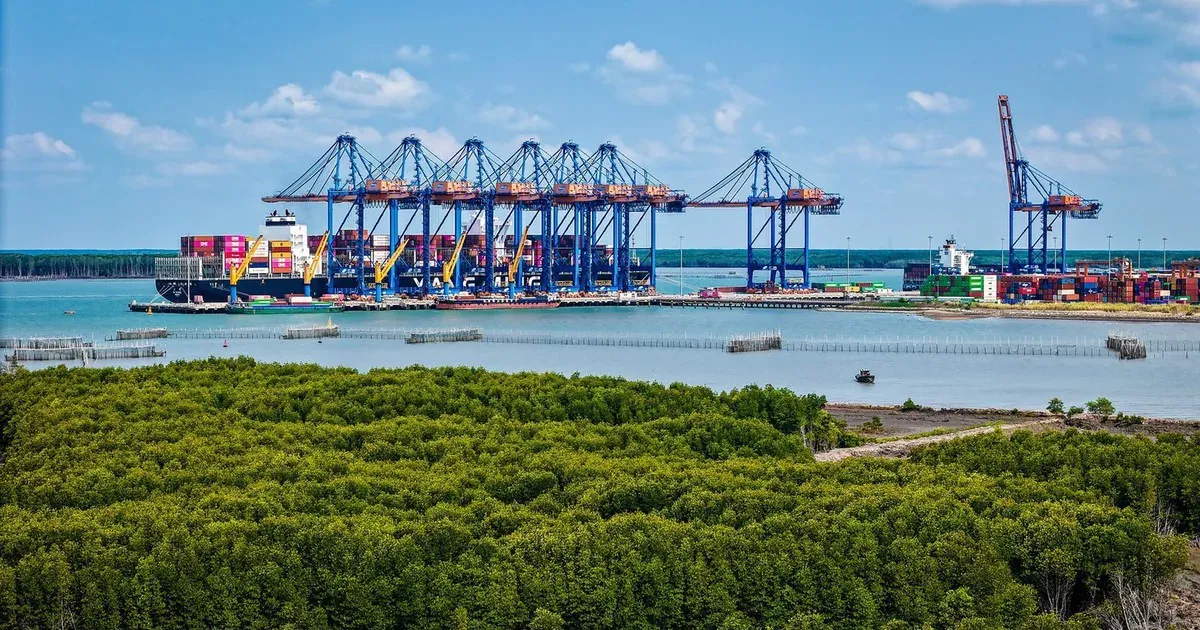
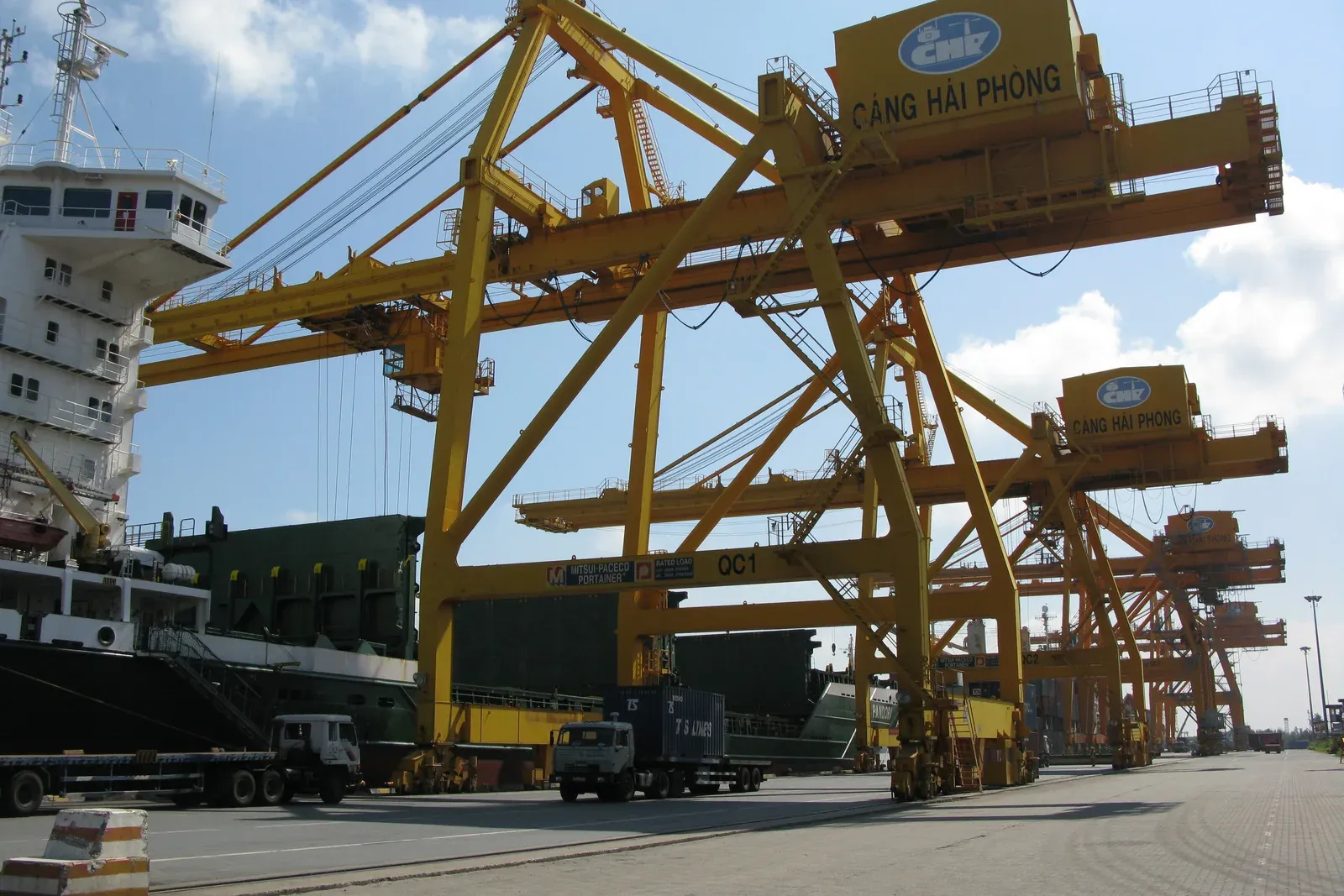
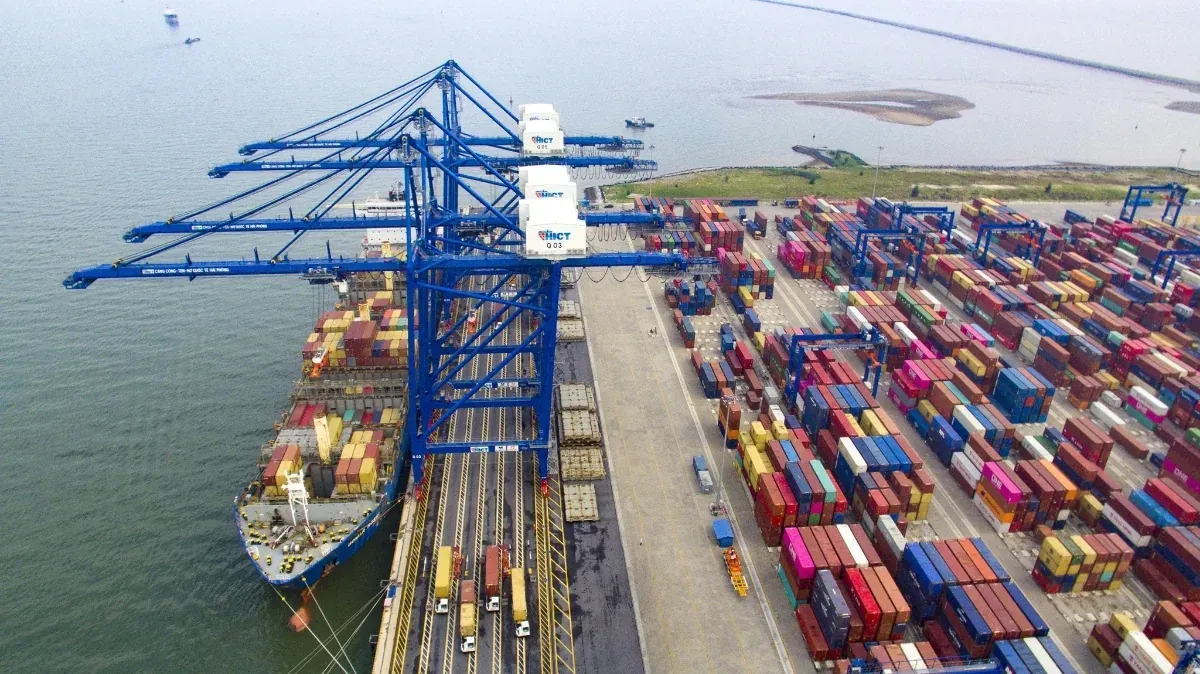
The physical system is expanding, which is why a trillion dollars of trade has not produced the congestion a trillion dollars would have caused five years ago. CMIT and Tan Cang–Cai Mep Thi Vai began commercial operations at a shared 1,200-metre berth on 9 October, letting adjacent terminals work three large ships at once and adding up to 900,000 TEU a year of combined capacity. In the north, Tan Cang–Hai Phong International Container Terminal passed its one-millionth TEU of 2026 on 19 October, the fifth straight year above that mark.
In Lloyd's List's 2026 ranking, Ho Chi Minh City port placed 22nd with 8.9 million TEU and Hai Phong 26th with 8.3 million TEU for 2025 throughput, ahead of New York/New Jersey and Hamburg. Choosing between those gateways changes inland cost, cutoffs and direct sailing frequency — one of several decisions covered in our guide to importing from Vietnam.
Reliability is the weak link: global container schedule reliability was 51.6% in September 2026, with late vessels arriving 4.2 days behind schedule on average. Half of all advertised arrivals do not happen when advertised.
The Pre-Tet Clock Starts Now
Tet falls on Saturday 6 February 2027. The public holiday runs 4–10 February, and employers may choose 3–9, 4–10 or 5–11 February. Factories rarely stop for only the statutory week: a common planning estimate is a shutdown from about 23 January to 21 February, with full output returning only around mid-March as workers come back.
Work backwards. If your supplier needs 25 days of production, the order must be released in December to leave the factory before the shutdown. If the cargo has to reach a warehouse in the first weeks of the new year, it needs to be on the water in early January, which means booking in early December — the same weeks carriers run their blank programme and hold capacity back for the pre-holiday surge.
That is the arbitrage in this market: spot rates are falling now, but the space you will want in January is being sold now. Fixing rate and space together, with a stated validity window, beats chasing the lowest weekly quote and finding the vessel full.
What to Do This Week
- Price Q1 volume now. Ask for validity through mid-January and confirm the voyage number, not just the service name.
- Choose FCL or LCL deliberately. Below roughly 15 cubic metres, LCL avoids paying for air in a box; above it, FCL usually wins once destination charges are counted. Co-loading is also where rollover risk concentrates when sailings are blanked.
- Set an ex-factory deadline of mid-January and confirm the supplier's actual Tet closure dates in writing — the official holiday is not the factory calendar.
- Audit origin documents before shipment, matching HS code, Certificate of Origin and invoice description on every line.
- Fix the Incoterms term before comparing quotes. A DDP quote and a DDU quote are different products, and the gap is exactly where tariff and destination charges land. Amazon FBA sellers also face tighter delivery appointments in December, so build that into the schedule — our Amazon FBA shipping from Vietnam guide covers labelling and the appointment sequence.
To hold a rate and a sailing against a specific cargo-ready date, VNForwarder quotes FCL, LCL, air and DDP door-to-door out of Cat Lai, Cai Mep and Lach Huyen with the validity window stated up front.
Risks and the Timeline to Watch
- Rate reversal: 8% of east–west sailings are blanked through early December. If pre-Tet demand arrives on schedule, the October decline can reverse in the second half of December.
- Tariff decisions: the agreement is unsigned and two Section 301 investigations are open; either could move the duty line with little notice.
- Weather: central Vietnam flooded in early October, and storm season runs into December.
- Reliability: at 51.6%, schedule buffers matter more than optimised cutoffs.
FAQ
Did Vietnam really reach US$1 trillion in trade in 2026?
Yes. Customs recorded cumulative trade passing US$1 trillion on 29 October 2026, with exports of about US$493.6 billion and imports of about US$507.7 billion. The ten-month estimate is US$1,010.6 billion, up 32.3%, and Customs expects full-year growth above 25%.
Are freight rates from Vietnam rising or falling right now?
Falling on the published indices: the VCFI composite was US$5,141 per FEU in the week to 23 October, down 2.21%, and Drewry's WCI fell 3% to US$4,429 on 29 October. That can change in December as pre-Tet bookings tighten space, so treat a quote without an expiry date as a risk.
Will the US–Vietnam trade agreement remove the 12.5% tariff?
Unknown, and it is unsigned. The text has been sent to Washington, but no signing date or tariff level has been announced, and two Section 301 investigations remain open. Plan on 12.5% and re-price if the agreement lands.
When do I have to ship to avoid the Tet shutdown?
Cargo ready at the factory by mid-January 2027, with booking confirmed in early December. Tet is 6 February, the public holiday is 4–10 February, and factories commonly close from about 23 January, returning to normal output only in March.